



Research Papers/Articles
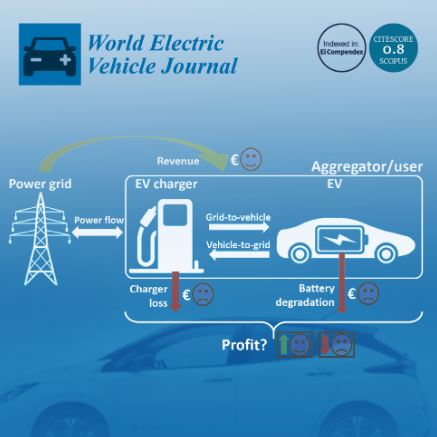
Applications of Battery Management System (BMS) in Sustainable Transportation: A Comprehensive Approach from Battery Modeling to Battery Integration to the Power Grid
2022
Author(s): B S S, Hampannavar S, B D, Bairwa B
In this paper, an equivalent circuit model (ECM) of the battery is proposed and analyzed that describes the battery behavior at various temperatures, considering the battery's internal resistance.
Powering Up: Understanding Traction Batteries: Technology and Standards
2022
Author(s): Bej S, Bhagyasree
Rapid improvements in battery technologies are crucial in achieving the required pace of transition to cleaner mobility. The high energy density, specific energy, and cycle life of the LiBs make these batteries outperform other available battery chemistries.
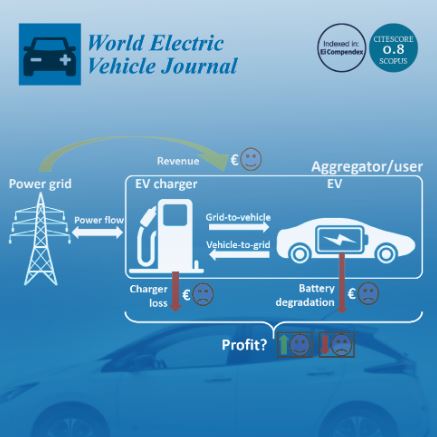
Real-Time Fire Detection Method for Electric Vehicle Charging Stations Based on Machine Vision
2022
Author(s): Zhang S, Yang Q, Gao Y, Gao D
In this paper, an improved You Only Look Once v4 (YOLOv4) real-time target detection algorithm based on machine vision is proposed to monitor the site based on existing monitoring equipment, transmit live video information in real-time, expand the monitoring range, and significantly reduce the cost of use.
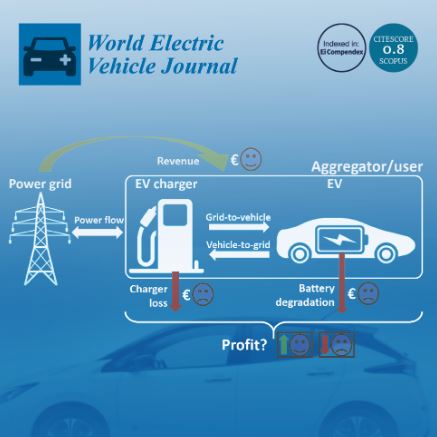
Novel Hybrid Thermal Management System for High-Power Lithium-Ion Module for Electric Vehicles: Fast Charging Applications
2022
Author(s): Karimi D, Behi H, Van Mierlo J, Berecibar M
This study proposes a novel hybrid TMS based on air-cooling system assisted phase change materials (PCM), heat pipes, and a heat sink for an LiC module under a 150 A continuous current profile.
Electric Vehicle Deployment and Integration in the Saudi Electric Power System
2022
Author(s): Almohaimeed SA
This work gives an overview of the Saudi electrical energy system and then investigates the impact EVs technology in the electricity sector in Saudi Arabia and its relevant consequences.
From Traditional to Electrified Urban Road Networks: The Integration of Fuzzy Analytic Hierarchy Process and GIS as a Tool to Define a Feasibility Index—An Italian Case Study
2022
Author(s): Nodari C, Crispino M, Toraldo E
This research describes and develops a simple, self-explanatory, repeatable, and adaptable selection criterion aimed at helping city managers in prioritizing the roads of an urban network to be upgraded from t-road to e-road status. T
The Potential of 48v Hybrids in India’s Light-Duty Vehicle Market
2022
Author(s): Deo A, German J, Bandivadekar A
There is still no penalty imposed on manufacturers in India if CO2 emissions limits are exceeded. Based on the analysis presented in this report, the study suggests it would be effective to establish a penalty of ₹2,500/gCO2/km for passenger cars. This will allow the reality that some manufacturers that do not enjoy large economies of scale might have somewhat higher DMC costs, and a penalty of ₹2,500/gCO2/km would mean that using 48V hybrid technologies in vehicles will be cheaper than paying the fine.

Exploration of the Characteristics and Trends of Electric Vehicle Crashes: A Case Study in Norway
2022
Author(s): Liu C, Zhao L, Lu C
With the rapid growth of electric vehicles (EVs) in the past decade, many new traffic safety challenges are also emerging. With the crash data of Norway from 2011 to 2018, this study gives an overview of the status quo of EV crashes.

Electrifying Passenger Road Transport in India Requires Near-Term Electricity Grid Decarbonisation
2022
Author(s): Abdul-Manan AFN, Gordillo Zavaleta V, Agarwal AK, Kalghatgi G, Amer AA
In several non-Annex 1 nations, including India, battery-electric vehicles (BEV) have become the preferred technology solution to reduce transportation-related greenhouse gas (GHG) emissions.

Fuel Cell Drive for Urban Freight Transport in Comparison to Diesel and Battery Electric Drives: A Case Study of the Food Retailing Industry in Berlin+
2022
Author(s): Winkler JK, Grahle A, Syré AM, Martins-Turner K, Göhlich D
The option of decarbonizing urban freight transport using battery electric vehicles (BEVs) seems promising. However, there is currently a strong debate whether fuel cell electric vehicles (FCEV) might be the better solution.