



Knowledge Hub
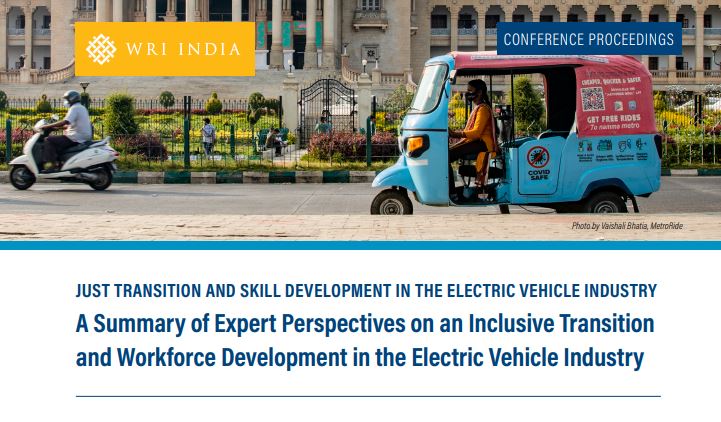
Just transition and skill development in the electric vehicle industry
2022
Author(s): World Resources Institute
The conference proceedings reflect the views of the stakeholders on the impact of the ongoing EV transition on the workforce of the automotive and transport industries and ways to ensure a just transition. The proceedings also highlight some of the recommendations shared by the stakeholders on minimizing the adverse impacts of the transition and the need for skill development initiatives, at the national and state levels, to optimize employment opportunities and reduce skill shortages during the EV transition.
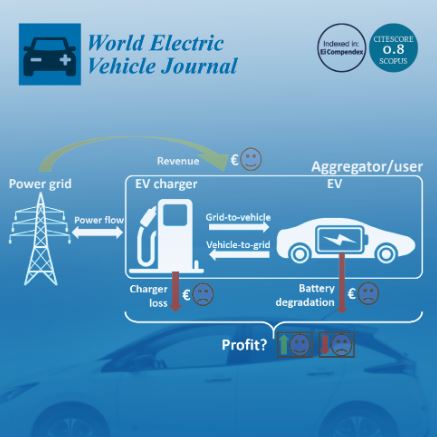
Analysis and Research on Power Supply Strategies of Electric Vehicles Based on Wind Farms
2022
Author(s): Liu Y
In this paper, the author design a power supply strategy for electric vehicle charging facilities based on wind farm power supply.
A Study to Investigate What Tempts Consumers to Adopt Electric Vehicles
2022
Author(s): Ali I, Naushad M
The purpose of this study is to ascertain the primary factors that influence the adoption of electric vehicles. This study includes five independent variables: financial incentives, charging infrastructure, social reinforcement, environmental concern, and price, and one dependent variable, electrical vehicle adoption.
A Brief Overview of Recently Launched Digital Libraries of India
2022
Author(s): Anup Kumar Das
Purpose: This paper evaluates the different digital libraries (DLs) in India developed in the past two decades. These DLs help advance scholarship and facilitate the reading habits of their users....
Real-Time Fire Detection Method for Electric Vehicle Charging Stations Based on Machine Vision
2022
Author(s): Zhang S, Yang Q, Gao Y, Gao D
In this paper, an improved You Only Look Once v4 (YOLOv4) real-time target detection algorithm based on machine vision is proposed to monitor the site based on existing monitoring equipment, transmit live video information in real-time, expand the monitoring range, and significantly reduce the cost of use.
Novel Hybrid Thermal Management System for High-Power Lithium-Ion Module for Electric Vehicles: Fast Charging Applications
2022
Author(s): Karimi D, Behi H, Van Mierlo J, Berecibar M
This study proposes a novel hybrid TMS based on air-cooling system assisted phase change materials (PCM), heat pipes, and a heat sink for an LiC module under a 150 A continuous current profile.
Study of the Effects of Current Imbalance in a Multiphase Buck Converter for Electric Vehicles
2022
Author(s): Reyes-Portillo IA, Claudio-Sanchéz A, Morales-Saldaña JA, Mina-Antonio JD, Netzahuatl-Huerta EM, Claudio-Pachecano L, Ponce-Silva M, Reyes-Sánchez E
This paper is focused on studying the effects of the current imbalance in a Multiphase Buck Converter, used as an intermediate cover between a power supply and the battery of electric vehicles.
A Multi-Criteria Analysis and Trends of Electric Motors for Electric Vehicles
2022
Author(s): El Hadraoui H, Zegrari M, Chebak A, Laayati O, Guennouni N
This paper presents the technological aspect of the different components of the electric powertrain and highlights the important information on the electric vehicle’s architecture
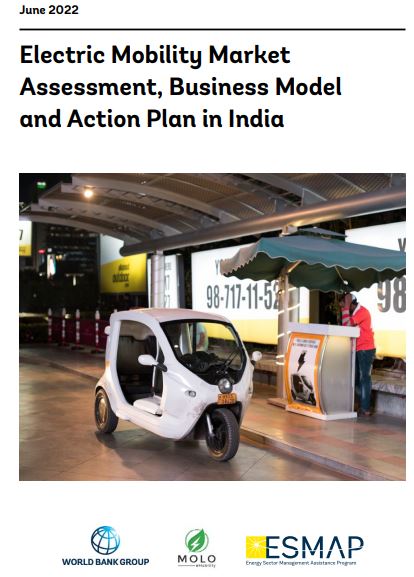
Electric mobility market assessment, business model and action plan in India
2022
Author(s): World Bank
This report evaluates each vehicle and market segment considering their unique characteristics. Analytical models based on key cost drivers for each segment were used to project market penetration in a range of scenarios (from business-as-usual or “BAU” to comprehensive implementation of recommendations). A deep dive analysis was undertaken for three states (Maharashtra, Tamil Nadu, and Madhya Pradesh) across ten of their largest cities, then aggregated at the state and national levels for a comprehensive picture.
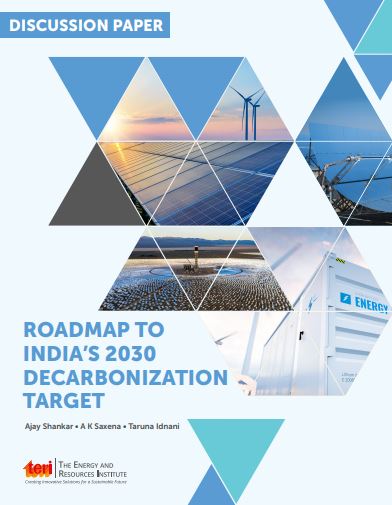
Roadmap to India’s 2030 decarbonization target
2022
Author(s): Shankar A, Saxena, A K, Idnani T
The share of renewables in total electricity generation is now over 10%, more than 70% of the country’s electricity was still generated by fossil fuels in 2021.At COP26, India announced the highly ambitious goal of decarbonizing energy to 50% and achieving 500 GW of fossil fuel free generating capacity by 2030. This was a very large increase above its Paris commitments, far more than expected. This study discusses the challenges and feasibility in achieving the ambitious 2030 targets.