



Knowledge Hub
Renewable energy outlook for ASEAN: towards a regional energy transition, 2nd ed.
2022
Author(s): International Renewable Energy Agency (IRENA)
This second edition of the ASEAN Renewable Energy Outlook was developed in collaboration with the ASEAN Center for Energy (ACE) and the ASEAN Secretariat’s Renewable Energy Sub-sector Network. It is guided by IRENA’s World Energy Transitions Outlook and details a comprehensive pathway for the development of a sustainable and cleaner regional energy system. It explores the role of end-use sector electrification, expansion of renewable generation, energy efficiency solutions, emerging technologies such as electric vehicles, hydrogen and battery storage-systems, as well the importance of expanding regional power sector integration.
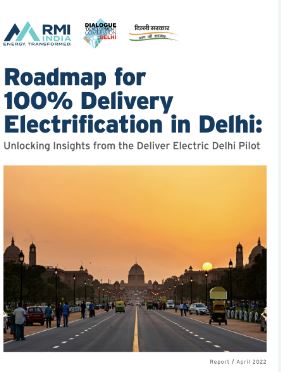
Roadmap for 100% delivery electrification in Delhi: unlocking insights from the deliver electric Delhi pilot
2022
Author(s): Dialogue and Development Commission of Delhi, RMI, RMI India
This report highlights insights from the design, implementation, and consultation phases of the Deliver Electric Delhi Pilot, and compiles these findings into a roadmap for scaling final-mile delivery vehicle adoption. The Pilot identified ways in which policies, charging infrastructure, and access to finance can help private and public sector players fully electrify final-mile delivery vehicles. The report compares the costs and performance of EVs to their fossil fuel counterparts and outlines the economic case for fleet electrification.
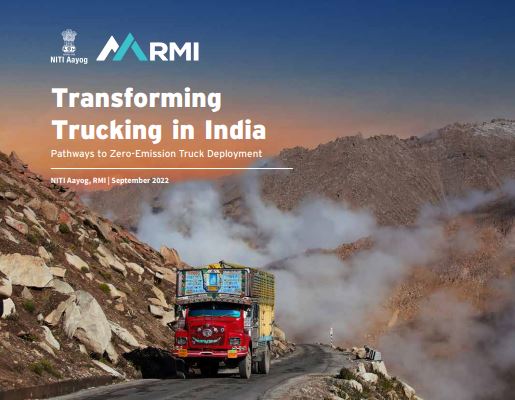
Transforming trucking in India: pathways to zero-emission truck deployment
2022
Author(s): NITI Aayog, RMI
This report outlines the economic case for scaling ZET adoption and presents a blend of near-term and long-term strategies and solutions including policy, financing, access to charging, and technology innovation that can enable India to capitalize on the far-reaching benefits of a zero-emissions trucking future. The report also shows that the estimated total cost of ownership for medium-duty ZETs under a mature production scenario is lower than diesel trucks and could feasibly reach parity in the heavy-duty truck segment by 2027.
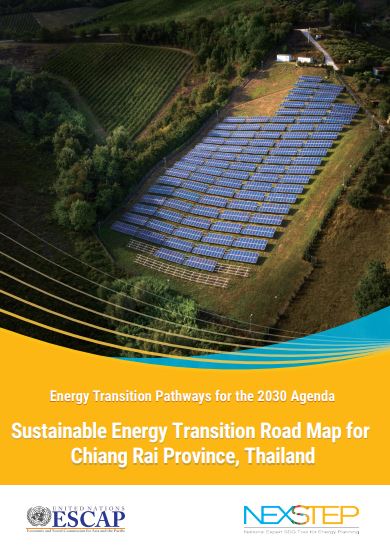
Energy transition pathways for the 2030 agenda: sustainable energy transition road map for Chiang Rai Province, Thailand
2022
Author(s): The Economic and Social Commission for Asia and the Pacific (ESCAP)
The Sustainable Energy Transition Road Map for Chiang Rai Province has two main objectives. First, it aims to establish a scenario baseline for 2019-2030, considering the current policy settings. Second, it identifies the measures and technological options that could raise Chiang Rai’s efforts to align with the SDG 7 targets, national targets as well as achieving deep decarbonization of its energy system.
The 15th annual “State of Green Business” report comes at an exciting and perilous time for companies, their stakeholders and the world in general. Business and, indeed, humankind is undergoing an epochal transition. Nearly everything must be reinvented if we are to equitably prosper into the future. If any institution on the planet has the resources and wherewithal to provide the human and financial firepower to get it done, it’s business. The good news is that companies are making great progress, with lots more on the way. But will it be too little, too late?
Toward credible transport carbon dioxide emissions accounting In China
2022
Author(s): Xue L, Liu D
This paper examines existing accounting methods and statistical data used by China’s national and subnational governments. By comparing transport emissions estimates using different accounting methods, this study reveals that current top-down and bottom-up accounting methods are uncertain and do not correctly align responsibility for producing emissions with responsibility to mitigate them, especially when used to quantify subnational transport emissions.
Market analysis of two- and three-wheeler vehicles in key ASEAN member states
2022
Author(s): Le H, Yang Z
This paper provides an overview of the two- and three-wheeler (2&3W) market in the ASEAN Seven member states in 2019 and 2020. The paper also analyzes and compares the 2&3W markets in a subset of four countries whose data is further segmented by fleet characteristics.
Characterisation of Norwegian Battery Electric Vehicle Owners by Level of Adoption
2022
Author(s): Bjørge NM, Hjelkrem OA, Babri S.
In this paper, the authors investigate differences between groups of Norwegian electric vehicle owners, sorted by their adoption level. The grouping is based on adoption theory and the share of battery electric vehicles in new car sales numbers.
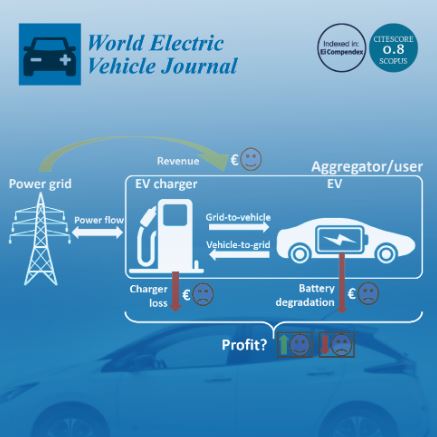
Research on Micro-Mobility with a Focus on Electric Scooters within Smart Cities
2022
Author(s): Vanus J, Bilik P.
The research on the current state of the development of long-range super-lightweight small electric vehicles for intergenerational urban E-mobility using intelligent infrastructure within Smart Cities was carried out with the prospect of using the information learned in a pilot study.
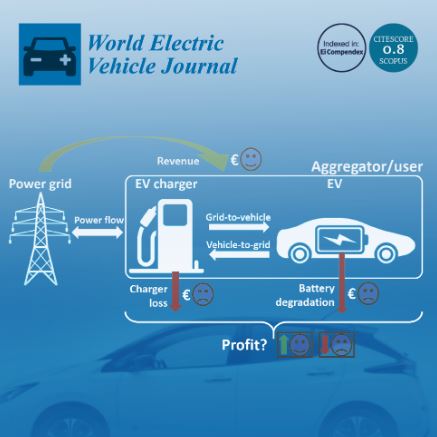
Smart Tool Development for Customized Charging Services to EV Users
2022
Author(s): Galbis AZ, García MA, García AIM, Karatzas S, Chassiakos A, Lazari V, Ageli O.
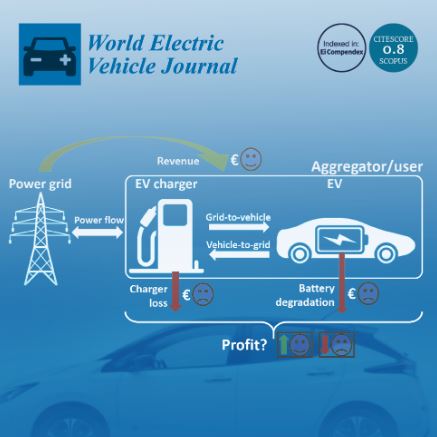
E-mobility is a key element in future energy systems. The capabilities of electric vehicles (EVs) are many and vary since they can provide valuable system flexibility services, including the management of congestion in transmission grids.