

Reports

Emission Reduction Potential in the Transport Sector by 2030
2015
Author(s): Gota S, Huizenga C, Peet K, Kaar G
This study is to determine the magnitude of mitigation possible in the transport sector by 2030 considering low carbon policies investigated for implementation in individual countries.

Contribution of Transport Commitments to Global Goals on Sustainable Development
2015
Author(s): SLOCAT Partnership
The 2015 report analyzes the contribution that voluntary transport commitments are making to the Global Goals on Sustainable Development that will guide global action on development in the next 15 years.

Analysis on National Transport Sector Emission Trends 1990 - 2012
2015
Author(s): Huizenga C, Peet K, Gota S
Tracking emissions trends in the transport sector is an essential step in defining possible transport components of Intended Nationally Determined Contributions (INDCs) from UNFCCC parties and helps to determine national and global mitigation targets.

Designing and preparing Intended Nationally Determined Contributions (INDCs)
2015
Author(s): Levin K, Rich D, Tirpak D, McGray H, Waskow D, Bonduki Y
This report guides countries on the preparation and design of Intended Nationally Determined Contributions (INDCs), including detailed technical guidance and process-related considerations. It walks practitioners through the choices they will face in preparing and designing their INDCs, laid out in five general steps: identifying the benefits of an INDC, organizing the INDC process, identifying data and analysis to inform the INDC, designing the INDC, and communicating the INDC.
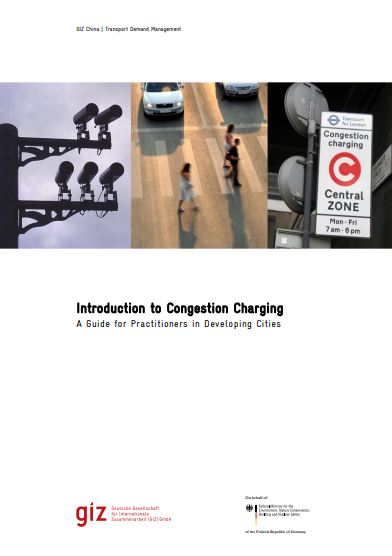
This guide provides information about congestion charging as a potential policy to mitigate congestion in cities. The report is intended for policy makers interested in implementing congestion charging in their cities.
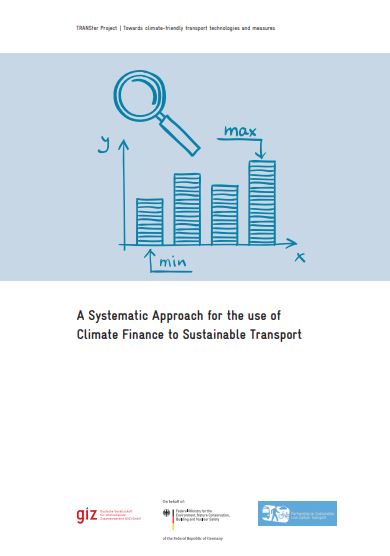
A Systematic Approach for the Use of Climate Finance to Sustainable Transport
2015
Author(s): Sayeg P, Allen H, Eckermann A, Huizenga C, Swann S
This document identifies how scarce International Climate Finance (ICF) can be systematically used to significantly scale-up sustainable, low-carbon transport infrastructure and services.
This report analyses synergies between low-carbon transport strategies and other economic, social and environmental objectives, as these can substantially increase the measure´s cost-effectiveness and help build political support for their implementation.

Monitoring Greenhouse Gas Emissions
2015
Author(s): Bongardt D, Eichhorst U, Dünnebeil F, Reinhard C
This report aims at enabling environmental authorities in Chinese cities to generate a regular emissions inventory of the transport sector.

Private investment in public transport success stories for Brazilian cities
2015
Author(s): Lefevre B, Leipziger D
This report examines two case studies from Brazil: Linha 4 of the São Paulo Metrô, and Estação Barreiro bus terminal in Belo Horizonte. Based on WRI research on private climate finance (Polycarp et al. 2013; Venugopal and Srivastava 2012), the study adopt a framework that analyzes public interventions on two levels: supporting enabling conditions at the market level and implementing de-risking instruments at the project level.

Zero and Low Carbon Mobility
2015
Author(s): German Partnership for Sustainable Mobility (GPSM), Deutsche Gesellschaft für Internationale Zusammenarbeit (GIZ) GmbH
In Germany, the transport sector accounts for almost 20% of all greenhouse gas (GHG) emissions, 95% of which are emitted by road transport. The Ministry for the Environment, Nature Conservation, Building and Nuclear Safety (BMUB) has developed a comprehensive strategy to tackle this issue on behalf of the German Federal Government.