



Knowledge Hub
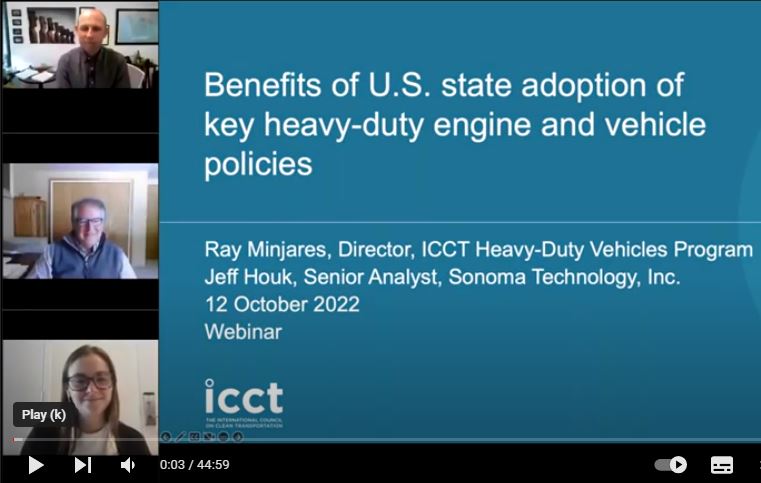
Benefits of adopting key medium and heavy duty vehicle emissions control policies in U.S. states
2022
Author(s): Minjares R, Houk J
This webinar presented an overview of the annual and cumulative emission benefits available in Washington, DC and sixteen states with adoption of these key policies targeting medium- and heavy-duty vehicles.
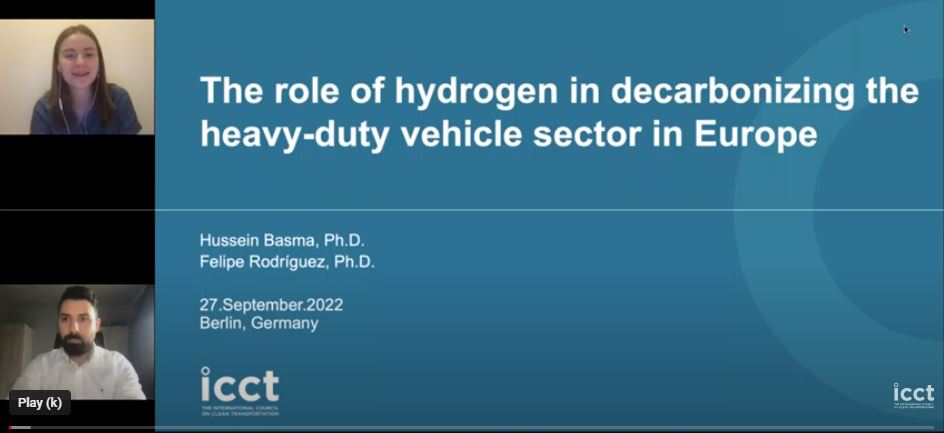
Can fuel cell hydrogen trucks ever be cost effective? the European case
2022
Author(s): Basma H, Rodríguez F
This webinar presented the results of an ICCT study of the total cost of ownership (TCO) of fuel cell electric trucks (FCETs) in France, the United Kingdom, Germany, Italy, Spain, the Netherlands, and Poland, home to more than 75% of HDV registrations in the EU in 2020.
Paying for the Paris agreement: a primer on government options for financing nationally determined contributions
2022
Author(s): Caldwell M, Alayza N, Larsen G
This report reviews how governments can raise new funds and align existing finance with their climate commitments. It provide an overview of the landscape of instruments available to governments as they seek to finance their NDCs — from green bonds to regulatory interventions. It also looks at options for monitoring government success in shifting funds toward their commitments.
The report provides a comprehensive assessment of the global gap in climate action across the world’s highest-emitting systems, highlighting where recent progress made in reducing GHG emissions, scaling up carbon removal, and increasing climate finance must accelerate over the next decade to keep the Paris Agreement’s goal to limit warming to 1.5°C within reach.
This report takes stock of countries’ latest NDCs and examines how these commitments have evolved since the Paris Agreement entered into force, identifying overall trends and pinpointing the elements where further action is needed. It finds that countries are making incremental progress on strengthening their NDCs, but what we really need to achieve the goals of the Paris Agreement is urgent transformational change.
Decarbonizing Hong Kong’s roads: pathways towards a net-zero road transport system
2022
Author(s): Xue L, Song S, Xi W, Jiang X, Lu L, Sawhney S
This report proposes a roadmap for zero emissions for Hong Kong's road transport sector, focusing on the bus, private car and freight vehicle segments.
Federal policy building blocks to support a just and prosperous new climate economy in the United States
2022
Author(s): Shrestha R, Neuberger J, Saha D
The report estimates the socioeconomic impact of federal climate policies under three mitigation scenarios. These mitigation scenarios focus on tax incentives, climate-friendly infrastructure investments, and sector-based performance standards—many of which have been enacted in the 2021 Bipartisan Infrastructure Law and the 2022 Inflation Reduction Act.
Unlocking early-stage financing for SDG partnerships
2022
Author(s): Li S, Gray E, Dennis M, Hand D, Avi S
This report aims to help commercially driven partnerships, grant funders and investors more effectively drive transformative Sustainable Development Goal (SDG) action by highlighting new approaches to finance. It is a follow-on publication to A Time for Transformative Partnerships, a World Resources Institute (WRI) report that identified the key success factors of transformative partnerships.
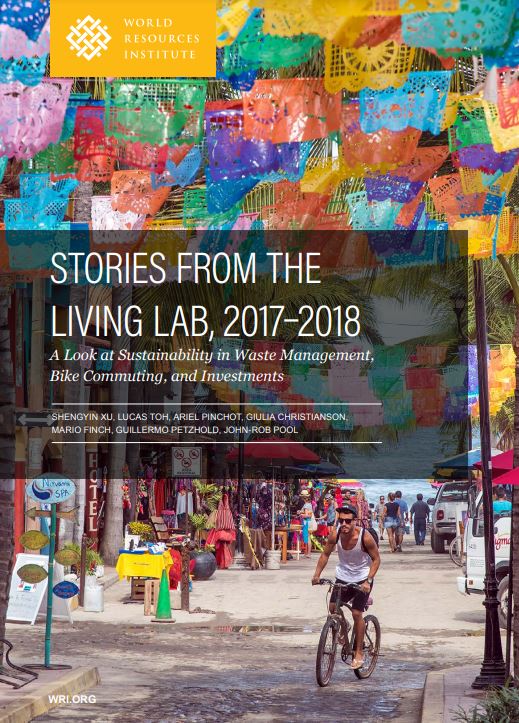
Stories from the Living Lab, 2017–2018: a look at sustainability in waste management, bike commuting, and investments
2022
Author(s): Xu S, Toh L, Pinchot A, Christianson G, Finch M, Petzhold G, Pool JR
This report shares journeys from three WRI Sustainability Initiative projects focused on waste and plastics reduction, bike and active commutes, and sustainability of WRI's endowment. Each journey is authored by a different project lead and shares the implementation challenges, data, and outcomes, as well as relevant research and case studies that informed the project design and development.
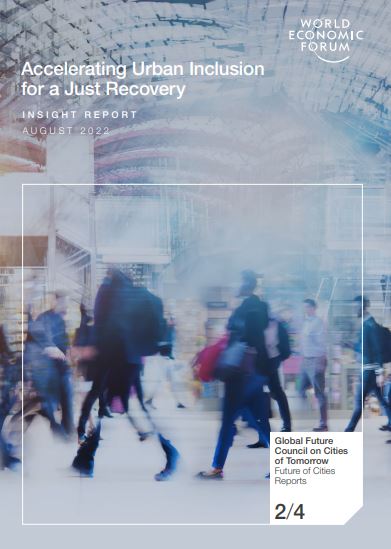
This report draws global attention to how the COVID-19 pandemic has worsened stark inequalities in cities around the world. This report makes the urgent case for greater urban inclusion, and provides guidance and inspiration to cities on how to achieve it. The report helps cities to understand that there are different dimensions of urban inclusion and provides a 10-step action plan to advance inclusion with a sequence of actions to enable urban inclusion in the spatial, digital, social/institutional, and economic realms on a spectrum from getting started to advanced action.