Reports

Vietnam’s Low Carbon Bus NAMA
2016
Author(s): Deutsche Gesellschaft für Internationale Zusammenarbeit (GIZ) GmbH
This document provides a summary of the propsed low carbon bus NAMA for Vietnam. The NAMA aims to contribute to the sustainable development of the transport sector by applying more efficient, low-carbon bus technologies, operational improvements and shifting from private to public transport.

Global Climate Action Agenda (GCAA) Transport Initiatives
2016
Author(s): SLOCAT Partnership
This report gives an overview of 15 voluntary multi-stakeholder initiatives on sustainable, low carbon transport, the manner in which they measure progress, and their alignment with the 2030 Agenda on Sustainable Development, the UN HABITAT III outcome and the Paris Agreement.

The year 2015 was an extraordinary one for renewable energy, with the largest global capacity additions seen to date, although challenges remain, particularly beyond the power sector.
This report provides a non-technical summary of the latest information on electric road vehicles in Europe, including those with hybrid technologies. It focuses upon electric passenger vehicles, explaining the different types that are now available on the market, how each type works, and their respective advantages and disadvantages.

Implications of 2DS and 1.5DS for Land Transport Carbon Emissions in 2050
2016
Author(s): Gota S, Huizenga C, Peet K
This report explores land transport emissions trends and mitigation potential relative to the 2 degree Celsius Target (2DS) and 1.5 degree Celsius Target (1.5DS) called for under the Paris Agreement on climate change.

This toolkit refers to the Comprehensive Mobility Plan (CMP) Revised (2014) toolkit of the Ministry of Urban Development, India, which was developed by the Institute of Urban Transport (IUT) Delhi, and UNEP DTU Partnership, along with Indian project partners from the UN Environment Project Promoting Low Carbon Transport in India.
Personal vehicles have dominated the U.S. mobility system for nearly 100 years. But we are now in the formative stages of a powerful confluence of cultural, technological, and societal forces.

Proposed Avenues for NDCs
2016
Author(s): Gota S, Peet K, Windisch E, Bongardt D, Eichhorst U
This short paper presents first propositions on how to increase the involvement of the transport sector in the Nationally Determined Contributions (NDCs), based on early results of an on-going cooperation between GIZ, SLoCaT and Ricardo Energy & Environment.
Cost assessment of near- and mid-term technologies to improve new aircraft fuel efficiency
2016
Author(s): Kharina A, Rutherford D, Zeinali M
Finds that fuel consumption of new aircraft designs could be cut by 25% in 2024 and 40% in 2034 using cost-effective emerging technologies—double the rate of improvement seen in designs coming from manufacturers now in response to market forces alone.
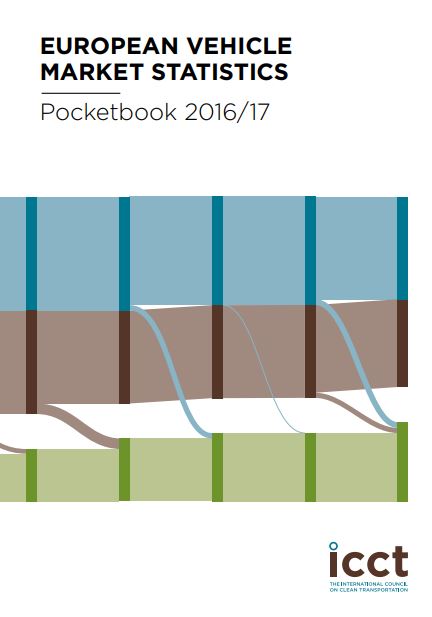
Annual statistical portrait of technologies, fuel consumption, and GHG and pollutant emissions in Europe’s passenger car, light-commercial, and heavy-duty fleets.