Reports
Green Vehicle Rating for 2 and 3 Wheelers in India
2018
Author(s): Kumar S, Yadav N, Das S, Mathew S
While traditional wisdom would count the 80% share of two and three-wheelers in India’s vehicle fleet as a hurdle in curbing vehicular energy and environmental burdens but thought otherwise, it presents an opportunity as large as the massive consumer base which is yet to be tapped with simple and open information for the bottom-up shift to cleaner and efficient vehicles.
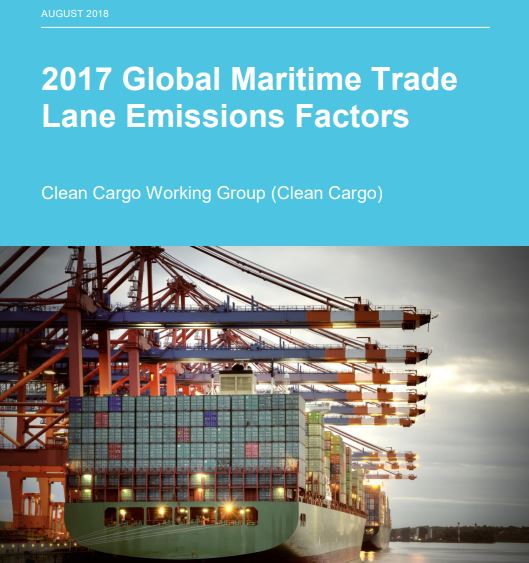
Clean Cargo is the leading buyer-supplier forum for sustainability in the cargo shipping industry. Members are major brands, cargo carriers, and freight forwarders that share a vision of a shipping industry that is a responsible part of sustainable supply chains, which supports clean oceans, healthy port communities, and global climate goals.

The Transport and Climate Change 2018 Global Status Report (TCC-GSR) describes trends in transport emissions and illustrates policies as well as policy targets across all transport sub-sectors. It sets a baseline that helps to capture the progress of transport in regard to climate action.

Marrakech Partnership for Global Climate Action (MPGCA) Transport Initiatives
2018
Author(s): SLOCAT Partnership
This update report presents profiles of the 22MPGCA transport which outlines their respective objectives, commitment, and signatories and partners.

Katowice Comes Through in the Clutch, With Low-Carbon Transport Essential for Ambition and Implementation
2018
Author(s): Peet K, Huisman Y, Zhu M, Huallya K, Cardama M, Yiu A, Donners B
This summary of the transport dimension at COP24 is structured around the COP24 key messages of the Paris Process on Mobility and Climate (PPMC), a joint initiative of Movin' On by Michelin and the Partnership on Sustainable, Low Carbon Transport (SLoCaT) to focus efforts of the global transport community to achieve Paris targets.

India Second Biennial Update Report to the United Nations Framework Convention on Climate Change
2018
Author(s): Ministry of Environment, Forest and Climate Change, Government of India (MoEFCC)
This report embodies information on national circumstances, national GHG inventory, mitigation actions, and an analysis of the constraints, gaps, and related finance, technology and capacity building needs, including information on domestic Measurement, Reporting and Verification (MRV).

Two-and-three-wheelers pose some of the most serious unresolved questions within the context of sustainable urban mobility. Currently, two-and-three-wheelers constitute close to 30% of total motorised vehicles worldwide.

This report recommends that the government’s ban on petrol and diesel vehicles is brought forward ten years, from 2040 to 2030. But, it says, targets alone won’t be enough. A comprehensive strategy including switching the government vehicle fleet to 100 per cent EV, will be needed to put Britain in a position to be a market leader.
Low-carbon cars in Europe: a socio-economic assessment
2018
Author(s): European Climate Foundation (ECF)
This report assesses the economic costs and benefits of decarbonising passenger cars in Europe. A scenario approach has been developed to envisage various possible vehicle technology futures, and then economic modelling has been applied to assess impacts. This technical report provides details about the charging infrastructure requirements, technology costs and economic impacts of the transition to low-carbon mobility.
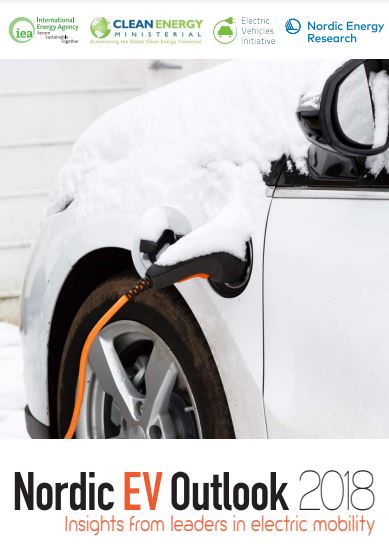
Nordic EV outlook 2018: insights from leaders in electric mobility
2018
Author(s): International Energy Agency, Nordic Energy Research
The report assesses the current status of the electric car market, the deployment of charging infrastructure, and the integration with the electricity grid at country level. It analyses the role of European, national, and local policy frameworks in supporting these developments. The analysis also provides insights on consumer behaviour and includes an outlook on the progress of electric mobility in the Nordic region up to 2030. NEVO 2018 has been developed in co-operation between the International Energy Agency (IEA) and Nordic Energy Research.