
Reports
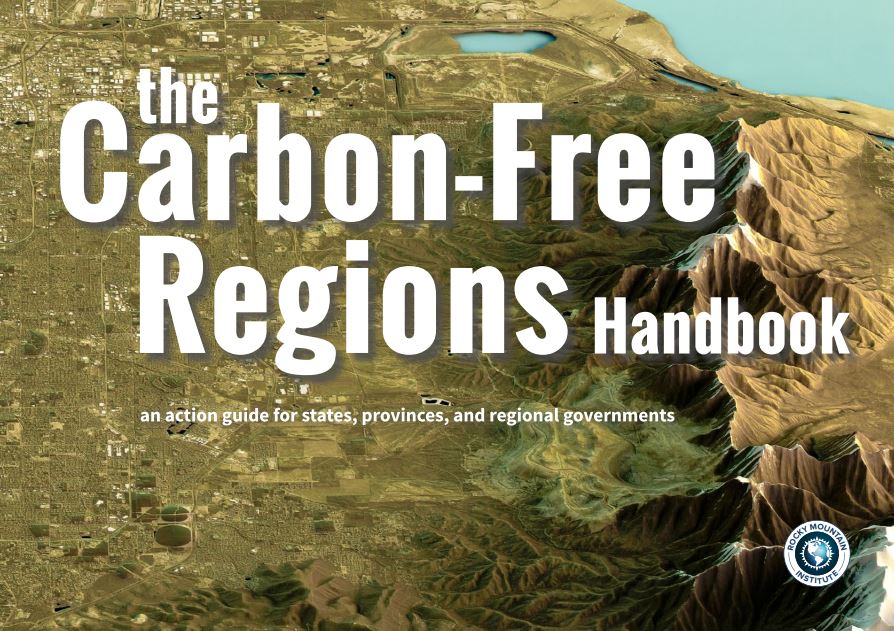
The Carbon-Free Regions Handbook
2018
Author(s): Corvidae J, Stone L, Jungclaus M, Mandel J, Whitney A, Bronski P
The Carbon-Free Regions Handbook helps state, provincial, and regional governments implement policies and actions that place their communities on an aggressive path toward sustainable, low-carbon economies.
Electric vehicles from life cycle and circular economy perspectives: TERM 2018
2018
Author(s): European Environment Agency
The study shows BEVs offer important opportunities to reduce GHG emissions and local air pollution. Areas where BEVs could have potential negative impacts are also identified during raw material extraction stage, a temporary rebound effect during vehicle adoption and uncertainty in terms of end-of-life processing. Current and future policy levers and incentives could be reviewed adopting battery standardization to facilitate recycling and reuse.
The costs of commuting are widespread, City leaders, transportation planners, and companies are looking to implement commuting solutions to ensure employees are happy and healthy, while simultaneously saving cities and companies money and helping the planet.
The Future Cost of Electricity-Based Synthetic Fuels
2018
Author(s): Agora Verkehrswende, Agora Energiewende
The objective of this study is to estimate the costs associated with importing synthetic fuels up to 2050. This study provides an important contribution to the current debate about decarbonisation strategies in the heating and transport sectors.
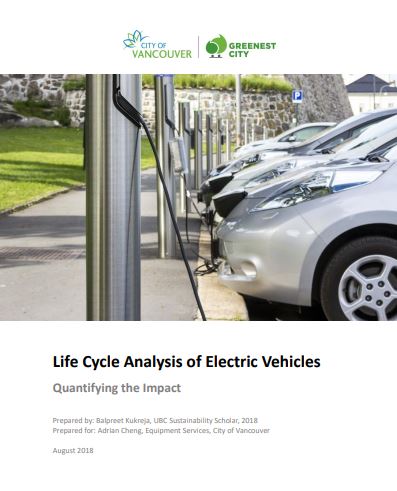
This study uses life cycle analysis (LCA) to comparatively analyze two vehicle models of similar size of each type (ICEV and EV) currently used in the City’s fleet. Ford Focus is chosen for the ICEV and Mitsubishi i-MiEV for the EV, both with a vehicle life of 150,000km. The analysis shows that the electric vehicle has notably lower carbon emissions and lower energy consumption per kilometer. After considering all phases, the Ford Focus emits 392.4gCO2-eq/km and Mitsubishi i-MiEV emits 203.0gCO2-eq/km over the vehicle life.

Electric Vehicles
2018
Author(s): Kapur G, Parmar Abhiraj S, Tyagi M, YES Global Institute (YGI)
This report titled “Electric vehicle - The colour is green”, focuses on paving the way from a policy perspective, which may lead to a transformative ecosystem, changing gears and making the shift from traditional dependencies on Internal Combustion Engines (ICE) to a more sustainable, low carbon, electric mobility based future.

Greenhouse Gas Emissions From the Transport Sector
2018
Author(s): Weber F, Notter B, Fussler J
This technical report compiles the methodolgy, assumptions and main results of an assessment of GHG emission reduction potentials in Kenya’s road transport sector.

Availability of Data for Greenhouse Gas Emission Calculation in Kenya’s Transport Sector
2018
Author(s): Ogot M, Nyangaya J, Muriuki R, Kwoba H
Kenya has set a target of reducing 3.46 Million tonnes of Carbon dioxide equivalent (MtCO2e) emissions in the transport sector by 2030. This will contribute to the overall national goal of reducing 30% of projected business-as-usual scenario emissions by 2030.

Transition to all- Electric Public Transportation
2018
Author(s): Sridhar H, N. C. T, Dash V, Bharadwaj Mridula D.
In this report, the authors examine the ‘Transition to All-Electric Public Transportation', focusing on the charging energy requirement in 2030. This assessment pertains to select four-wheeler taxi categories and public buses.
Implementation Plan for Electrification of Public Bus Transport in Bengaluru
2018
Author(s): Center for Study of Science, Technology and Policy (CSTEP)
Last year, Karnataka announced a landmark policy on electric vehicles, becoming the first Indian state to do so. Now, the Bangalore Metropolitan Transport Corporation (BMTC) is in the process of procuring its first fleet of 40 electric buses.