



Knowledge Hub
Real-World Usage of Plug-In Hybrid Vehicles in Europe: A 2022 Update on Fuel Consumption, Electric Driving, and CO2 Emissions
2022
Author(s): Bieker G, Dornoff J, Mock P, Plötz P, Link S, Ringelschwendner H, Keller M, Moll C
This study presents an analysis of the average real-world fuel consumption and electric driving share of about 9,000 private and company car PHEVs in Europe, with an emphasis on Worldwide Harmonized Light Vehicles Test Procedure (WLTP) type-approved vehicle models.
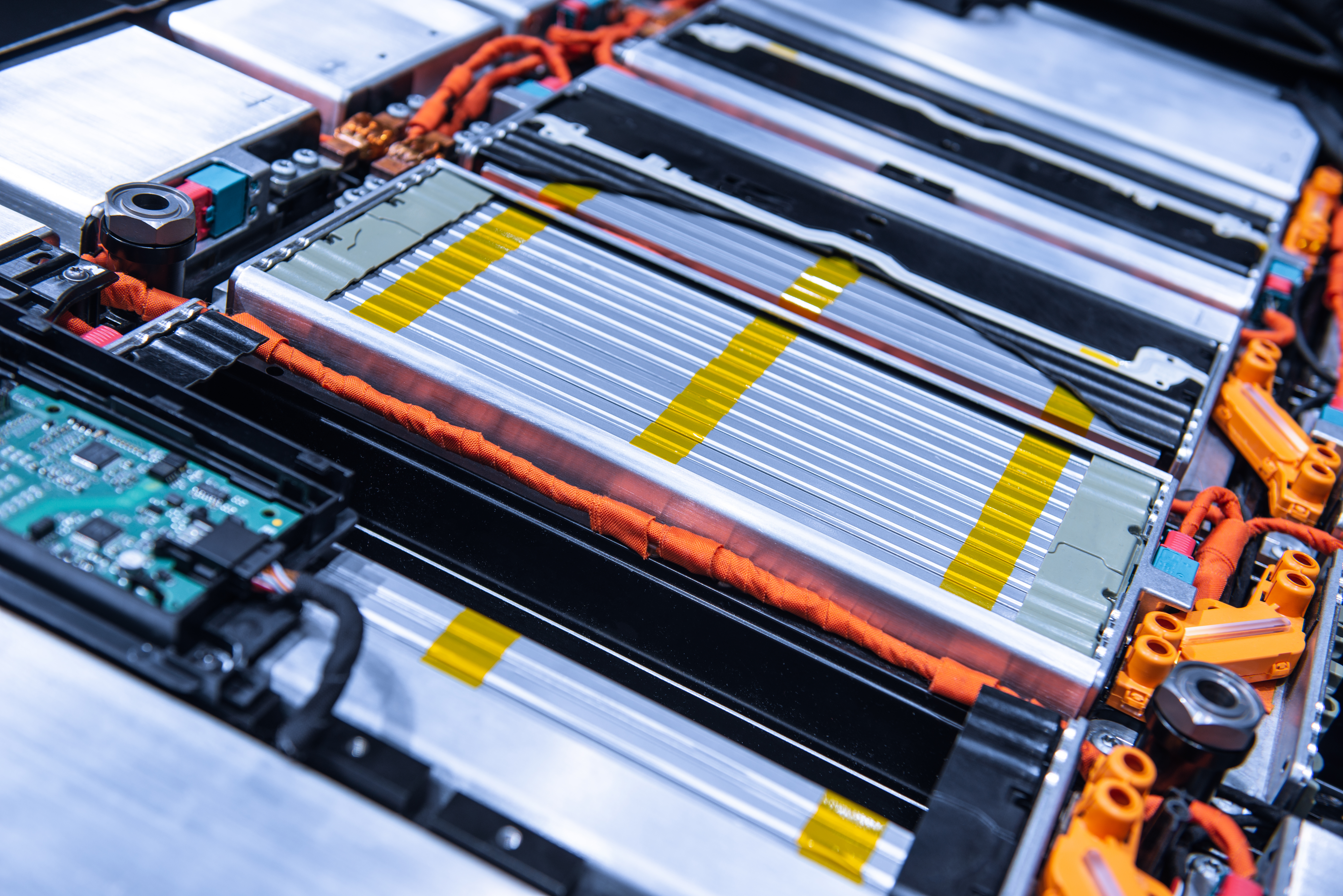
Managing Waste: Battery Recycling in the Indian Scenario
2022
Author(s): Zhimomi T, Bej S
Battery recycling will play a crucial role in the efficient use and re-extraction of the resources ensuring a stable supply chain and contributing to the circular economy. However, the scale at which battery recycling can contribute significantly has not been achieved yet owing to many reasons.

It explores the challenges tourist islands face, such as the seasonal fluxes in transport usage, the pressures of tourism to provide aesthetic green spaces, and the space issues of being an island in relation to economic potential and infrastructure construction.
Decarbonizing China’s road transport sector: strategies toward carbon neutrality
2022
Author(s): Xue L, Liu D
Within the transport sector, road transport represented the largest share 84.1 percent of transport related GHG emissions in China in 2014 (MEE 2020a). To meet its carbon neutrality goal, China’s road transport sector needs explicit sectoral emission reduction targets, actionable strategies, and cost-effective policy instruments. This study examines how the transport sector might be decarbonized in China.
Battery Ecosystem: A Global Overview, Gap Analysis in Indian context, and Way Forward for Ecosystem Development
2022
Author(s): Mandal A (Deloitte India), Dikshit C (Deloitte India), Singha H (Deloitte India), Parihar A (Deloitte India), Tripathy A (Deloitte India), Mohapatra P (Deloitte India)
The aim to attain energy security, reduce dependency on international markets for oil and the urgent need to prohibit carbon emission from the transportation sector is promoting a rapid shift towards electrified mobility.

Behavioural Modelling for Personal and Societal Benefits of V2G/V2H Integration on EV Adoption
2022
Author(s): Singh K, Singh A
This work presents a model to empower an energy user to emerge as an EV-prosumer using vehicle-to-grid (V2G)/ vehicle-to-home (V2H) integration.
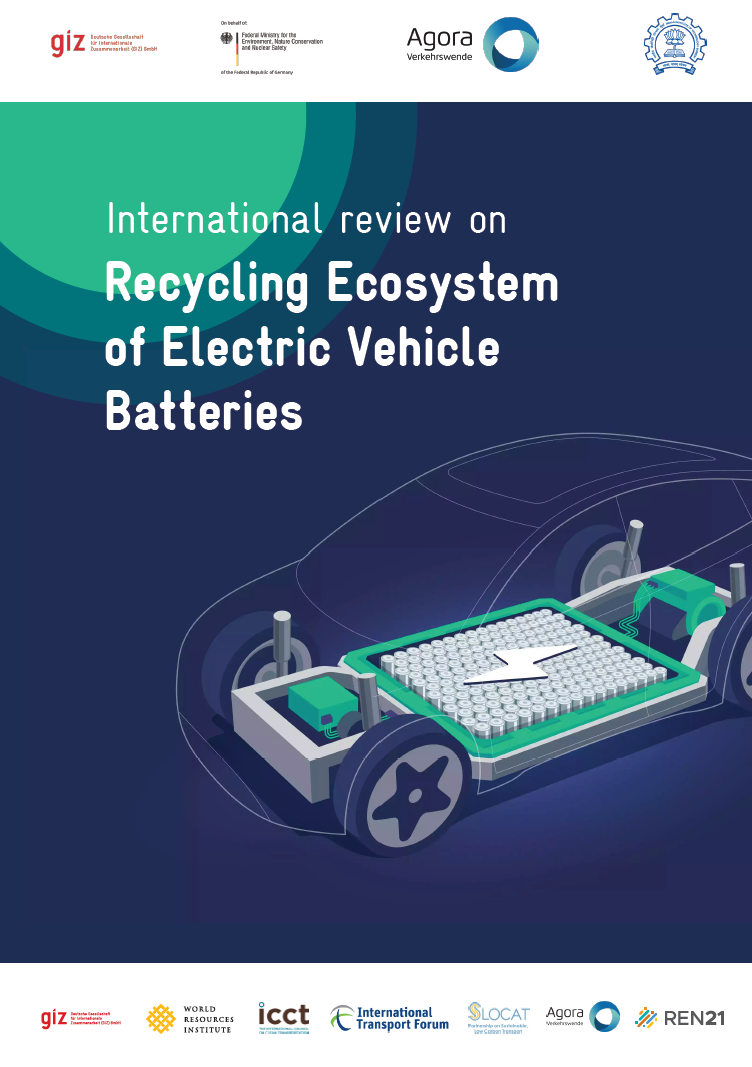
International Review on Recycling Ecosystem of Electric Vehicle Batteries
2022
Author(s): Bej S (GIZ), Zhimomi T (GIZ), Hochfeld C (Agora Verkehrswende), Riehle EB (Agora Verkehrswende), Rather Z (Indian Institute of Technology Bombay), Bradiya MR (Indian Institute of Technology Bombay), Maity S (Indian Institute of Technology Bombay)
This study focuses on the recycling ecosystem of batteries. Batteries up until recently were primarily used in electronic appliances. However, with the advent of EVs, batteries for traction applications have become synonymous with battery recycling and needs careful and in-depth study.
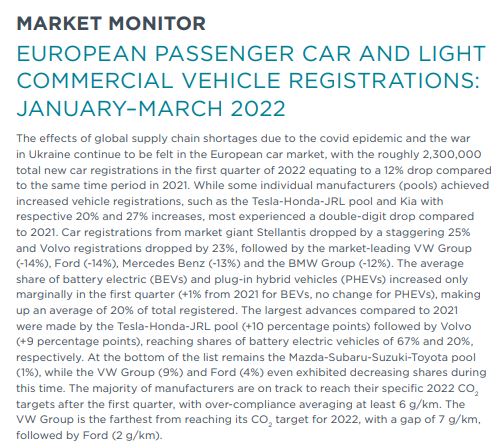
Market monitor: European passenger car and light commercial vehicle registrations
2022
Author(s): Mock P, Tietge U, Wappelhorst S, Bieker G, Dornoff J, Bernard R M, Monteforte M
The majority of manufacturers are on track to reach their specific 2022 CO2 targets after the first quarter, with over-compliance averaging at least 6 g/km.
Diving ambitions: the business case for circular economy in the car industry
2022
Author(s): Dror M B, Gupta A, Deloison T, Schmidt A, Holst A, Machur W, Lacy P, Reers J
The circular economy approach enables automotive companies to increase revenues per vehicle by 15-20 times the sales price and significantly improve profitability by maximizing lifetime performance.

An Optimal Cell Balancing Mechanism for Electric Vehicles
2022
Author(s): Thiruvonasundari D
The cell balancing mechanism is meant to extend battery life and safety. Cell balancing systems are broadly classified as passive and active cell balancing. An intelligent optimized ML based passive cell balancing scheme is presented in this work. To select a better balancing scheme, an enhanced passive cell balancing is implemented through model-based simulations and circuit implementations.