


Reports

Vehicle and efficiency electrification: a global status report
2020
Author(s): Global Fuel Economy Initiative (GFEI)
The report highlights the urgent actions government need to take to accelerate the decarbonisation of road transport, which include: Set long-term policy frameworks to reduce CO2 and increase EV sales in combination with wider decarbonisation and efficiency policies.; Eliminate remaining fossil fuels subsidies; End sales of internal combustion engine (ICE) vehicles as soon as possible.; Combine policies to increase sales of EVs with a focus on decarbonising the electricity sector and integrating energy and charging infrastructure.
The industry’s rapid development has encouraged regulators around the world to introduce AV policy frameworks to enable the safe experimentation and development of the technology. Approaches to AV policy vary greatly between nations and other jurisdictions, and all are relatively nascent.
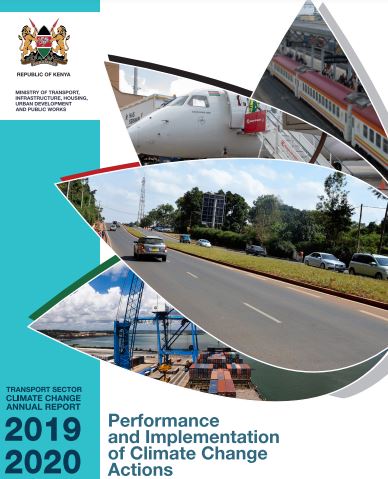
Kenya’s Transport Sector Climate Change Annual Report (2019/2020): Performance and Implementation of Climate Change Actions
2020
Author(s): Climate Change Unit, State Department of Transport, Government of Kenya
The second year in a row, the Climate Change Coordination Unit of the transport sector in Kenya compiled the Transport Sector Climate Change Annual Report. As noted in the report, the transport sector continuously makes up a large share of national GHG emissions.

Location is Everything: Approaches to Siting Electric Vehicle Charging Infrastructure for the Indian Context
2020
Author(s): Natural Resources Defense Council (NRDC)
This issue brief provides decision-makers and stakeholders with information on the principles of charging infrastructure location and siting. It also presents successful EV adoption approaches that have been used by cities in other parts of the world. In addition, based on international practices, this issue brief presents approaches to siting EV charging infrastructure.
Raising ambitions: a new roadmap for the automotive circular economy
2020
Author(s): World Economic Forum, Accenture Strategy
A meaningful transition to the circular economy will require playe...

The Road Ahead for E-mobility
2020
Author(s): Tschiesner A, Heuss R, Hensley R, Wu T, Schaufuss P, Hertzke P, Knupfer Stefan M, Gersdorf T
While electrification represents the biggest technological development in automotive power trains in decades, there is still significant uncertainty as to when large-scale adoption of electric vehicles (EVs) will occur.

The effects of COVID-19 have been quick and substantial. The pandemic has resulted in being a major disrupter; shifting global dynamics. Manufacturing companies around the world are now focusing on developing plans to minimise the aftershocks of this disease, automotive manufacturing being one such sector.

How countries’ nationally determined contributions (NDCs) are implemented and improved upon over time will determine whether the long-term temperature goal of the Paris Agreement is achieved. Each country will prepare for and implement its NDC in different ways, based on the nature of its NDC, how the NDC was first developed, and its national circumstances. Recognizing that NDC implementation is inherently country-driven and location-specific, this document is not meant to be prescriptive. Instead it provides an overview of critical issues that countries can keep in mind while devising their implementation strategies.
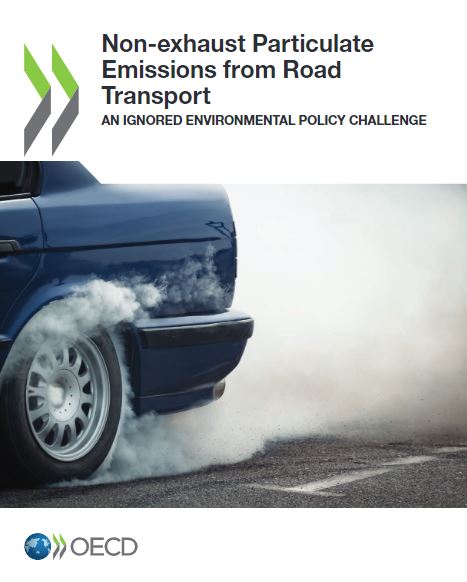
Non-exhaust particulate emissions from road transport: an ignored environmental policy challenge
2020
Author(s): Organisation for Economic Co-operation and Development
This report synthesizes the current state of knowledge about the nature, causes, and consequences of non-exhaust particulate emissions. It also projects how particulate matter emissions from non-exhaust sources may evolve in future years and reflects on policy instrument mixes that can address this largely ignored environmental issue.
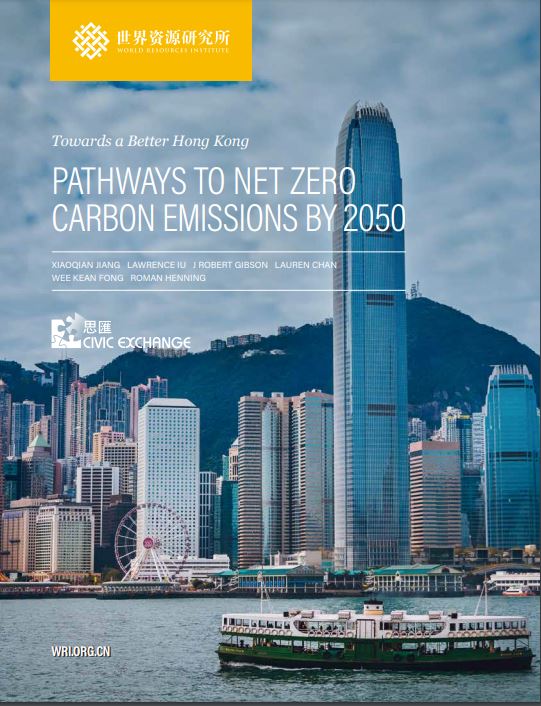
Towards a better Hong Kong: pathways to net zero carbon emissions by 2050
2020
Author(s): Jiang X, Lu L, Gibson JR, Chan L, Fong WK, Henning R
Hong Kong kicked off a public engagement program during June to September 2019 to collect public views, and it will subsequently formulate a long-term decarbonisation strategy. Many cities have committed to carbon neutrality or deep decarbonisation by 2050 or earlier. Copenhagen, for example, committed to being carbon neutral by 2025, and London and New York committed to being carbon neutral by 2050. If Hong Kong can achieve net zero emissions like these cities?