

Case Study
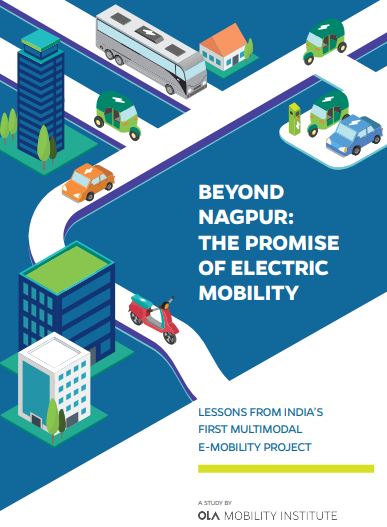
Ola Mobility Institute (OMI) studied India’s first multimodal electric mobility project in Nagpur through a pilot in May 2017. The pilot focused primarily on ensuring usage of EVs - or simply put, clean kilometres travelled – to test the viability of EVs on economic metrics. The study found that the pilot required a broad set of actions. This report takes into account data points from all aspects of EV operations spread over 18 months of the Nagpur pilot providing a detailed overview of the study.
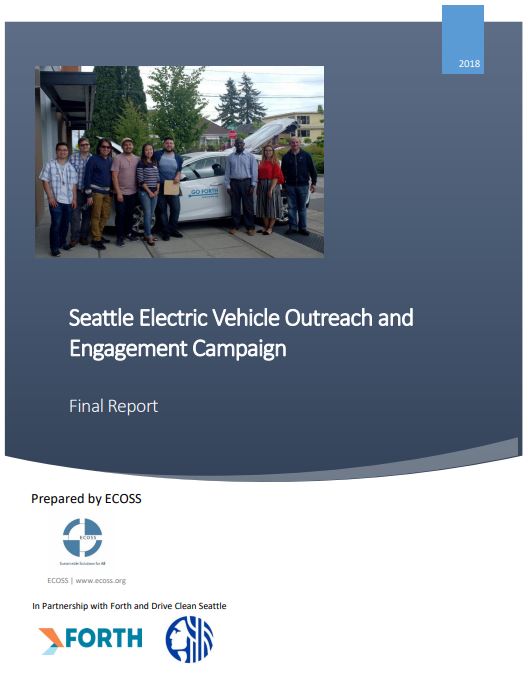
This project carried out a clean mobility outreach and awareness campaign in underserved communities in the Greater Seattle region. ECOSS supported the projec engaging with members of Latino/a, Som...
Towards Smarter Service Provision for Smart Cities: Accounting for the Social Costs of Urban Service Provision
2018
Author(s): Markandya A, Sagar A, Shastry S, Goswami S, Ray I, Aziz Z, Paul S, Pai M, Tagat A, Chatterjee A
Through a case study of four Indian cities, this work examines the current unmanaged growth (business as usual urbanisation) and the costs associated with it. This paper has been jointly prepared by Indian Council for Research on International Economic Relations (ICRIER) and World Resources Institute (WRI) under the aegis of New Climate Economy the flagship project of The Global Commission on the Economy and Climate. The project has been overseen and led by Rajat Kathuria (Director & CE, ICRIER) and Ani Dasgupta (Global Director, WRI Ross Center for Sustainable Cities).

Zero-Emission Bus Evaluation Results: County Connection Battery Electric Buses
2018
Author(s): Eudy L, Jeffers M
The purpose of this report is to present the results from Central Contra Costa Transit Authority (County Connection) deployment of four electric buses in Concord, California. County Connection’s service area covers more than 200 square miles in the East Bay of in California.

Public Sector Fleet EV Procurement Examples: A Case Study of Three All-Electric Vehicle Procurements Conducted by the U.S. Navy, City of New Bedford (MA), and City of Seattle (WA)
2017
Author(s): EV Smart Fleets
This case study explores EV procurements conducted by the U.S. Navy, the City of New Bedford in Massachusetts, and the City of Seattle in Washington State—examples of public fleet procurements that captured federal or state financial incentives to reduce the vehicles’ upfront cost.

Parking Management Strategy – Case of Udaipur
2017
Author(s): Shakti Sustainable Energy Foundation
The report highlights the summary of the parking management strategy and action plan developed for a pilot stretch in the walled city of Udaipur to deal with the problem of choked streets, junctions and informal activities such as informal parking and hawkers.
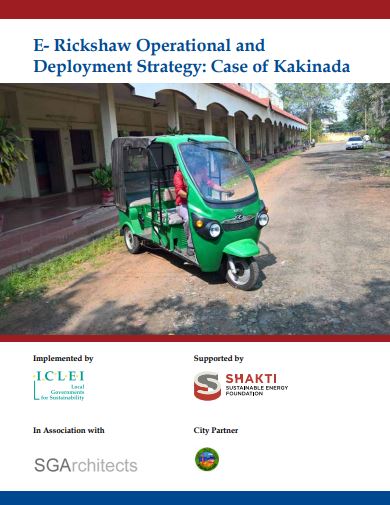
E- Rickshaw Operational and Deployment Strategy – Case of Kakinada
2017
Author(s): ICLEI – Local Governments for Sustainability, South Asia
This report, ‘E Rickshaw deployment plan and report: Kakinada’, is part of the output reports under the project ‘Supporting Smart Urban Mobility and Built Environment in Indian Cities’ under Grant Ref: G 15 SSEF-140 for the period of October 2015 to January 2017. The report highlights the various aspects of assessment undertaken by the project team to verify the feasibility of e-rickshaw deployment in the city. The report also highlights the required institutional frameworks, policy recommendations for e-rickshaw deployment and operational strategy.

This report provides area-level recommendations that can form the basis for developing a city-wide parking management plan in Kakinada.
This presentation by Kate Blumberg outlines the health assessment of the on-road sector for Mexico while analysing the potential benefits of on-road vehicle standards in order to reduce the impact on air pollution and mortality.
In the framework of the South African-German Energy Partnership, GIZ organized a Hydrogen Fuel Cell Bus Study Tour in 2017. The main purpose of the study tour was to share lessons learnt with selected South African municipalities, bus operators and policy developers about the journey in deploying fuel cell busses.