
Reports

Good to Go? Assessing the Environmental Performance of New Mobility
2020
Author(s): Cazzola P, Crist P
The focus of the study is twofold: First, it assesses if current life cycle assessment methodologies are fit for purpose and able to address full life-cycle impacts of new mobility services, and proposes methodological improvements where they are not. Second, the report analyses the life-cycle performance of a range of new vehicles and services based on their technical characteristics, operation, and maintenance, and compares it with that of privately owned cars and public transport.
 for Bus Transport for post COVID-19 Lockdown.JPG)
Standard Operating Procedures (SOPs) for Bus Transport for post COVID-19 Lockdown
2020
Author(s): Parashar L
Parashar from GIZ-Supported Integrated Sustainable Urban Transport Systems for Smart Cities (Smart-SUT) explained useful SOP strategies for the bus transport sector facing post-COVID 19 lockdowns including operators, authorities, workers, infrastructure, and passengers.
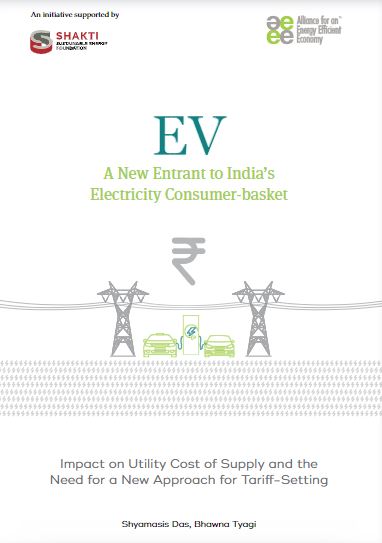
Electrification of vehicles in India is still at its early stage. Both the battery electric vehicles (BEVs) and plugin hybrid electric vehicles (PHEVs) only contribute to 0.06% of India's total car market through 2017.
India has two categories of electric cars, based on their range and battery capacity. The current Indian e-4W market is dominated by cars with a range of 100-200 km and a lower battery pack capacity. This study aims to facilitate the planning and establishment of public e-4W charging infrastructure in Indian cities.
Like every year, the Renewables Global Status Report (GSR) has been launched to present the latest data and facts on renewable energy policies, markets and investments. This year its quite different from previous year
The climate bill that Germany passed in December 2019 sets yearly limits to the amount of greenhouse gas emissions that each of its economic sectors may release over the next decade. The limit for the transport sector in 2030 is 95 million tonnes of CO2 equivalents.
Transport for Under Two Degrees – The Way Forward
2020
Author(s): Hochfeld C, Pützschler M, Wanko M, Jung A, Enskat M, Hörtner C, Mettke C, Uhl J, Major M , Sohm S, Wolff C, Loane M
By adopting the 2030 Climate Action Plan including a CO2 pricing scheme for the transport sector, the Federal Government has paved the way for meeting its climate targets for 2030. Germany has taken on a pioneering role in the global energy transition – which represents the efforts made and results achieved on renewable energy expansion and energy efficiency.
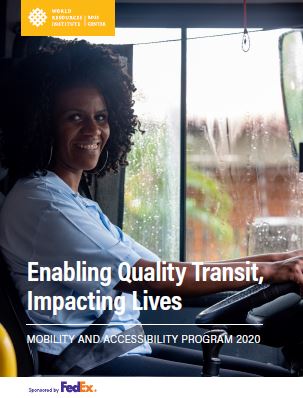
More than ever before, cities and their surroundings are centers of opportunity and innovation. As humanity urbanizes in record numbers, challenges of enhancing access, mitigating congestion, elevating safety, and improving air quality become essential needs to provide access to opportunities.

Sustainable Transport for Human Development, Human Transport for Sustainable Development
2020
Author(s): Laake Thomas V
This report was produced by Laake, a participant of the Young Leaders in Sustainable Transport in 2019. This article puts forward the argument that a clearer assessment of the respective benefits and downsides of active transport and motorisation is central to achieving sustainable and inclusive development.
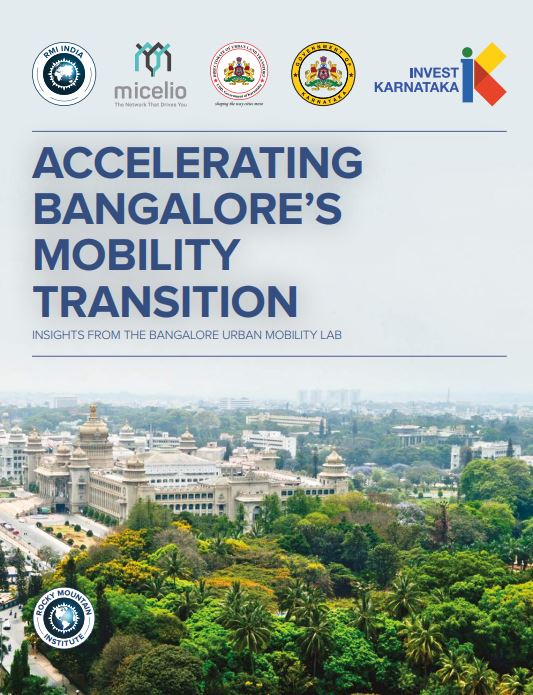
Accelerating Bangalore’s Mobility Transition
2020
Author(s): Rocky Mountain Institute, RMI India, Micelio
Cities across India are witnessing rapid urbanization and growing mobility demand. Developing and deploying shared, clean, and citizen-centric mobility solutions will be critical to ensure this demand is met in a sustainable manner that provides safe, accessible, and reliable transportation for citizens.