



Knowledge Hub

Charging Forward: A Toolkit for Planning and Funding Urban Electric Mobility Infrastructure
2023
Author(s): Joint Office of Energy and Transportation
Urban communities, metropolitan planning organizations (MPOs), transportation providers, businesses, and property owners and developers can use the toolkit to identify key partners for an electric charging project, take advantage of relevant planning tools, and identify available funding or financing to help make that project a realit
This insight report highlights the experiences and perspectives of 11 industrial clusters that are a part of the Transitioning Industrial Clusters towards Net Zero initiative. These clusters, despite facing unique geographical, infrastructure, policy and sectoral challenges, have all developed comprehensive strategies to rapidly and equitably decarbonize their operations.
Case study: Electrification of an early-adopter fleet in Canada
2023
Author(s): Arriaga C, Brito J, Buysse C, Sharpe B
This case study explores the feasibility of a Canadian small business acquiring a medium-duty battery electric van instead of an internal combustion engine vehicle. To understand how the business will be affected, the analysis predicts the daily driving strategy, including charging locations and charging time, and estimates operational costs. The study also includes a return-on-investment analysis.
Data for the city of tomorrow: developing the capabilities and capacity to guide better urban futures
2023
Author(s): World Economic Forum
While cities like Bogota, Helsinki and Singapore are actively harnessing the potential of data to improve services, few agree on how different types of cities should aggregate, analyse and apply data to their immediate issues and strategic challenges. Indeed, concern among rights activists and residents is growing about the way personal data is being gathered and used, including by urban authorities. This report offers a look at what data exists, and how cities can take the best next steps to make the most of it.

Advantage for Pioneers: How Market Developments and Electrification Strategies Affect Car Manufacturers’ Profit Prospects
2023
Author(s): Agora Verkehrswende
The focus of this study is the question of what financial impact the switch to electromobility will have on the strength of automobile manufacturers.

Energy Management Optimization in Smart Railway Stations with the Ability to Charge Plug-In Hybrid Electric Vehicles
2023
Author(s): Mohajer K B, Mousavi G S M
This study suggests a framework for energy efficiency optimization for intelligent train stations that offer parking space for plug-in electric vehicle charging, renewable energy sources, and regenerative braking energy.

Thermal Management Optimization Strategy of Electric Vehicle Based on Dynamic Programming
2023
Author(s): Lian Y, Ling H, Zhu J, Lv J, Xie Z
In this paper, a vehicle thermal management control approach based on dynamic programming was created in order to better access the energy-saving potential of the thermal management system of pure electric vehicles and to increase the driving range in low-temperature environments.
The global automaker rating 2022: who is leading the transition to electric vehicles?
2023
Author(s): Shen C, Fadhil I, Yang Z, Searle S
Evaluates how the world’s top 20 light-duty vehicle manufacturers stack up in the transition to electric vehicles by rating them on 10 custom-built metrics that reflect their actions and plans.
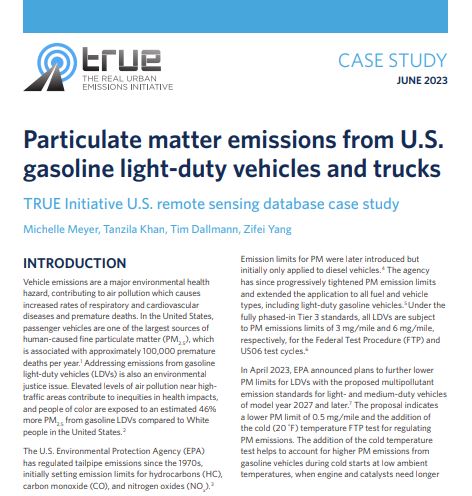
Particulate matter emissions from U.S. gasoline light-duty vehicles and trucks: TRUE Initiative U.S. remote sensing database case study
2023
Author(s): Meyer M, Khan T, Dallmann T, Yang Z
New analysis finds increased levels of particulate matter tailpipe emissions from light-duty gasoline cars and trucks across the United States since 2015
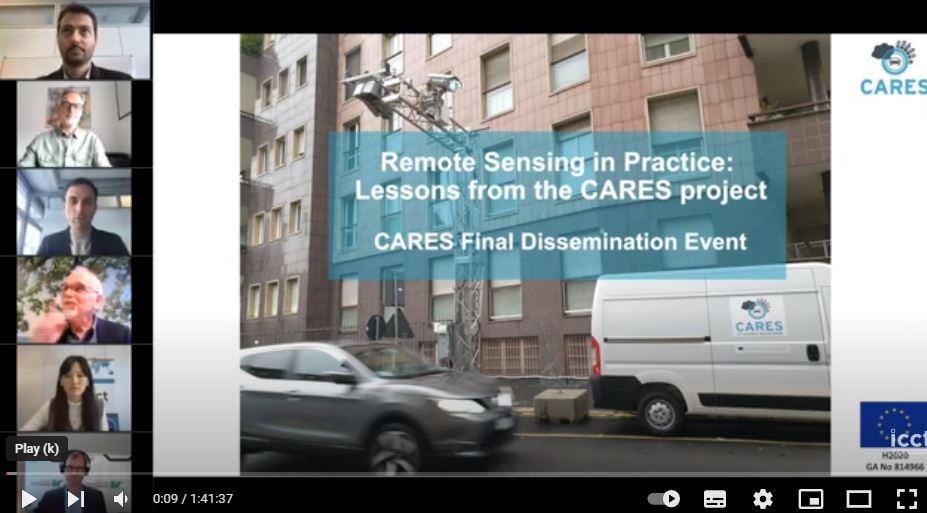
Remote Emission Sensing in Practice: Lessons from the CARES Project
2023
Author(s): International Council on Clean Transportation
The webinar presented key results of the CARES project and explained and discussed the potential use cases for monitoring as well as enforcing improvements in real-world road vehicle emission levels.