


Research Papers/Articles

State of Charge Estimation and Error Analysis of Lithium-Ion Batteries for Electric Vehicles Using Kalman Filter and Deep Neural Network
2022
Author(s): Rimsha, Murawwat S, Gulzar M M, Alzahrani A, Hafeez G, Khan F A, Abed A M
This research aims to propose an Equivalent Circuit Model (ECM) based on Kalman filtering method and a data-driven technique, Deep Feed-Forward Neural Network (DFNN), for accurate SOC estimation of Electric Vehicle Battery (EVB).

Electric Two-Wheeler Market Growth in Vietnam: An Overview
2022
Author(s): Le H, Posada F, Yang Z
The study surveys the market for electric two-wheelers in Vietnam and examines the country’s potential to become a leader in production of electric two-wheeler vehicles.
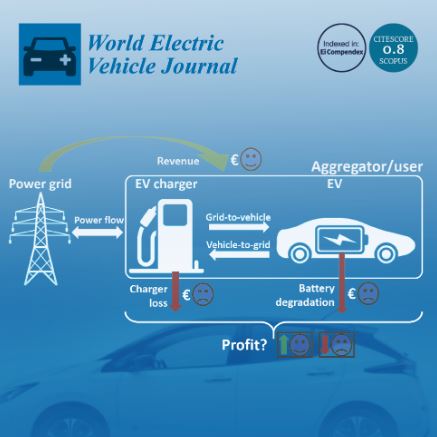
Smart Tool Development for Customized Charging Services to EV Users
2022
Author(s): Galbis AZ, García MA, García AIM, Karatzas S, Chassiakos A, Lazari V, Ageli O.
E-mobility is a key element in future energy systems. The capabilities of electric vehicles (EVs) are many and vary since they can provide valuable system flexibility services, including the management of congestion in transmission grids.

Identification and Evaluation of Barriers in Implementation of Electric Mobility in India
2022
Author(s): James AT, Kumar G, Pundhir A, Tiwari S, Sharma R, James J
Transportation is the primary source of greenhouse gases, which are mostly contributed by fossil fuel-driven automobiles. The entire world is now focusing on reducing the dependency on fossil fuels and switching to using electric vehicles.
Integrating Refrigerants with Low Global Warming Potential into India’s Light Vehicle Fuel Efficiency Standards
2022
Author(s): Deo A, German J, Callahan J
This study analyzes potential reductions in greenhouse gas emissions from using alternative refrigerants with low global warming potential and more efficient air conditioning systems in vehicles in India.
A Review of Critical State Joint Estimation Methods of Lithium-Ion Batteries in Electric Vehicles
2022
Author(s): Wen C, Xu Q, Chen M, Xiao Z, Wen J, Luo Y, Zhao X, Liang Y, Liang K.
Battery state of charge (SOC), state of health (SOH), and state of power (SOP) are decisive factors that influence the energy-management system (EMS) performance of electric vehicles. However, the accurate estimation of SOC, SOH, and SOP remains challenging due to the high nonlinearity of the battery dynamic characteristics and the strong coupling among the states
Technical Feasibility of Heavy-Duty Battery-Electric Trucks for Urban and Regional Delivery in Germany—A Real-World Case Study
2022
Author(s): Link S, Plötz P.
This case study aims to assess the technical feasibility of urban and regional delivery in Germany based on real-world and per-vehicle operational data that feed into an energy simulation with Monte-Carlo modeling.
Where to Charge Electric Trucks in Europe—Modelling a Charging Infrastructure Network
2022
Author(s): Speth D, Sauter V, Plötz P.
The European Union plans to build a fast charging network for trucks to decarbonize road freight transport. This paper presents two scenarios covering European highways with charging stations at regular intervals every 50 or 100 km along the most important highways.
Potential of Load Shifting in a Parking Garage with Electric Vehicle Chargers, Local Energy Production and Storage
2022
Author(s): Castellucci V, Wallberg A, Flygare C.
This article provides a case study based on a real-world parking garage with a smart grid infrastructure called Dansmästaren. The analysis shows how renewable energy sources, energy storage technologies, and smart charging of electric vehicles can smooth out the load curve of the parking garage and relieve the electric grid during peak hours.
Effects of the Incorporation of Electric Vehicles on Protection Coordination in Microgrids
2022
Author(s): Saldarriaga-Zuluaga SD, López-Lezama JM, Zuluaga Ríos CD, Villa Jaramillo A.
Electric vehicles (EVs) would connect to the grid using clean, renewable electricity; however, the interconnection between EVs and the grid brings about new challenges for traditional power systems. Plug-in hybrid and plug-in EVs have become more prevalent in the system; therefore, their impacts and benefits are also of concern.