



Knowledge Hub

Quantifying Electric Vehicle Mileage in The United States
2023
Author(s): Zhao L, Ottinger E R, Yip A H C, Helveston J P
This study delivers comprehensive, high-resolution estimates of annual vehicle miles traveled (VMT) in the United States for battery electric vehicles (BEVs), plug-in hybrid electric vehicles (PHEVs), hybrid electric vehicles (HEVs), and conventional gasoline vehicles (CVs) using odometer readings from 12.5 million used cars and 11.4 million used sport utility vehicles (SUVs) listed between 2016 and 2022

Hierarchical Eco-Driving Control for Plug-In Hybrid Electric Vehicles under Multiple Signalized Intersection Scenarios
2023
Author(s): Lei Z, Cai J, Li J, Gao D, Zhang Y, Chen Z, Liu Y
This study proposes a dynamic inverse hierarchical optimization method, which incorporates traffic-signal phase and timing as well as road data, to plan economic velocity and improve PHEV energy consumption.
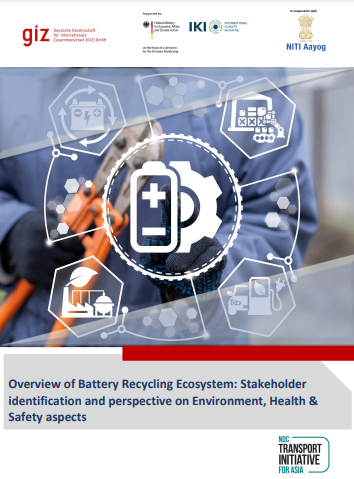
Overview of Battery Recycling Ecosystem: Stakeholder identification and perspective on Environment, Health & Safety aspects
2023
Author(s): Sinha S J (NITI Aayog), Teja T (NITI Aayog), Sharma G (NITI Aayog), Mandal A (Deloitte India), Dikshit C (Deloitte India), Singha H (Deloitte India), Parihar A (Deloitte India), Tripathy A (Deloitte India), Mohapatra P (Deloitte India), Jain P (Deloitte India), Mishra S (Deloitte India), Bhagyasree (GIZ), Zhimomi T (GIZ)
The report focuses on providing an overview of battery recycling ecosystem from the perspective of stakeholder identification, risk identification, and its mitigation measures.

Multi-Level Coordinated Control of Islanded DC Microgrid Integrated with Electric Vehicle Charging Stations with Fault Ride-Through Capability
2023
Author(s): Faraji H, Khorsandi A, Hosseinian S H
This paper presents an integrated control framework for islanded DC microgrid (MG) with electric vehicle (EV) charging stations, energy storage unit, and AC/DC loads.
Uncertainty Compensation with Coordinated Control of Evs and DER Systems in Smart Grids
2023
Author(s): Nasab M A, Zand M, Dashtaki A A, Nasab M A, Padmanaban S, Blaabjerg F, Vasquez Q J C
In this article, the problem of planning the flexibility of electric vehicle charging and discharging to coordinate with wind and solar production and to compensate for the uncertainty of these resources has been solved using the CPLEX solver.
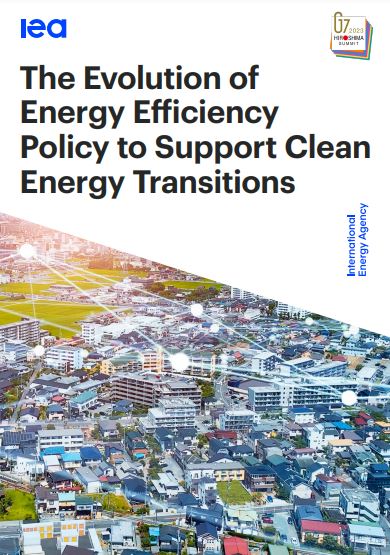
The Evolution of Energy Efficiency Policy to Support Clean Energy Transitions
2023
Author(s): International Energy Agency
This report outlines the ways in which energy efficiency policies can evolve to deliver the energy system that is needed for rapid change now and for the energy system of the future.

This master thesis report has studied several methods to improve the energy consumption of an electric vehicle equipped with two permanent magnet synchronous motors. Two driving torque distribution maps are developed based on efficiency map and load transfer, respectively. The drive torque distribution map based on the efficiency map shows up to 8.94% energy saving.

Powering the Future of Transportation: Creating an Ethical, Sustainable Battery Supply Chain
2023
Author(s): Plug In America
This report focuses on strategies, policies, and programs that industry and government can develop to ensure that supply chains for EVs and their batteries are secure, circular, and reduce the need for mining virgin minerals, thus reducing adverse impacts on the planet and its people.
Including Research on Optimization Planning of Multi-Energy Complementary Electric Vehicle Charging Station
2023
Author(s): Cai R, Huang K, Zheng S, Liang J, Dong X
This study first suggests a Voronoi diagram-based charging station service division strategy, then an M/G/K queuing model-based technique for assessing the charging capacity of the EV charging station. The goal of these approaches is to support the development of a low-carbon economy.
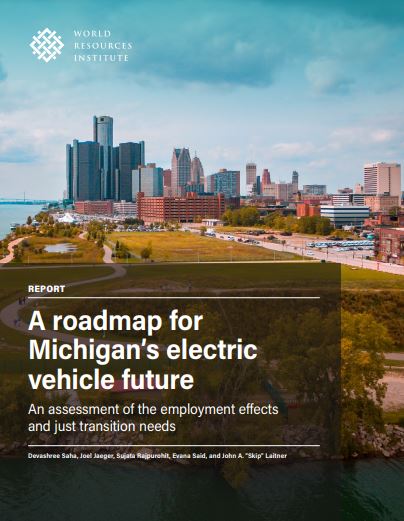
A roadmap for Michigan’s EV future: an assessment of the employment effects and just transition needs
2023
Author(s): Saha D, Jaeger J, Rajpurohit S, Said E, Laitner JAS
This report discusses the employment effects of Michigan’s auto industry shifting from internal combustion engine vehicle manufacturing to electric vehicle manufacturing, with a focus on supporting a just transition for workers and communities. Using economic modeling from 2024 to 2040, the report highlights the importance of Michigan seizing the opportunities electrification presents. Additionally, it presents policy recommendations to help Michigan attract and retain good jobs, support workers and ensure local communities benefit from the transition.