

Reports

As national freight activity grows about five-fold by 2050, India’s freight transport ecosystem has a critical role to play in supporting India’s ambitious priorities. Some of these include international competitiveness, job growth, urban and rural livelihoods, and clean air and environment.

Bridging Policy and Innovation: Using Regulatory Sandbox to Drive New Mobility Innovations
2021
Author(s): Ola Mobility Institute
Mobility is transcending the traditional notion of traveling, hurtling towards automation, IoT and MaaS among other things. Technologies and business models are constantly evolving to keep pace with changing preferences and solutions.

On the Electrification Path: Europe’s Progress Towards Clean Transportation
2021
Author(s): Wappelhorst S
This policy paper has been developed as part of the EAFO 2.0 contract for the European Commission. It highlights the current uptake of electric passenger cars – battery electric vehicles (BEVs) and plug-in hybrid electric vehicles (PHEVs) – and the rollout of the relevant public recharging infrastructure network.

The Innovative Mobility Landscape: The Case of Mobility as a Service
2021
Author(s): International Transport Forum (ITF)
This report reviews changes in today’s urban mobility landscape and the potential of Mobility as a Service (MaaS) to improve travel in cities. It assesses essential governance and regulatory challenges that stakeholders must address to create a healthy ecosystem for Mobility as a Service which aligns with societal objectives and delivers clear benefits to people.

Accelerating Citizen Centric Energy Transition 2021: The India Story
2021
Author(s): Ministry of New and Renewable Energy (MNRE), Government of India
India’s biggest asset as a global energy transition advocate and change agent is its own example. India is the only G20 nation whose actions are consonant with a sub 2°C rise in global temperatures. Its achievements in energy transition is way beyond its NDCs.

This Knowledge Brief gives an introduction to battery trolleybuses with In Motion Charging, ‘the reinvented trolleybus 2.0’, and provides a specific focus on the infrastructural needs and challenges.
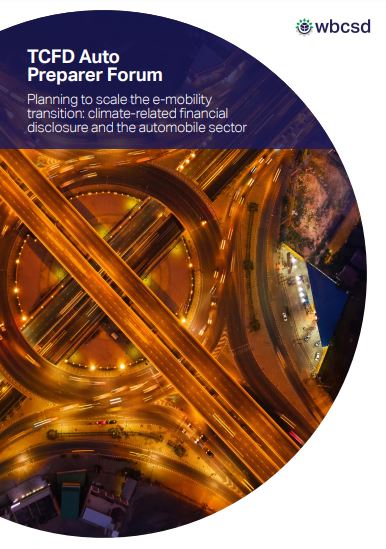
Planning to scale the e-mobility transition: climate-related financial disclosure and the automotive sector
2021
Author(s): World Business Council For Sustainable Development (WBCSD)
In this report, the Forum provides a commentary on key areas of the TCFD’s recommendations based on members’ individual experience of implementing them. The commentary is supported by examples of effective practice that are consistent with the recommendations. The report also includes proposals for how disclosures might be enhanced over time. Given its publication date, examples are taken from a mix of Forum members’ 2019 and 2020 Annual Reports, Sustainability Reports and other public communications such as investor presentations.

The Global EV Outlook is an annual publication that identifies and discusses recent developments in electric mobility across the globe. It is developed with the support of the members of the Electric Vehicles Initiative (EVI).

Large-scale Bus Electrification: The Impact on Business Models
2021
Author(s): International Association of Public Transport (UITP)
This Knowledge Brief outlines the impact of large-scale electrification trends on the sector and the effect on operators’ business models. The change is significant enough to alter funding models and financing tools and a city’s governance structure.
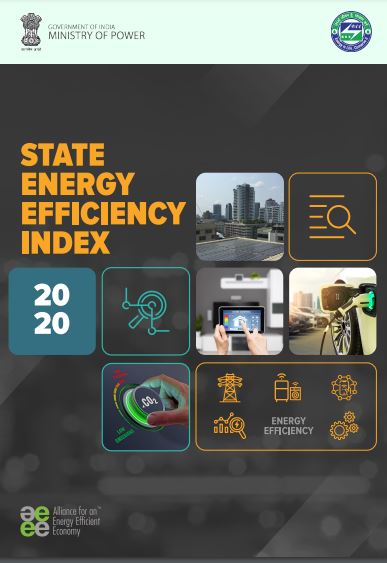
State energy efficiency index 2020
2021
Author(s): Bureau of Energy Efficiency, Alliance for an Energy Efficient Economy
Karnataka has topped the State Energy Efficiency Index 2020 (SEEI), scoring 70 points out of 100 on the back of several initiatives to improve energy efficiency in the state. The Ministry of Power’s (MoP) Energy Efficiency Index ranks states on their performance across 68 indicators covering buildings, industry, municipalities, transport, agriculture, distribution companies (DISCOMs), and cross-sector initiatives. The index assesses the states’ performance on policy and regulation, financing mechanism, institutional capacity, adoption of energy efficiency measures, and energy savings.