

Reports
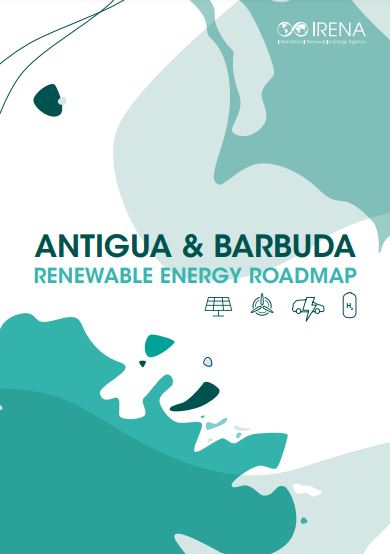
Antigua and Barbuda: renewable energy roadmap
2021
Author(s): International Renewable Energy Agency
The Roadmap charts a path for the Government of Antigua and Barbuda, providing options for achieving a 100% renewable energy share in both the power and transport sectors.

World energy outlook special report: the role of critical minerals in clean energy transitions
2021
Author(s): International Energy Agency
This World Energy Outlook Special Report provides the most comprehensive analysis to date of the complex links between these minerals and the prospects for a secure, rapid transformation of the energy sector.

Study of electric mobility development in Viet Nam [Nghiên cứu phát triển phương tiện giao thông điện tại Việt Nam]
2021
Author(s): Tue DD, Tuan LA, Lien NTY
This assessment study aims to identify current context, challenges, and opportunities with regards to electric mobility development in order to develop and improve the regulatory framework at both national and local levels.

Opportunities and pathway to decarbonize China’s transportation sector during the fourteenth five-year plan period and beyond
2021
Author(s): Jin L, Shao Z, Mao X, Miller J, He H, Isenstadt A
The study provides China with a technical foundation for consideration of climate goals during the 14th Five-Year-Plan (FYP) period (2021-2025) and over the long term.

Analysis of Heavy-duty Vehicle Fuel Efficiency Technology Uptake in California and Canada
2021
Author(s): Sharpe B, Schaller D
This study analyzes policies that California, the United States, and Canada have enacted to promote reduced GHG emissions from heavy-duty trucks, how these policies have impacted technology deployment, and lessons that Canada can take as it evaluates policy options to accelerate the deployment of fuel- and GHG-reduction technologies in its trucking fleet.
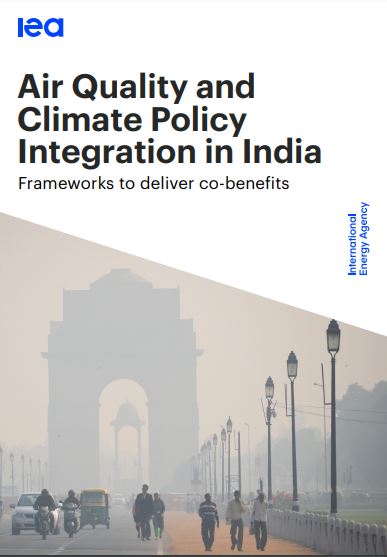
Air quality and climate policy integration in India; frameworks to deliver co-benefits
2021
Author(s): International Energy Agency
This report shows that well designed, coherent policy packages can deliver such synergies if properly implemented. In order to demonstrate co-benefit potential, it provides quantitative analysis that presents the ways in which flagship energy policies can contribute to both air pollution reduction and climate change mitigation in tandem.
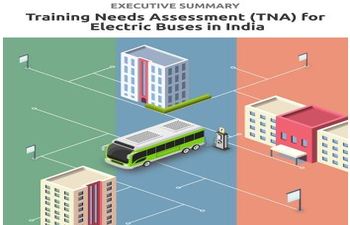
Training Needs Assessment (TNA) for Electric Buses in India: Executive Summary
2021
Author(s): Deutsche Gesellschaft für Internationale Zusammenarbeit (GIZ) GmbH
Under SMART-SUT project, GIZ has concluded a National level study on “Training Needs Assessment (TNA) for Electric Buses in India”. Under SMART-SUT project, GIZ has concluded a National level study on “Training Needs Assessment (TNA) for Electric Buses in India”.
Training Needs Assessment for Electric Buses in India: Volume I - Identification of Training Needs
2021
Author(s): Deutsche Gesellschaft für Internationale Zusammenarbeit (GIZ) GmbH
This volume identifies clear training needs in Public Transport Authorities (PTAs) across e-Bus life cycle functions, various departments, and hierarchies.
Training Needs Assessment for Electric Buses in India: Volume II - E-Bus Training Programme Structure
2021
Author(s): Deutsche Gesellschaft für Internationale Zusammenarbeit (GIZ) GmbH
This report aims to prepare a detailed and organised training programme structure for Public Transport Authorities (PTAs). It identifies a total of eight e-Bus training modules across its life cycle stages – i.e. from fundamentals and safety; technology selection; financial planning and strategy; procurement; operations; monitoring and control; repair and maintenance; and end-of-life, scrapping, and recycling.
Training Needs Assessment for Electric Buses in India: Volume III - Proposed Organisational Structure for E-Buses
2021
Author(s): Deutsche Gesellschaft für Internationale Zusammenarbeit (GIZ) GmbH
The Volume – III report, considers two operating models for e-Buses, namely 1) PTAs (Public Transport Authorities) with all inhouse e-Bus operations and 2) PTAs (Public Transport Authorities with SPV structure and PPP model, requiring no Central Workshop.