Research Papers/Articles
Mid- and Long-Term Strategy Based on Electric Vehicle Charging Unpredictability and Ownership Estimation
2022
Author(s): Goh HH, Zong L, Zhang D, Liu H, Dai W, Lim CS, Kurniawan TA, Teo KTK, Goh KC
Predicting the charging load of electric vehicles (EVs) is critical for the safe and reliable operation of the distribution network. Analyzing an EV's random charging characteristics and the uncertainty associated with its development scale is vital to predict its charging load accurately.
Locating and Sizing Method of Electric Vehicle Charging Station Based on Improved Whale Optimization Algorithm
2022
Author(s): Cheng J, Xu J, Chen W, Song B
This research presents an Improved Whale Optimization Algorithm (IWOA) to solve the problem of poor accuracy and stability in optimizing the locating and sizing of nonconvex and nonlinear electric vehicle (EV) charging stations (CSs).
Photovoltaic–Electric Vehicles Participating in Bidding Model of Power Grid That Considers Carbon Emissions
2022
Author(s): Wen Y, Chen Y, Wang P, Rassol A, Xu S
The synergy of clean energy and electric vehicles (EVs) is highly relevant in achieving low-carbon development. To promote the coordinated development of EVs and photovoltaics (PV) under the background of open power selling, a PV–EV bidding model that considers carbon emissions based on the distributed storage and smart contract technology of a blockchain is proposed in this study.
Toward Supply Side Incentive: The Impact of Government Schemes on a Vehicle Manufacturer's Adoption of Electric Vehicles
2022
Author(s): Chen Z, Fan Z-P, Zhao X
Besides the consumer subsidy scheme, governments have recently implemented a hybrid scheme with an additional dual-credit scheme on the supply side. It is essential to understand the impact of this new practice on a vehicle manufacturer (VM) that provides gasoline vehicles (GVs) and/or electric vehicles (EVs) and the consumer and social welfare.
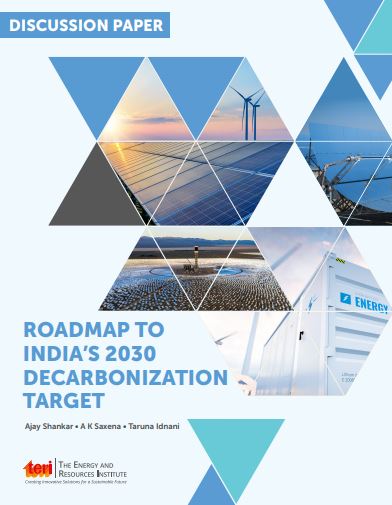
Roadmap to India’s 2030 decarbonization target
2022
Author(s): Shankar A, Saxena, A K, Idnani T
The share of renewables in total electricity generation is now over 10%, more than 70% of the country’s electricity was still generated by fossil fuels in 2021.At COP26, India announced the highly ambitious goal of decarbonizing energy to 50% and achieving 500 GW of fossil fuel free generating capacity by 2030. This was a very large increase above its Paris commitments, far more than expected. This study discusses the challenges and feasibility in achieving the ambitious 2030 targets.
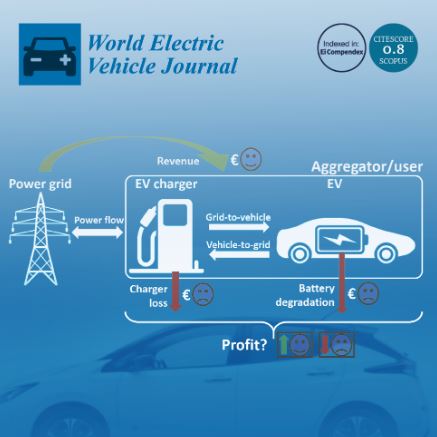
Pathways to Carbon-Free Transport in Germany until 2050
2022
Author(s): Gnann T, Speth D, Krail M, Wietschel M, Oberle S
This paper explored four pathways to a carbon-free transport sector in Germany in 2050 with foci on electricity, hydrogen, synthetic methane, or liquid synthetic fuels.

Improving Bankability of E-bus Procurement in India
2022
Author(s): World Bank
This report outlines some immediate opportunities for adjustments to reduce cost of contracting under GCC by around 10 to 15 percent. Those include: (i) removal of subsidy bank guarantee; (ii) adequate time for bid preparation; (iii) enhanced termination and Force Majeure clauses; (iv) adequate payment securities; (v) measures to enhance creditworthiness of the contracting authorities; and (vi) capping of penalties.

EV Charging Station Monitoring Framework—A Case Study of Croatia: Performance Analysis and Anomaly Detection Under Pandemic Situation
2022
Author(s): Grgic D, Podobnik V, Capuder T
In this paper, the authors analyse framework performance and key performance indicator (KPI) values during the pre-lockdown period, soft-lockdown period, and post-lockdown lift-off period to show how the pandemic situations and governmental lockdown regulations can impact EV grid performance and EV charging business.
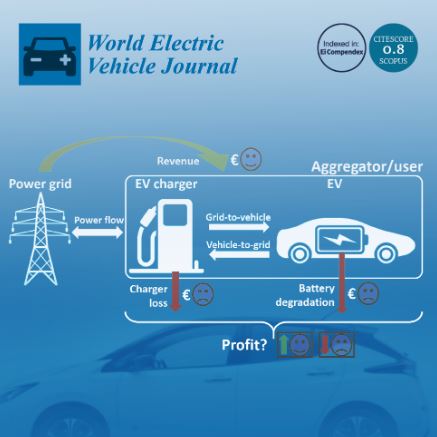
Research on the Influence of Liquid on Heat Dissipation and Heating Characteristics of Lithium-Ion Battery Thermal Management System
2022
Author(s): Zhang C, Huang J, Sun W, Xu X, Li Y.
A battery thermal management system (BTMS) with functions of heat dissipation and heating by using only one liquid and one structure was studied, and a design for a new type of thermal management device structure was proposed.
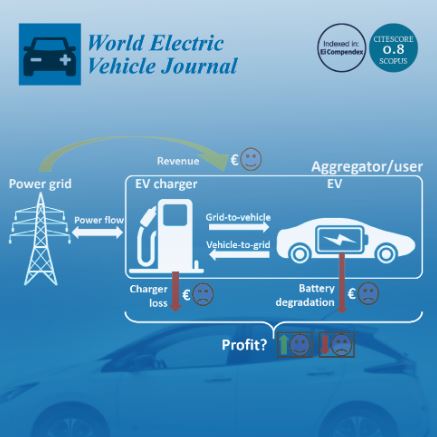
Efficient Multi-Phase Converter for E-Mobility
2022
Author(s): Sampath S, Rahiman Z, Chenniappan S, Sundaram E, Subramaniam U, Padmanaban S
This paper discusses a detailed analysis for reducing power loss and improving efficiency. In continuous conduction mode, the converters are tested with a constant duty cycle of 50%.