



Knowledge Hub

Method to Determine and Quantify Changes in Value Chains Caused by E-Mobility
2012
Author(s): Sihn W, Palm D, Gommel H, Tober W, Bauer C
Within the scope of this work, a methodology will be introduced that allows a forecast and quantification of the effects of electric mobility on vehicle-specific national value added chains.
 2020.JPG)
National Electric Mobility Mission Plan (NEMMP) 2020
2012
Publisher/Organisation: Ministry of Heavy Industries & Public Enterprises, Government of India
The National Electric Mobility Mission Plan (NEMMP) 2020 plan was launched by the Government of India in 2013 with the objective of achieving national fuel security by promoting electric and hybrid vehicles.
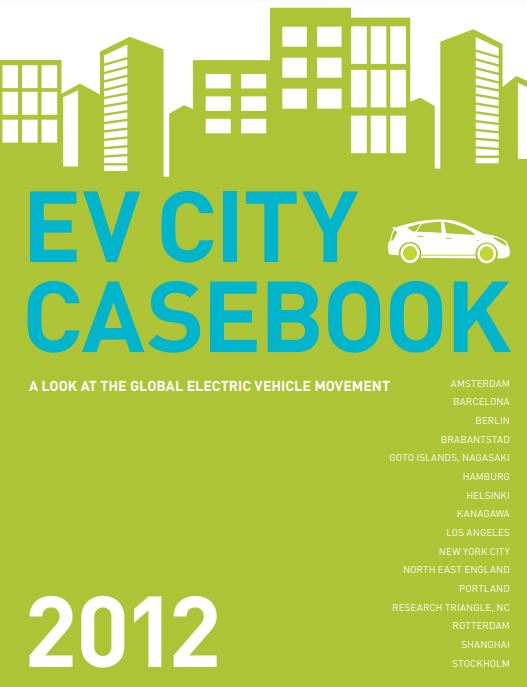
EV City Casebook: A Look at the Global Electric Vehicle Movement
2012
Author(s): Organisation for Economic Cooperation and Development, International Energy Agency, Rocky Mountain Institute, Clean Energy Ministerial.
The EV City Casebook presents informative case studies on city and regional EV deployment efforts around the world. These case studies are illustrative examples of how pioneering cities are preparing the ground for mass market EV deployment. They offer both qualitative and quantitative information on cities’ EV goals, progress, policies, incentives, and lessons learned to date.

Using Smartphones to Profile Mobility Patterns in a Living Lab for the Transition to E-mobility
2012
Author(s): Cellina F, Förster A, Rivola D, Pampuri L, Rudel R, Rizzoli AE
The diffusion of electric vehicles presently the most encouraging opportunity diminish the reliance on fossil fuel in the mobility sector. However, the transition to electric vehicles seems hindered by psychological and behavioural hurdle.

Plug-In Electric Vehicle Handbook for Electrical Contractors
2012
Author(s): National Renewable Energy Laboratory (NREL)
This handbook is designed to answer basic questions about PEVs and charging infrastructure and to point additional information one needs to participate in this EV fast-growing industry.
The study aims at analyzing the control domain in electric mobility and discussing the design of the controller that drives the motor, allowing its driving and braking, with the ability to regenerate braking energy for recharging the batteries. The system should be capable of working without speed or position sensors.
Routing EV Users Towards an Optimal Charging Plan
2012
Author(s): Bessler S, Grønbæk J
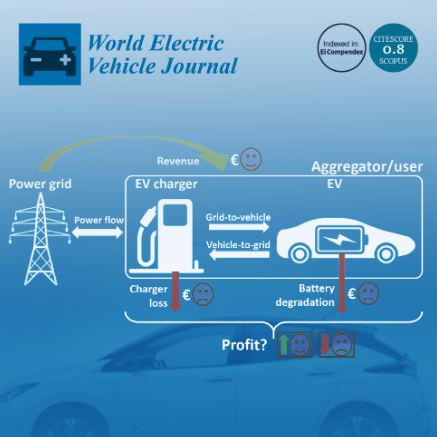
In this work the authors addressed two related aspects of e-mobility i.e. the logistic problem of finding a public charging station, and the charging energy balancing problem that affects both the grid provider and the user.
Reaching 10% Renewable Transportation Fuels in 2020 by Electric-Vehicles in Styria/Austria
2012
Author(s): Jungmeier G, Felberbauer K-P, Beermann M
Electric-vehicles have the potential for a significant substitution of diesel and gasoline vehicles, and contribute to a reduction of greenhouse gas (GHG) and particulate matter emissions. According to the European Renewable Energy Directive, the share of renewable transportation fuels should be 10% in 2020.
Governing and Innovation: The Transition to E-Mobility – A Dutch Perspective
2012
Author(s): Van Der Steen M, Van Deventer P, De Bruijn H, Van Twist M, Ten Heuvelhof E, Haynes KE, Chen Z
This is an essay approach to develop a discussion about the role government can play in stimulating electric vehicle (EV) diffusion, adoption and deployment in support of larger societal goals such as sustainability and urban livability.

In this paper, the results of a comprehensive analysis with different scenarios are summarized. The potential application of technologies and investments in new energy technologies were analyzed within existing frameworks and markets as well as new business models in new markets with different frameworks.