



Knowledge Hub

Do sparsely populated rural areas have the potential for the use of electric vehicles?
2014
Author(s): Mann A, Klopsch K, Bieker L, Wölki M
By 2020, one million electric cars shall be driving in Germany. Demonstration activities, fleet trials and pilot operations are performed in various cities around the world. However, do sparsely populated, rural areas also have the potential for the use of electric vehicles? In applying the example of Germany, this study recorded the current situation of households and their needs concerning mobility in small towns and rural regions.

Towards a Holistic Approach for Problems in the Energy and Mobility Domain
2014
Author(s): Lutzenberger M, Masuch N, Kuster T, Keiser J, Freund D, Voß M, Hrabia C-E, Pozo D, Fahndrich J, Trollmann F, Albayrak S
With the current rise of electric vehicles, it is possible to use those vehicles for storing surplus energy from renewable energy sources; however, this can be in conflict with providing and ensuring the mobility of the vehicle's user.
This study estimates the effects of the timing and intensity of policies and adds uncertainty about technological progress to the previous study’s analysis of uncertainty about the market’s response. The analyses presented in this report are based on Scenario 2 of the previous report, in which the ZEV standards are enforced through 2025 and continued at the 2025 level through 2030 and then ended.
Gas propulsion or e-mobility is the solution on the way of clean and carbon free road transportation
2014
Author(s): Domanovszky H
Most of the political revelations are speaking of the e-mobility as the cleanest and final solution on the way of vehicles technology improvements. On the other hand, too little attention is paid for the gas propulsion, however, it's technology is proved, the environmental benefits can be as much as at the e-mobility, but requires far less investment. Compared to the e-mobility, the gas fuelling is a viable solution of today.
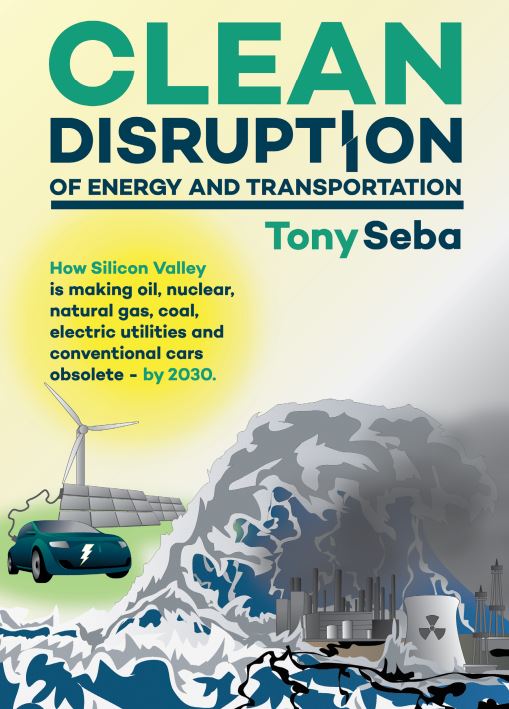
Clean Disruption of Energy and Transportation:How Silicon Valley Will Make Oil, Nuclear, Natural Gas, Coal, Electric Utilities and Conventional Cars Obsolete by 2030
2014
Author(s): Seba T
The industrial age of energy and transportation will be over by 2030. Maybe before. Exponentially improving technologies such as solar, electric vehicles, and autonomous (self-driving) cars will disrupt and sweep away the energy and transportation industries
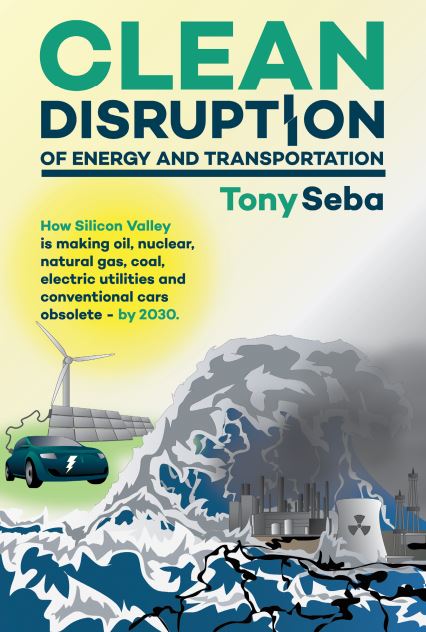
Clean Disruption of Energy and Transportation: How Silicon Valley Will Make Oil, Nuclear, Natural Gas, Coal, Electric Utilities and Conventional Cars Obsolete by 2030
2014
Author(s): Seba T
The industrial age of energy and transportation will be over by 2030. Maybe before. Exponentially improving technologies such as solar, electric vehicles, and autonomous (self-driving) cars will disrupt and sweep away the energy and transportation industries as we know it.

Design and Evaluation of In-Line Product Repair Strategies for Defect Reduction in the Production of Electric Drives
2014
Author(s): Colledani M, Coupek D, Verl A, Aichele J, Yemane A
Manufacturing companies are continuously facing the challenge of operating their manufacturing processes and systems in order to deliver the required production rates of high quality products of in...

Agent-based Simulation of Electric Taxicab Fleets
2014
Author(s): Bischoff J, Maciejewski M
Battery operated electric vehicles offer the opportunity to manage zero-emission car traffic at low operational costs. In this paper, a battery operated electric taxicab fleet is simulated in a small city scenario using the agent-based transport simulation MATSim.

Investigation of Electric Vehicle Grid Support Capability
2014
Author(s): Napierala A, Blasius E, Nickusch M, Schönrat H-J, Reich J, Krüger D, Binnenbruck R
The scope of the e-SolCar project aimed to enhance the urban grid structures to address the future challenges in photovoltaic generation and loads from e-mobility, the fleet consisting of about 41 battery electric vehicles (BEV) has been put into operation.

Road vehicles - Vehicle - To - Grid communication interface: Part 2 network and application protocol requirements
2014
Publisher/Organisation: Bureau of Indian Standards (BIS)
This Indian Standard (Part 2) which is identical with ISO 15118-2: 2014 ‘Road vehicles - Vehicle-to-grid communication interface - Part 2: Network and application protocol requirements’ issued by the International Organization for Standardization (ISO) was adopted by the Bureau of Indian Standards on the recommendation of the Electrotechnology in Mobility Sectional Committee and approval of the Electrotechnical Division Council.