



Knowledge Hub
Costs and Benefits of Motor Vehicle Emission Control Programs in China
2015
Author(s): Shao Z, Wagner DV
The vehicle population in China grew nearly sevenfold, from 16 million to 108 million, between 2000 and 2012, and this rapid pace will continue for the foreseeable future. This report focuses on means of controlling vehicle tailpipe emissions in the transportation sector.
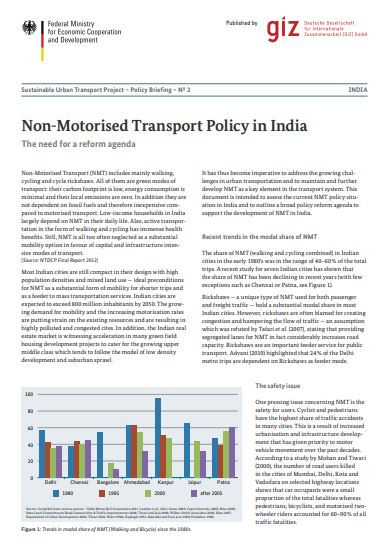
Non-Motorised Transport Policy in India
2015
Author(s): Deutsche Gesellschaft für Internationale Zusammenarbeit (GIZ) GmbH
This publication gives an overview of recent trends in the modal share of NMT in India, as well as a snapshot of current NMT policy in India and related issues such safety.
This book coins the term 'Mobility Revolution' and is a summary of the 'three zeroes' that are defining the future for the automobile industry

Benefits of Coordinating Plug-In Electric Vehicles in Electric Power Systems: Through Market Prices and Use-of-System Network Charges
2015
Author(s): Momber I
The thesis develops a model of an aggregation agent as the interface to the wholesale electricity generators, which is envisaged to be in charge of procuring energy in electricity markets, exposed to uncertainty in prices, fleet availability and demand requirements.
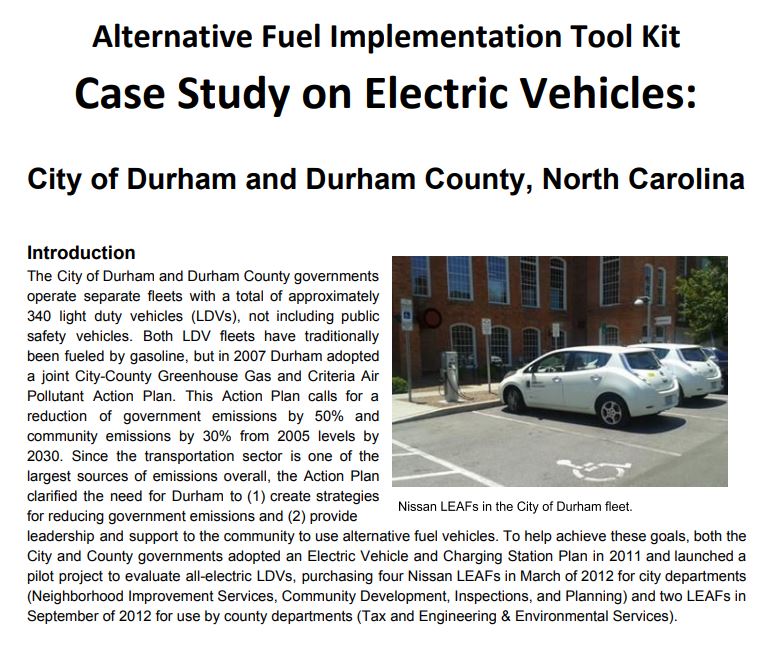
Case Study on Electric Vehicles: City of Durham and Durham County, North Carolina
2015
Author(s): NC Clean Energy Technology Centre
This case study details the action undertaken by the Durham City and County governments to help achieve the goals of Electric Vehicle and Charging Station Plan in 2011.
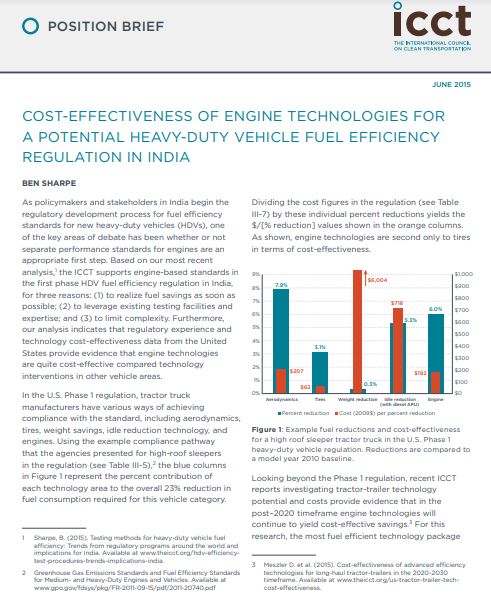
Cost-Effectiveness of Engine Technologies for a Potential Heavy-Duty Vehicle Fuel Efficiency Regulation in India
2015
Author(s): International Council on Clean Transportation (ICCT)
As policymakers and stakeholders in India begin the regulatory development process for fuel efficiency standards for new heavy-duty vehicles (HDVs), one of the key areas of debate has been whether or not separate performance standards for engines are an appropriate first step.
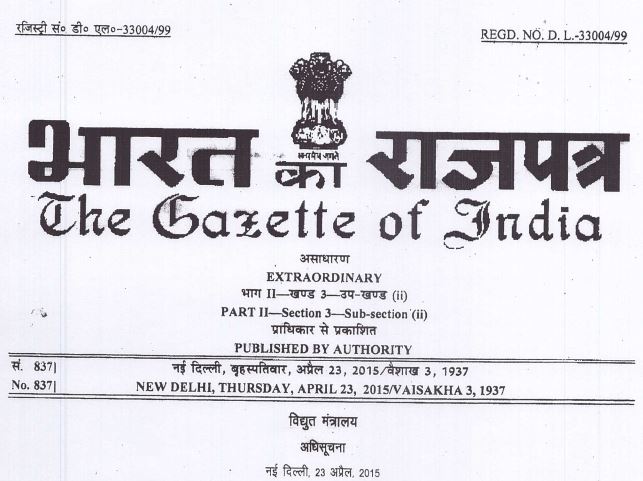
Fuel Economy Norms for Passenger Cars
2015
Publisher/Organisation: Bureau of Energy Efficiency (BEE), Ministry of Power
The central government in consultation with the Bureau of Energy Efficiency (BEE), specified the energy consumption standards for motor vehicles which are type approved under the Central Motor Vehicle Rules, 1989, with at least four wheels, other than quadricycles, used for the carriage of passengers and their luggage and comprising not more than 9 seats including the driver's seat.
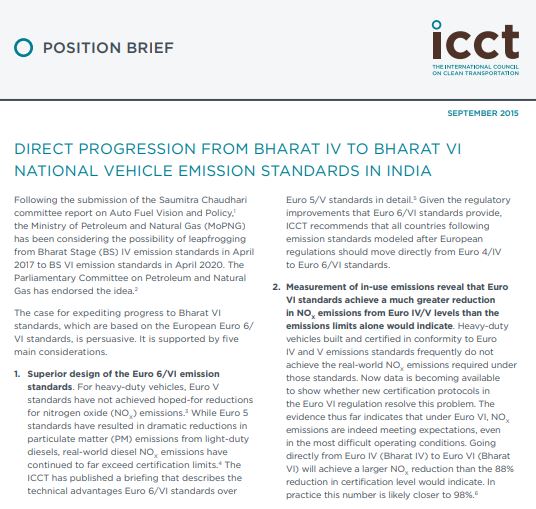
Direct Progression from Bharat IV to Bharat VI National Vehicle Emission Standards in India
2015
Author(s): International Council on Clean Transportation (ICCT)
Following the submission of the Saumitra Chaudhari committee report on Auto Fuel Vision and Policy, the Ministry of Petroleum and Natural Gas (MoPNG) has been considering the possibility of leapfrogging from Bharat Stage (BS) IV emission standards to BS VI emission standards.

Urban Transport and Related Emissions in Kolkata City
2014
Author(s): Chowdhury Indrajit R
The study area of this research work is confined within the limits of Kolkata Municipal Corporation area (KMC) covering total area of 187.33 sq.km.
The reduction of upstream greenhouse gas emissions from flaring and venting
2014
Author(s): Malins C, Searle S, Baral A, Galarza S, Wang H
A report for the European Commission describing regulatory options to allow crediting under the EU’s Fuel Quality Directive of upstream emission reductions from decreased venting and flaring of gas at oil drilling sites.