



Knowledge Hub
The briefing paper summarises the status of hybrid vehicle development in the United States. The analyses summarized in this briefing paper suggest that before 2025 full-function P2 hybrids are lik...

Road vehicles - Vehicle to grid communication interface: Part 3 physical and data link layer requirements
2015
Publisher/Organisation: Bureau of Indian Standards (BIS)
This Indian Standard (Part 3) which is identical with ISO 15118-3: 2015 ‘Road vehicles — Vehicle to grid communication interface — Part 3: Physical and data link layer requirements’ issued by the International Organization for Standardization (ISO) was adopted by the Bureau of Indian Standards on the recommendation of the Electrotechnology in Mobility Sectional Committee and approval of the Electrotechnical Division Council.
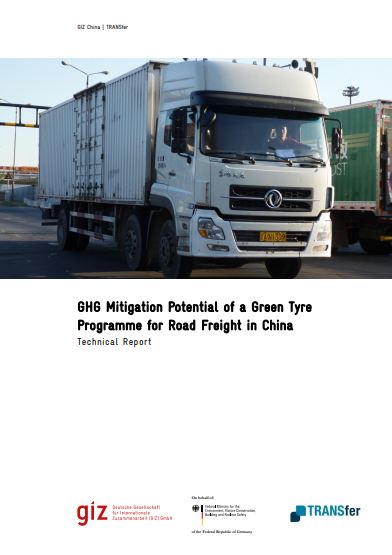
GHG Mitigation Potential of a Green Tyre Programme for Road Freight in China
2015
Author(s): Keller H, Dünnebeil F, Dongbo Y
This report provides an ex-ante assessment of fuel and GHG emission savings potential of low rolling resistance tyres in China’s commercial road freight sector resulting from China’s Green Tyre programme.
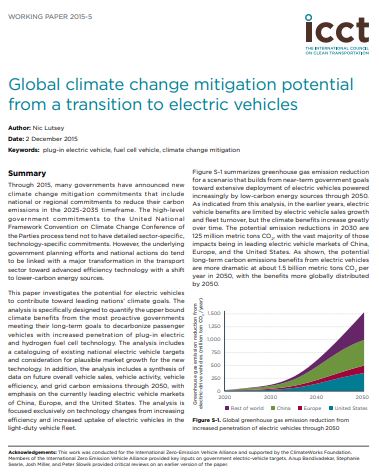
Global Climate Change Mitigation Potential From a Transition to Electric Vehicles
2015
Author(s): Lutsey N
This paper investigates the potential for electric vehicles to contribute toward leading nations’ climate goals. The analysis includes a cataloguing of existing national electric vehicle targets and consideration for plausible market growth for the new technology.
Final G.S.R. notification regarding Smoke test and Bio-CNG
2015
Publisher/Organisation: Ministry of Road Transport & Highways, Government of India
This draft document of Central Motor Vehicles (10th Amendment) Rules, 2015 was published by the Central Government to amend the Central Motor Vehicles Rules, 1989 with substitution in Clause (ii) of Sub-rule (2) of rule 115 as mentioned in this document.
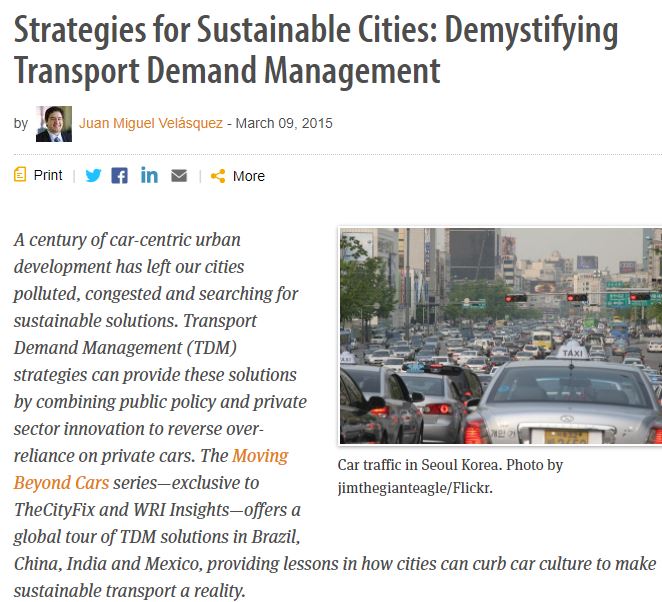
Strategies for Sustainable Cities: Demystifying Transport Demand Management
2015
Author(s): Velásquez Juan M
A century of car-centric urban development has left the cities polluted, congested and searching for sustainable solutions. Transport Demand Management (TDM) strategies can provide these solutions by combining public policy and private sector innovation to reverse over-reliance on private cars.
This report analyses synergies between low-carbon transport strategies and other economic, social and environmental objectives, as these can substantially increase the measure´s cost-effectiveness and help build political support for their implementation.
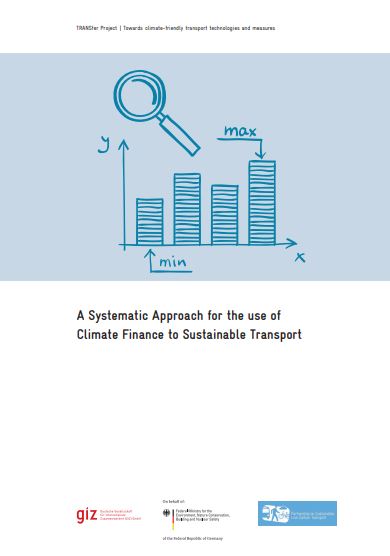
A Systematic Approach for the Use of Climate Finance to Sustainable Transport
2015
Author(s): Sayeg P, Allen H, Eckermann A, Huizenga C, Swann S
This document identifies how scarce International Climate Finance (ICF) can be systematically used to significantly scale-up sustainable, low-carbon transport infrastructure and services.
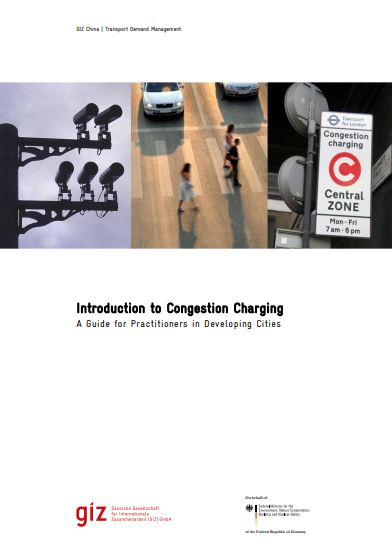
This guide provides information about congestion charging as a potential policy to mitigate congestion in cities. The report is intended for policy makers interested in implementing congestion charging in their cities.
U.S. efficiency and greenhouse gas emission regulations for MY 2018–2027 heavy-duty vehicles, engines, and trailers
2015
Publisher/Organisation: International Council on Clean Transportation (ICCT)
On June 19, 2015, the U.S. Environmental Protection Agency (EPA) and the U.S. Department of Transportation’s National Highway Traffic Safety Administration (NHTSA) jointly proposed new standards to reduce the fuel consumption and greenhouse gas emissions of new heavy-duty vehicles, tractors, trailers, and engines. The new Phase 2 regulations would be implemented from model years 2018 to 2027, building upon initial standards that cover model years 2014 to 2018. This policy update provides a summary of some key aspects of the proposed rules.