



Knowledge Hub
Evolution of Incentives to Sustain the Transition to a Global Electric Vehicle Fleet
2016
Author(s): Slowik P, Lutsey N
This report evaluates near-term electric vehicle market trends to apprise on the optimal evolution of governments’ electric vehicle incentive programmes to sustain market growth.

Incumbent Actors As Niche Agents: The German Car Industry and the Taming of the 'Stuttgart E-Mobility Region'
2016
Author(s): Späth P, Rohracher H, Von Radecki A
The Stuttgart region in Southwest Germany is traditionally perceived as the home base of the (German) car industry. This paper examines the locus of agency in such a 'transition arena'.
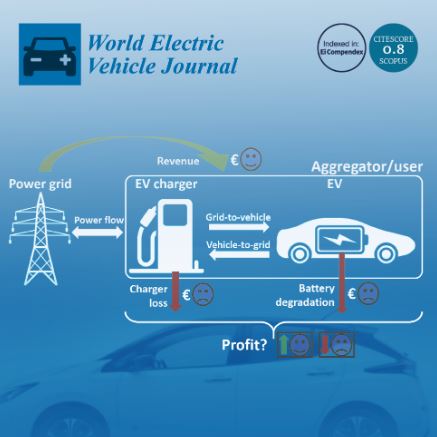
German Emobility User Survey 2015 – Reasons Why Even Electro Mobility Friendly People Are Not Buying Electric Cars!
2016
Author(s): Vogt M
In 2015 a survey among very electro mobility experienced people was conducted in Germany. This survey is part of the government founded “monitoring and impact research for the German showcase program for electro mobility”.

GO4SEM Recommendations to Support Innovation Links for Entering Global e-Mobility Markets
2016
Author(s): Alonso A, Coosemans T, Perlo P, Comoglio M, Otella M, Reeves C, Bierau F, Mueller B, Meyer G, Koehler U, Feyder C, Gallego I, Chefneux M, Zegers P, Deix S
GO4SEM (Global Opportunities for Small/medium enterprises in Electro-Mobility) aims to support the European small and medium enterprises (SMEs) in assessing emerging global markets by creating a framework that informs and advises on the business opportunities and market requirements for selected countries in Asia and America.
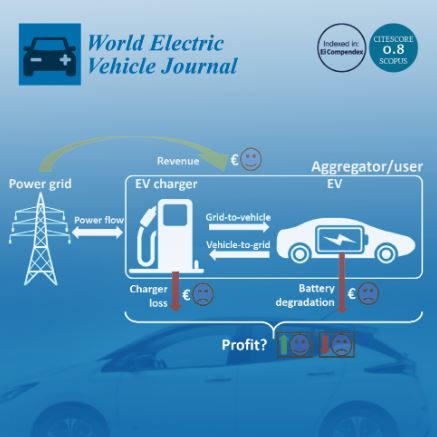
Bidirectional Charge- and Traction-System
2016
Author(s): Bruell M, Brockerhoff P, Pfeilschifter F, Feustel H-P, Hackmann W
The field of fast charging is diverse. Many solutions use dedicated additional costly components for each charging type. To push the E-Mobility market, a new system for charging is proposed comprising of E-Machine, Inverter and Boost DC/DC converter with a minimum of additional components.
Can Privacy Concerns for Insurance of Connected Cars be Compensated?
2016
Author(s): Derikx S, de Reuver M, Kroesen M
Internet-of-things technologies enable service providers such as insurance companies to collect vast amounts of privacy-sensitive data on car drivers. This paper studies whether and how privacy concerns of car owners can be compensated by offering monetary benefits.
Selected Results of the Scientific Accompanying Research of the E-Mobility Model Region “E-Pendler in Nieder/osterreich” (Austria)
2016
Author(s): Fasthuber D, Litzlbauer M
This paper describes selected results of the scientific accompanying research of the e-mobility model region "e-pendler in nieder¨osterreich" which is a co-financed model region of th...

Privacy Preservation for V2G Networks in Smart Grid: A Survey
2016
Author(s): Han W, Xiao Y
The privacy preservation problem in V2G networks could be more severe than in other parts of Smart Grid due to its e-mobility. In this paper, the authors analyze and summarize privacy preservation approaches which achieve various privacy preservation goals.

Charging Infrastructure Implementation for EVs - The Case of Berlin
2016
Author(s): Hardinghaus M, Blumel H, Seidel C
In order to launch and facilitate the uptake of e-mobility, many major cities are facing the challenge of supporting the development of a cost-efficient and demand-meeting system of charging points. To tackle this task, the city of Berlin performed an innovative procedure.

Transitions and Impacts of Passenger Car Powertrain Technologies in European Member States
2016
Author(s): Harrison G, Krause J, Thiel C
In this paper the authors seek to understand the relative impacts that policies and incentives focused on e-mobility may have on the technology market shares for passenger cars, and the associated fleet energy requirements and greenhouse gas emissions.