



Knowledge Hub
Transforming Transport to Ensure Tomorrow’s Mobility
2017
Author(s): Hochfeld C, Jung A, Klein-Hitpaß A, Maier U, Meyer K, Vorholz F
The 12 insights contained in this report outline the steps Germany will need to take to accomplish this transformation.
Developing a roadmap for the adoption of clean fuel and vehicle standards in Southern and Western Africa
2017
Author(s): Naré H, Kamakaté F
Provides a roadmap to support the implementation of comprehensive clean fuel and vehicle policies in Southern and Western Africa.
Karnataka Electric Vehicle Policy
2017
Publisher/Organisation: Commerce and Industries Department, Governmnet of Karnataka
Government of Karnataka with the intention to make Bengaluru the EV capital of India, formulated this policy to enable the growth of the electric mobility sector in the state.
The Prospects of Electric Vehicles in Cities without Policy Support
2017
Author(s): Nian V, Hari MP, Yuan J
The developments in electric vehicles (EVs) are driven by the agenda of cleaner and more efficient transport. The manufacturing cost of EVs are higher than that of internal combustion engine vehicles (ICEVs) mainly due to cost of batteries.
Improved heavy-duty vehicle fuel efficiency in India: benefits, costs and environmental impacts
2017
Author(s): Nihan K, Gopal AR, Sharpe B, Delgado O, Bandivadekar A, Garg M
Examines the benefits and costs of fuel-saving technologies for new heavy-duty vehicles (HDVs) in India over the next 10 years and, explores how various scenarios for the deployment of vehicles with these technologies will impact petroleum consumption and carbon dioxide (CO2) emissions over the next three decades.
The Islamic Development Bank (IsDB) and the Partnership on Sustainable, Low Carbon Transport (SLoCaT) released a new report on low carbon transport in IsDB member countries.
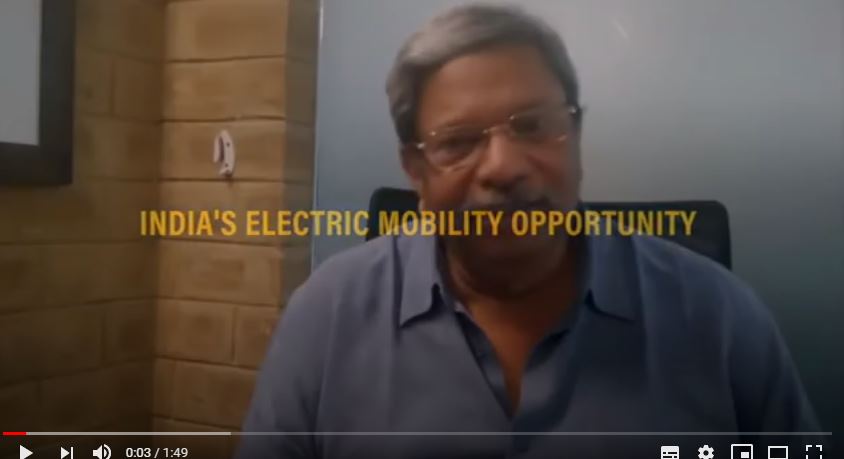
India's Electric Mobility Opportunity - OP Agarwal
2017
Author(s): World Resources Institute (WRI)
World Resources Institute India’s CEO, Dr. OP Agarwal speaks on India’s ambitions for full vehicle electrification, and the critical questions that need to be answered to make that possible.
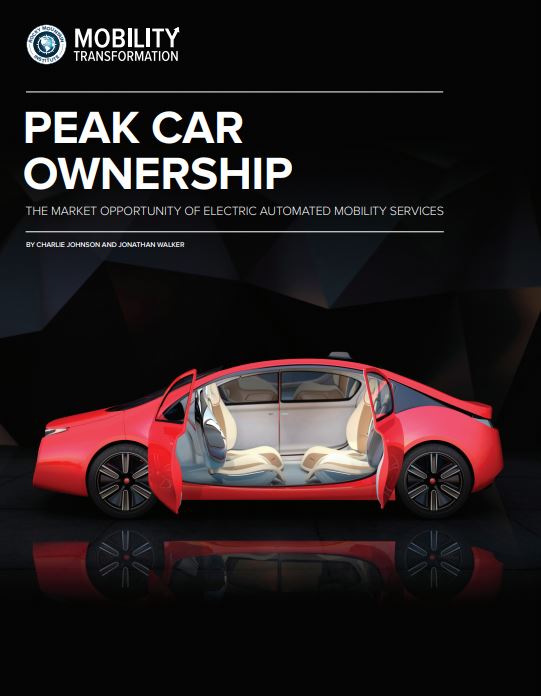
Personal vehicles have dominated the U.S. mobility system for nearly 100 years. But we are now in the formative stages of a powerful confluence of cultural, technological, and societal forces.
Proposed Avenues for NDCs
2016
Author(s): Gota S, Peet K, Windisch E, Bongardt D, Eichhorst U
NDCs represent a unique opportunity to increase bold mitigation and adaptation measures in transport and other sectors as all Parties to the UNFCCC are communicating their commitments to reduce emissions and increase resilience on sectorial scales in the context of the UNFCCC system.
The Paris Agreement on Climate Change adopted in December 2015 provides the transport sector with a clear sense of ambition and direction to a "net zero-emission" economy.