



Knowledge Hub

Marketing Challenges and Potential of Environment Friendly Vehicles in India
2017
Author(s): Kanwa A
Invention of wheel not only changed the way of transportation but also helped industrial revolution. Initially it was used by potters to make ceramics or earthen pots. Over the years it has found its utility in different ways. The mode of earlier transportation was based on animals such as donkeys, horses or oxen. The advent of wheel made transportation convenient, faster and increased its load carrying capacity. The initial human endeavor to create an automobile revolved around developing a car.
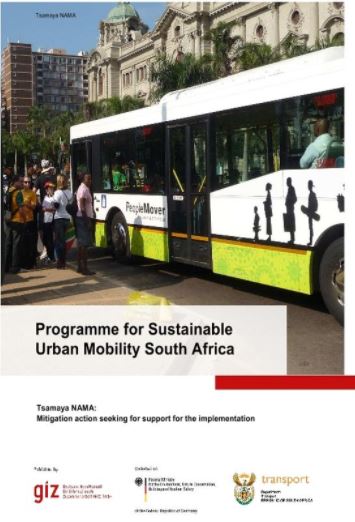
This documents describes the full concept of the Tsamaya NAMA in South Africa, including its objectives, planned measures and expected impacts, the support required, as well as the monitoring, reporting and verification (MRV) framework, and a financing concept.
All Electric Passenger Vehicle Sales in India by 2030
2017
Author(s): Abhyankar N, Gopal Anand R, Sheppard C, Park Won Y, Phadke Amol A
In India, there is growing interest among policymakers, planners, and regulators for aggressive electrification of passenger vehicles to battery electric vehicles (BEVs) by 2030.
Thermal Management of Electric Vehicle Battery Systems
2017
Author(s): Dinçer I, Hamut H S. , Javani N
This book provides the reader with the necessary information to develop a capable battery TMS that can keep the cells operating within the ideal operating temperature ranges and uniformities, while minimizing the associated energy consumption, cost and environmental impact.
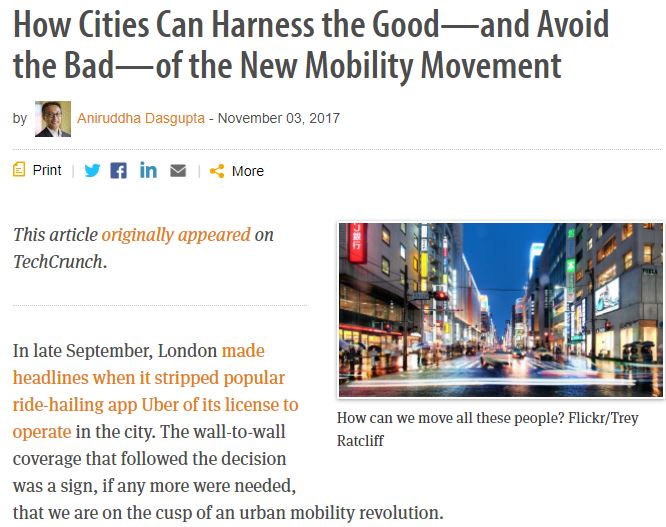
How Cities Can Harness the Good—and Avoid the Bad—of the New Mobility Movement
2017
Author(s): Dasgupta A
Ride-hailing systems, car- and bicycle-sharing networks, trip-planning apps and other innovative services that capitalize on advances in mobile communications, cashless payments and remote monitoring are increasing in popularity around the world.
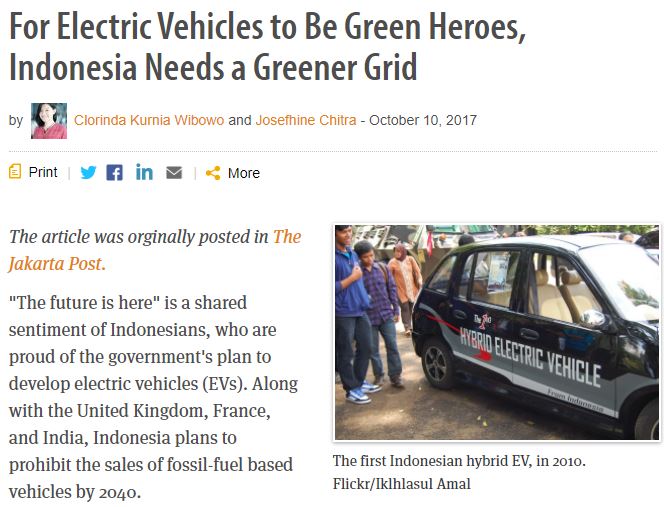
For Electric Vehicles to Be Green Heroes, Indonesia Needs a Greener Grid
2017
Author(s): Wibowo Clorinda K, Chitra J
"The future is here" is a shared sentiment of Indonesians, who are proud of the government's plan to develop electric vehicles (EVs).
2017 Global update: light-duty vehicle greenhouse gas and fuel economy standards
2017
Author(s): Yang Z, Bandivadekar A
Examines how the greenhouse gas and fuel economy standards have changed over time, how the auto industry in different regions has reacted, and discusses how the standards may evolve in the future.
Before introducing any mitigation policies, it is essential to thoroughly quantify the emissions inventories and impact costs. However, many developing countries do not have the capacity to quantify the emissions inventories and impact costs from the transport sector because of limited technical support, methodology, data, and awareness. This study was thus designed to help these cities and countries fill such gaps.
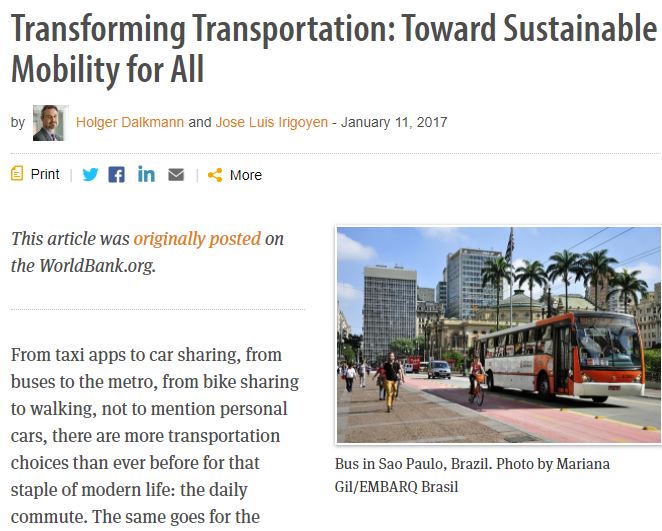
Transforming Transportation: Toward Sustainable Mobility for All
2017
Author(s): Dalkmann H, Irigoyen Jose L
In 2015 and 2016, the international community made a series of global commitments, which provide a clear vision of what sustainable transport looks like: the Sustainable Development Goals (SDG), the Paris Agreement on Climate Change, the New Urban Agenda at Habitat III, the Brasilia Declaration on road safety, and the Ashgabat Declaration.
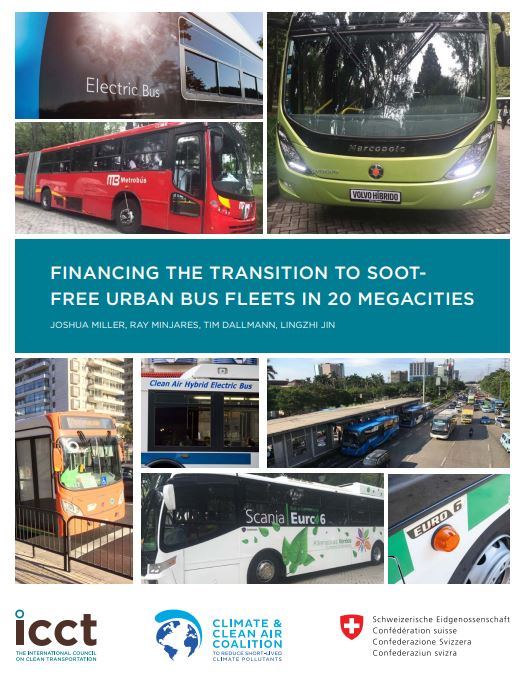
Financing the transition to soot-free urban bus fleets in 20 megacities
2017
Author(s): Miller J, Minjares R, Dallmann T, Jin L
Addresses the opportunities for facilitating, and the barriers to financing, the transition to soot-free urban bus fleets in 20 megacities.