



Knowledge Hub
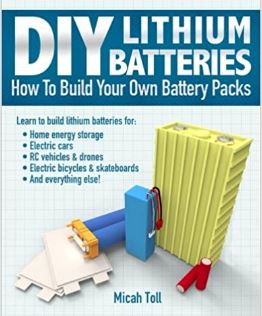
From choosing the right cells to designing a battery pack and building it yourself, this book includes all the steps for building safe, effective custom lithium battery packs.

Life Cycle Assessment of Lithium Sulfur Battery for Electric Vehicles
2017
Author(s): Deng Y, Li J, Li T, Gao X, Yuan C
Lithium-sulfur (Li-S) battery is widely recognized as the most promising battery technology for future electric vehicles (EV). To understand the environmental sustainability performance of Li-S battery on future EVs, here a novel life cycle assessment (LCA) model is developed for a comprehensive environmental impact assessment of a Li-S battery pack using a graphene sulfur composite cathode and a lithium metal anode protected by a lithium-ion conductive layer, for actual EV applications.
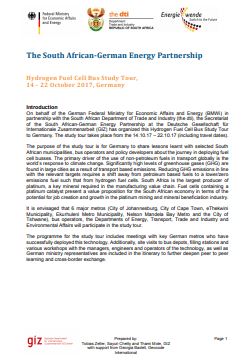
In the framework of the South African-German Energy Partnership, GIZ organized a Hydrogen Fuel Cell Bus Study Tour in 2017. The main purpose of the study tour was to share lessons learnt with selected South African municipalities, bus operators and policy developers about the journey in deploying fuel cell busses.
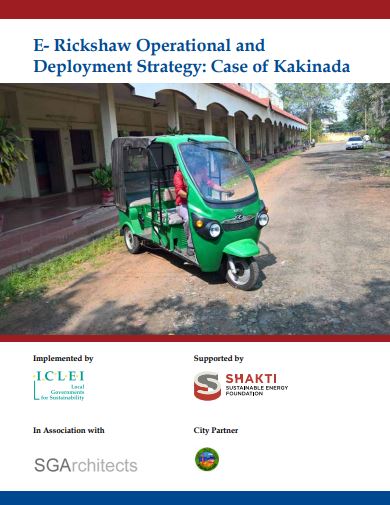
E- Rickshaw Operational and Deployment Strategy – Case of Kakinada
2017
Author(s): ICLEI – Local Governments for Sustainability, South Asia
This report, ‘E Rickshaw deployment plan and report: Kakinada’, is part of the output reports under the project ‘Supporting Smart Urban Mobility and Built Environment in Indian Cities’ under Grant Ref: G 15 SSEF-140 for the period of October 2015 to January 2017. The report highlights the various aspects of assessment undertaken by the project team to verify the feasibility of e-rickshaw deployment in the city. The report also highlights the required institutional frameworks, policy recommendations for e-rickshaw deployment and operational strategy.

India’s “leapfrog” vision of an electric, shared, and connected mobility system may result in a $300 billion domestic market for electric vehicle (EV) batteries between now and 2030, representing more than one-third of global EV battery demand over this time period, according to our new report.

Design and Analysis of Magnetic Resonance Based Wireless Charging System for Electric Vehicle
2017
Author(s): Kar Durga Prasanna
There is an evolving paradigm shift in transportation industry towards electrified vehicles, which are more environmental friendly, reliable, safer and smarter. Electric vehicles (EVs) are seen as next generation transportation for sustainable living and low carbon mobility.

Aggregation of Plug-in Electric Vehicles in Power Systems for Primary Frequency Control
2017
Author(s): Seyedmahdi I
The number of plug-in electric vehicles (PEVs) is likely to increase in the near future and these vehicles will probably be connected to the electric grid most of the day time. This thesis proposes aggregate models of PEVs for PFC.

Business Model Gaming: A Game-Based Methodology for E-Mobility Business Model Innovation
2017
Author(s): Laurischkat K, Viertelhausen A
This paper presents a new game-based methodology that supports the systematic development of innovative business models in the field electric mobility.

Towards a Reference Model for Agile New Service Development Using the Example of E-Mobility Service Systems
2017
Author(s): Lamberth-Cocca S, Meiren T
Electric mobility (e-mobility) is currently an intensively discussed topic in research and business practice. From the point of view of new service development (NSD), creating service systems in an...
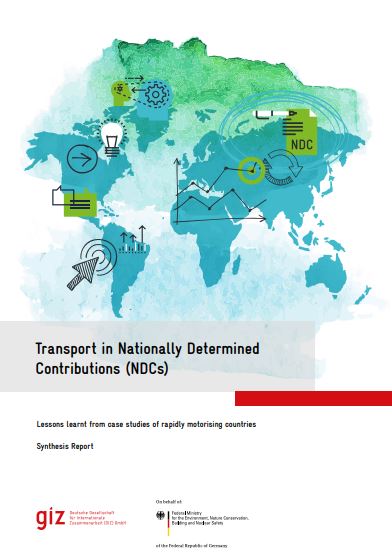
Transport in Nationally Determined Contributions (NDCs)
2017
Author(s): Löhr E, Perera N, Hill N, Bongardt D, Eichhorst U
This synthesis report authored by GIZ and Ricardo Energy and Environment provides policy-makers and development practitioners with lessons learned for the development and implementation of Nationally Determined Contributions (NDCs) in the transport sector for post-2020 climate actions.