



Knowledge Hub

Economic Analysis of Public Transportation Services in Kolkata
2018
Author(s): Siddiqui Sahin Z.H.
The centralized transport system of Kolkata Metropolitan City exhibits the dependency on mass transport services.

Design Analysis and Implementation of Bidirectional Converter for Grid Integrated Off Board Electric Vehicle Battery Charge and Discharge Control
2018
Author(s): Suhara E M
Energy is the vital force that powers our businesses, services, manufacturing, transportation, defence systems etc. Among that transportation energy presently accounts for about 50% of global oil consumption and 25% of global Green House Gas (GHG) emissions from fossil fuels.
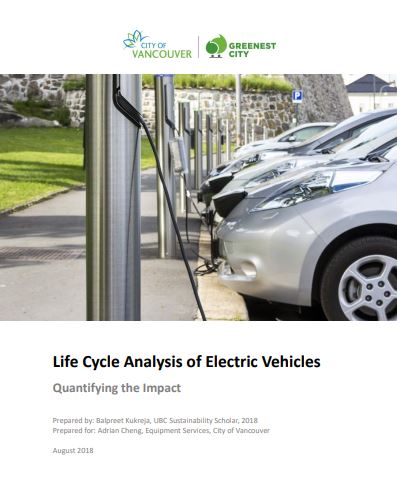
This study uses life cycle analysis (LCA) to comparatively analyze two vehicle models of similar size of each type (ICEV and EV) currently used in the City’s fleet. Ford Focus is chosen for the ICEV and Mitsubishi i-MiEV for the EV, both with a vehicle life of 150,000km. The analysis shows that the electric vehicle has notably lower carbon emissions and lower energy consumption per kilometer. After considering all phases, the Ford Focus emits 392.4gCO2-eq/km and Mitsubishi i-MiEV emits 203.0gCO2-eq/km over the vehicle life.

Novel Soft Switching Topologies of Buck Boost DC DC Converters for Electric Vehicles
2018
Author(s): Kumar Aylapogu Pramod
The main aim of this research is to design two different new soft-switching buck-boost DC-DC converters for the applications in electric vehicles. In general, the conventional, hard switched non-isolated converters performance affected by high peak ripple inductor current.
Electric vehicles for smarter cities: the future of energy and mobility
2018
Author(s): World Economic Forum
This report examines the major trends affecting the transformation of energy and mobility systems, with a special focus on cities. Topics addressed include: electrification, decentralization and digitalization of the energy system, along with the shift towards electric, shared and autonomous mobility.
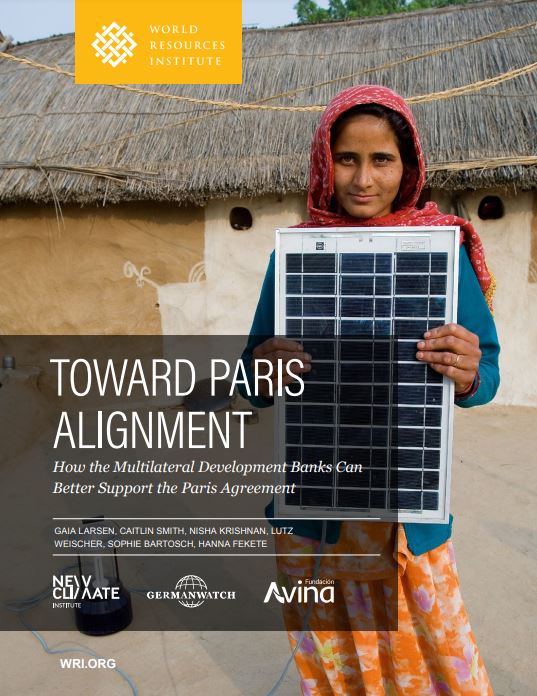
Toward Paris alignment: how the multilateral development banks can better support the Paris agreement
2018
Author(s): Larsen G, Smith C, Krishnan N, Weischer L, Sand B, Fekete H
The report is based on an extensive review of policy and academic literature and official documents. We also conducted semi-structured interviews with 115 MDB staff, representatives from MDB member countries, and other relevant stakeholders. Interviews took place at the headquarters of several MDBs and in seven countries that receive MDB finance: Argentina, Brazil, India, Kazakhstan, Sri Lanka, Tunisia, and Uganda.
Stories from the WRI sustainability “Living Lab”: annual sustainability report and 2015–2016 greenhouse gas emissions inventory
2018
Author(s): Kamins A, Metzger E, Miao L, Rubnitz T, Trostmann K, Waite R, Xu S
This report features the results of WRI’s 2015–2016 Greenhouse Gas Emissions Inventory. It also shares stories that go in-depth on sustainability projects that were active during the reporting period. Together, the quantitative GHG emissions data and the sustainability stories highlight WRI’s experiences in meeting the competing demands of organizational growth and WRI efforts to reduce absolute environmental impacts.
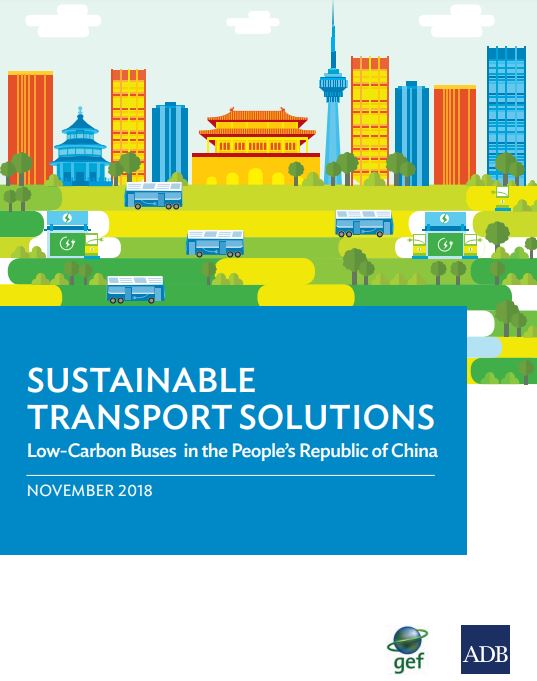
Sustainable transport solutions low-carbon buses in the people’s Republic of China
2018
Author(s): Asian Development Bank
This report discusses the real-world performance data of low-carbon buses in the People’s Republic of China.

Design and Optimization of Integrated Active Chassis Dynamics Control System for Narrow Tilting Three Wheeled Electric Hybrid Electric Vehicle
2018
Author(s): Chatterjee M
This work concentrates on the use of easy to implement controller design to match the computing capacity of the low cost and low power embedded computing technologies available in current vehicles.
Integrating a Hydrogen Fuel Cell Electric Vehicle with Vehicle-to-Grid Technology, Photovoltaic Power and a Residential Building
2018
Author(s): Robledo CB, Oldenbroek V, Abbruzzese F, van Wijk AJM
This paper presents the results of a demonstration project, including building-integrated photovoltaic (BIPV) solar panels, a residential building, and a hydrogen fuel cell electric vehicle (FCEV) for combined mobility and power generation, aiming to achieve a net-zero-energy residential building target.