



Knowledge Hub
Road vehicles - Vehicle to grid communication interface: Part 5 physical layer and data link layer conformance test
2018
Publisher/Organisation: Bureau of Indian Standards (BIS)
This Indian Standard (Part 5) which is identical with ISO 15118-5: 2018 ‘Road vehicles — Vehicle to grid communication interface — Part 5: Physical layer and data link layer conformance test’ issued by the International Organization for Standardization (ISO) was adopted by the Bureau of Indian Standards on the recommendation of the Electrotechnology in Mobility Sectional Committee and approval of the Electrotechnical Division Council.
Road vehicles - Vehicle to grid communication interface: Part 8 physical layer and data link layer requirements for wireless communication
2018
Publisher/Organisation: Bureau of Indian Standards (BIS)
This Indian Standard (Part 8) which is identical with ISO 15118-8: 2018 ‘Road Vehicles — Vehicle to grid communication interface — Part 8: Physical layer and data link layer requirements for wireless communication’ issued by the International Organization for Standardization (ISO) was adopted by the Bureau of Indian Standards on the recommendation of the Electrotechnology in Mobility Sectional Committee and approval of the Electrotechnical Division Council.
With support from the Robert Wood Johnson Foundation, RMI is exploring and testing industry interest in a concept we’re calling MOD Cities, where “MOD” is short for “modular” and “modifiable” and also stands for “mobility-oriented development.”
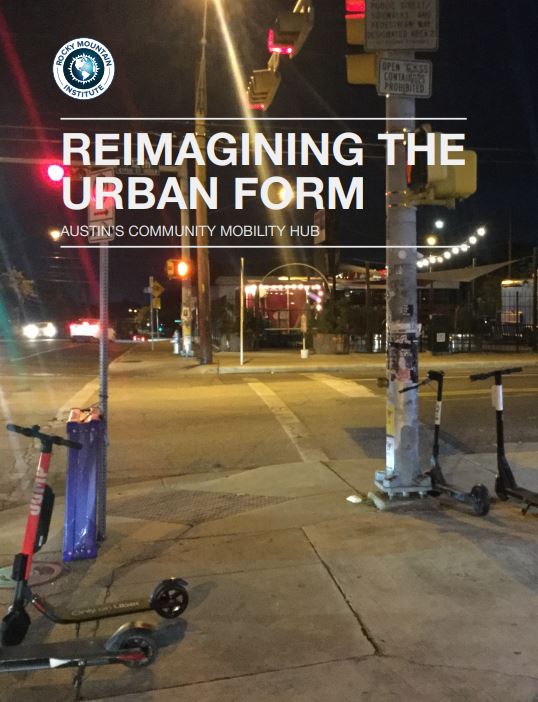
With support from the Robert Wood Johnson Foundation, RMI’s Mobility-Oriented Development team has been experimenting at the interface of personal mobility and urban design to develop a practical and scalable approach to reducing emissions, enhancing health, and improving equity in cities.

The Carbon-Free Regions Handbook
2018
Author(s): Corvidae J, Stone L, Jungclaus M, Mandel J, Whitney A, Bronski P
The Carbon-Free Regions Handbook helps state, provincial, and regional governments implement policies and actions that place their communities on an aggressive path toward sustainable, low-carbon economies.
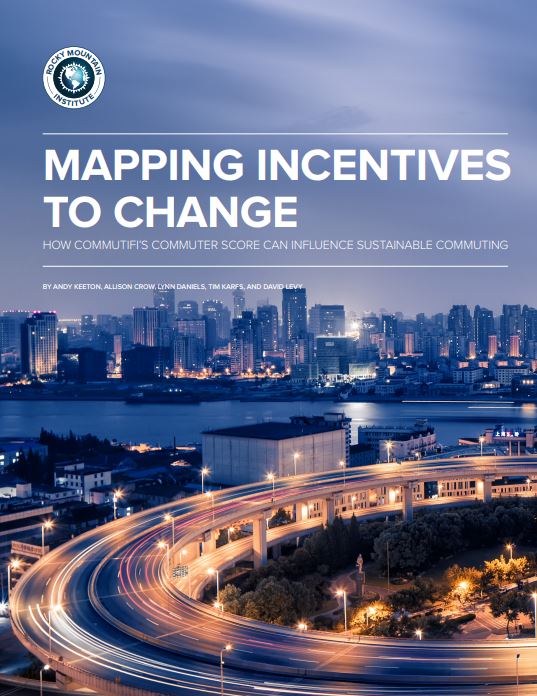
The costs of commuting are widespread, City leaders, transportation planners, and companies are looking to implement commuting solutions to ensure employees are happy and healthy, while simultaneously saving cities and companies money and helping the planet.

The Future Cost of Electricity-Based Synthetic Fuels
2018
Author(s): Agora Verkehrswende, Agora Energiewende
The objective of this study is to estimate the costs associated with importing synthetic fuels up to 2050. This study provides an important contribution to the current debate about decarbonisation strategies in the heating and transport sectors.
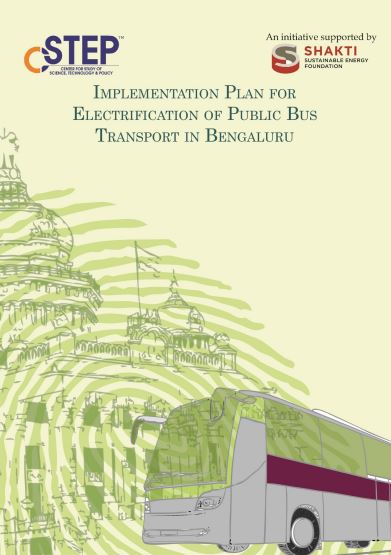
Implementation Plan for Electrification of Public Bus Transport in Bengaluru
2018
Author(s): Center for Study of Science, Technology and Policy (CSTEP)
Last year, Karnataka announced a landmark policy on electric vehicles, becoming the first Indian state to do so. Now, the Bangalore Metropolitan Transport Corporation (BMTC) is in the process of procuring its first fleet of 40 electric buses.
Converting a Conventional Car into a Hybrid Solar Vehicle: A LCA Approach
2018
Author(s): Tiano FA, Rizzo G, Feo GD, Landolfi S
This paper presents the application of LCA for the evaluation of total energy consumption and GHGs emissions when a driver is in front to several mobility options. A life-cycle assessment study of several mobility options is presented in the paper.
Upgrading in the Indian Automobile Sector: The Role of Lead Firms
2018
Author(s): Ray S, Miglani S
The Indian automobile industry has come a long way since its inception. This paper has made an attempt to identify the role of lead firms in mapping the activities related to upgrading. Upgrading refers to the process through which firms may move up the value chain.