



Knowledge Hub
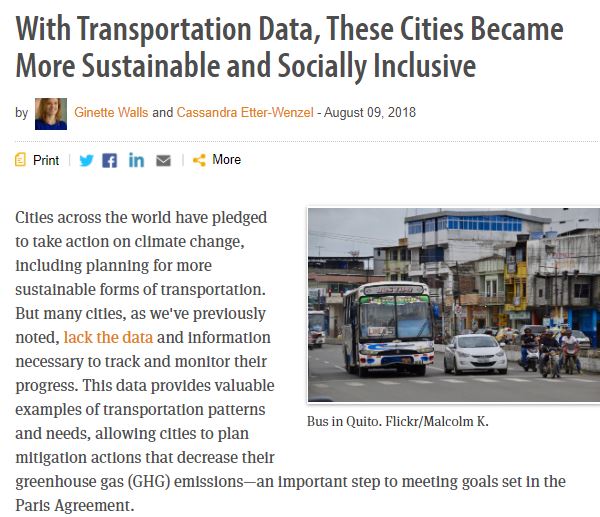
With Transportation Data, These Cities Became More Sustainable and Socially Inclusive
2018
Author(s): Walls G, Etter-Wenzel C
Cities across the world have pledged to take action on climate change, including planning for more sustainable forms of transportation. But many cities lack the data and information necessary to track and monitor their progress.
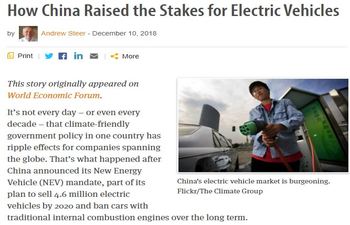
China announced its New Energy Vehicle (NEV) mandate, part of its plan to sell 4.6 million electric vehicles by 2020 and ban cars with traditional internal combustion engines over the long term.

Electric vehicles (EVs) for road transport boost energy efficiency, require no direct fuel combustion and rely on electricity – the most diversified energy carrier, thereby contributing to a wide range of transport policy goals.

This book presents the current research on all types of solar cells and photonic devices. It gives a new track approach between photonics.

Ecopreneurs’ Creation of User Business Models for Green Tech: An Exploratory Study in E-Mobility
2018
Author(s): Abdelkafi N, Hansen EG
This paper introduces user business models to the literature on ecopreneurship and explores their contribution to environmental sustainability. Renewable e-mobility is identified as an appropriate application. The research methodology consists of two steps: A document analysis for developing a typology of ecopreneurs with user business models, and an in-depth case study analysis.
Adapting Carsharing Vehicle Relocation Strategies for Shared Autonomous Electric Vehicle Services
2018
Author(s): Brendel AB, Nastjuk I, Lichtenberg S, Kolbe LM
New mobility services based on the sharing economy are emerging. New mobility solutions must address the challenges of urban development, requiring smart, safe, dynamic and flexible transport alternatives, in order to be regarded as valid alternatives to the existing common means of transport.
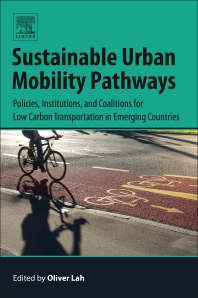
This book examines how sustainable urban mobility solutions contribute to achieving worldwide sustainable development and global climate change targets, while also identifying barriers to implementation and strategies to overcome them.
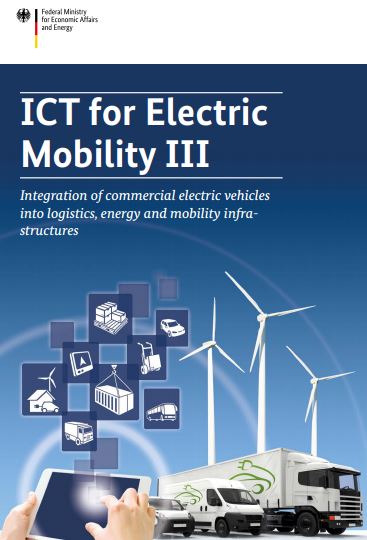
ICT for Electric Mobility III
2018
Author(s): Federal Ministry for Economic Affairs and Energy (BMWi)
In view of the importance of ICT as the key to the success of electric mobility, the BMWi initiated the series of “ICT for Electromobility” funding programmes in 2009. With the 3rd technology programme, the BMWi is focussing on electric mobility for commercial use.

A Comprehensive Model for Lithium-Ion Batteries: From the Physical Principles to an Electrical Model
2018
Author(s): Berrueta A, Urtasun A, Ursúa A, Sanchis P
The growing interest in e-mobility and the increasing implementation of systems based on renewable energy are contributing to rapid improvements in lithium-ion batteries. In this context, battery manufacturers and engineers require advanced models in order to study battery performance accurately.
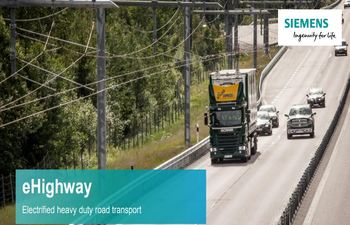
This presentation by Mr. Patrik Akerman, Head of eHighway Business Development, Siemens AG (Mobility Technology & Innovation Highway) presents a context for Electrified Roads for HDVs and address the following questions on electrification of Heavy-Duty Vehicles (HDV) Transport: 1. What are electrified roads for HDVs 2. Development of eHighway 3. The potential benefits 4. Possible roadmap from initial deployment to system