



Knowledge Hub
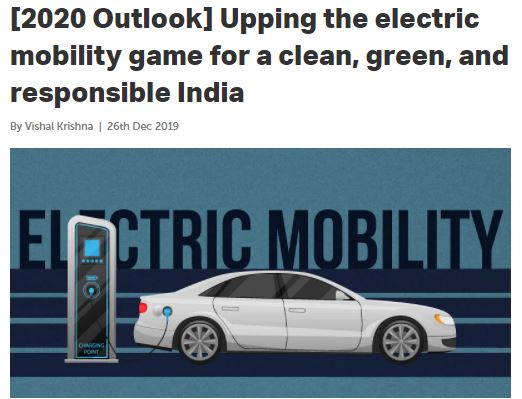
Upping the electric mobility game for a clean, green, and responsible India
2019
Author(s): Krishna V
In a bold and far-reaching move, India’s electric vehicle goals are set to flourish as Niti Aayog, the government’s thinktank brandishes the e-mobility mantra. The government aspires for a greener India by emphasising on the sale of only electric vehicles by 2030, or have a large percentage of EVs on the road by then. In this blogpost from "YourStory", the author Vishal Krishna highlights the various statewide developments in India's EV sector and future expectations.
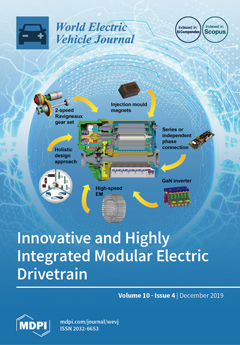
Electric Mobility and Smart Mobility: Concepts - Restrained Uptake in German Cities
2019
Author(s): Johnsen D, Vorholt F, Gieschen J-H, Müller B, Randhahn A
This article evaluates the Green City Plans (GCP) of German municipalities. It also explains the activities on the local level in Germany to mitigate climate change and to affect a mobility turnaround. In the scope of this study, 55 publicly available GCPs were evaluated in order to assess their potential for traffic turnaround at a municipal level.
User Decision-Making in Transitions to Electrified, Autonomous, Shared or Reduced Mobility
2019
Author(s): Whittle C, Whitmarsh L, Haggar P, Morgan P, Parkhurst G
In this paper, the authors integrate insights from the multi-level perspective on transitions and socio-psychological literature and draw on transport expert interview (N = 11) data, to examine (a) what influences current attitudes and behaviours in respect of EVs and AVs, and shared mobility, and (b) how this may change in the years to come.
The Future of Mobility is at Our Doorstep
2019
Author(s): McKinsey Center for Future Mobility
With many important achievements across the disruptive dimensions of mobility such as autonomous driving, connectivity, electrification, and shared mobility (ACES), automotive industry is going for large scale disruption.
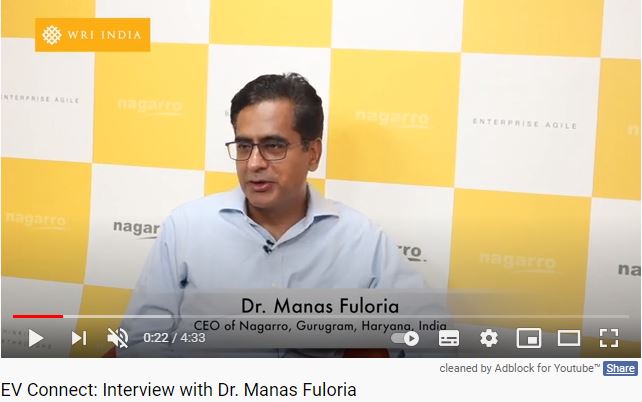
The World Resources Institute (WRI) India conducted a power talk with Dr. Manas Fuloria, CEO of Nagarro, Gurugram, Haryana, India in August 2019 about the EV launch at Nagarro and the role of the private sector to accelerate EV.
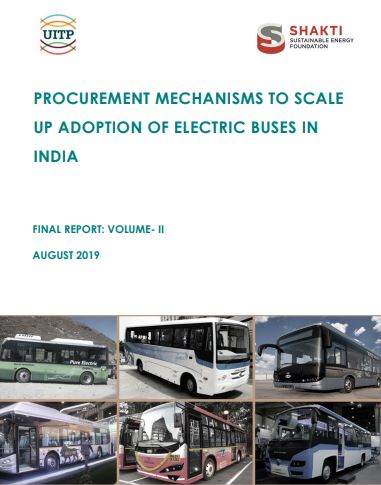
Procurement Mechanisms to Scale up Adoption of Electric buses in India
2019
Author(s): Gadepalli R, Cheriyan C, Kumar S, Singh J, Nandy R
This study is to evaluate the enabling mechanism to scale up adoption of electric buses (e-buses) in Indian cities to inform FAME-II guidelines and to improve capacity of bus agencies in procuring e-buses.
This interview was conducted by the World Resources Institute (WRI) with Dr.Dario Hidalgo, Executive Director of Foundacion Despacio, Bogota, Colombia and Senior Mobility Consultant, WRI Ross Center to discuss people's perception that electric buses are very costly and they come at the cost of conventional buses.
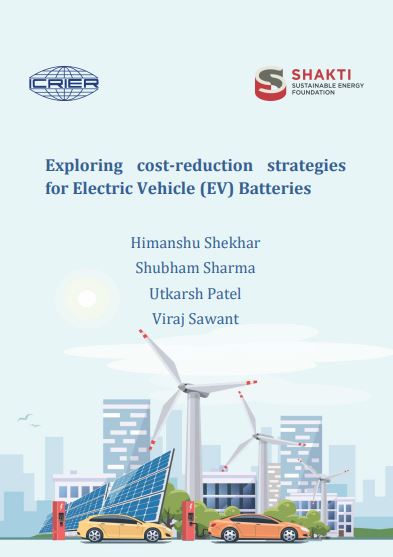
Exploring Cost-reduction Strategies for Electric Vehicle (EV) Batteries
2019
Author(s): Shekhar H, Sharma S, Patel U, Sawant V
Electric Vehicles (EVs) are viewed as a solution to several problems: reducing emission of greenhouse gases, sustainable economic growth, improving air quality, and reducing fossil fuel imports in India.
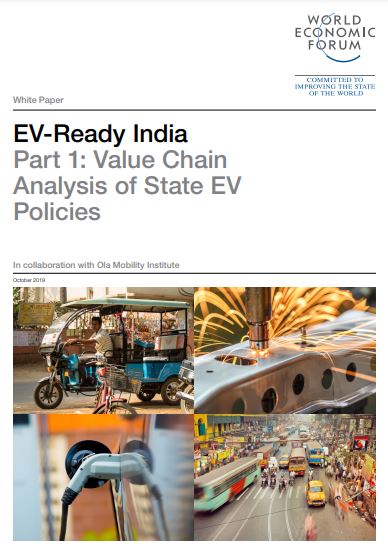
EV-Ready India Part 1: Value Chain Analysis of State EV Policies
2019
Author(s): World Economic Forum
This White paper uses a Value Chain Framework to analyse the EV policies in 10 Indian States. The Value Chain framework pays attention to the multisectoral and multistakeholder aspects of EV-policies - separated into three different value chains; the value chain of electric vehicles, the value chain of charging, and the value chain of the surrounding network. It ensures that overall sustainability is considered from cradle to grave.

This interview was conducted by The World Resources Institute (WRI) with the founder of Lithium Urban Technologies or Project Lithium, a Bengaluru based startup that provides fully electric corporate fleets.