


Reports

Innovation landscape for smart electrification: decarbonizing end-use sectors with renewable power
2023
Author(s): International Renewable Energy Agency
This report maps 100 innovative solutions for the smart electrification of end-use sectors using renewable power. It offers innovation toolboxes to guide policy makers in formulating smart electrification strategies for mobility, the heating and cooling sectors, and green hydrogen production.

Complete streets in Brazil: promoting a paradigm shift
2023
Author(s): Santos PM, Samios A, Batista B
This report systematizes the implementation process, challenges, learnings, and results of complete street interventions in eight cities from different regions of Brazil.

Decarbonisation pathways and how finance can accelerate the business transition to a low-carbon economy in the Guangdong–Hong Kong–Macao Greater Bay Area
2023
Author(s): Huang Z, Zhang D, Li X, Jiang X, Cui Y, Liu Y, Zeng X, Lu L, Yu B, Miao L, Hu X, Chow K, Chan L, Li W He J
This report aims to connect decarbonization solutions with the finance required to accelerate the net-zero transition in the GBA, to analyse macro pathways for the whole GBA and specific decarbonisation pathways for the key energy-consuming sectors. This report estimates how much investment will be required and how finance can accelerate the business transition to a low-carbon economy as well.

Real-world performance of battery electric passenger cars in China: energy consumption, range, and charging patterns
2023
Author(s): Jin L, Wang S, He H
Analyzes the performance of 10 popular battery electric passenger car models in five cities in China using real-world operations data from 2021.

An equitable transition from combustion engines to battery electric vehicles: theoretical framework and status in Germany
2023
Author(s): Wappelhorst S, Morrison K, Wilkens M
This study focuses on one important part of equitable mobility and the decarbonization of the transport sector: the transition from internal combustion engine vehicles (ICEVs) to battery electric vehicles (BEVs)

Increasing the visibility of soot-free and zero emission heavy-duty vehicles in the Transport Decarbonization Agenda of the ASEAN region
2023
Author(s): Mahalana A, Posada F, Triatmojo A
The soot-free working group hosted four regional workshops, which were conducted with participation from various regional key ministries.
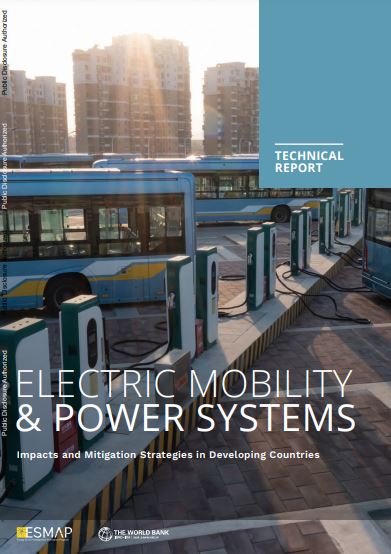
Electric mobility and power systems: impacts and mitigation strategies in developing countries
2023
Author(s): Energy Sector Management Assistance Program (ESMAP)
This report addresses the technical dimension of the challenge in the context of developing countries, intending to inform E-Mobility practitioners and policymakers about the impacts on power systems and potential mitigation strategies. Specifically, the research for this report provides an opportunity to clarify related questions
The report offers a deep analysis of recent policies, trends and market developments. It also provides forecasts through 2025 for electricity demand, supply and CO 2 emissions with a detailed study of the evolving generation mix. This year’s report contains a comprehensive analysis of developments in Europe, which faced a variety of energy crises in 2022. The Asia Pacific region also receives special focus, with its fast -growing electricity demand and accelerating clean energy deployment.
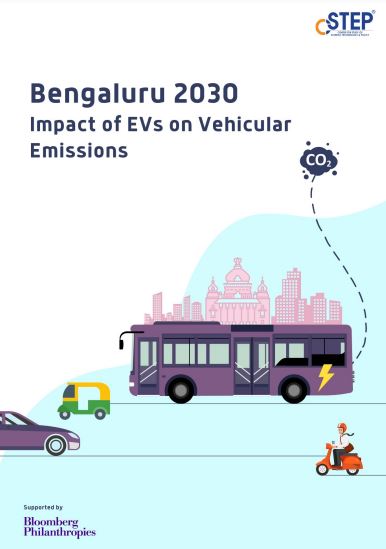
Bengaluru 2030: impact of EVs on vehicular emissions
2023
Author(s): Center for Study of Science, Technology and Policy (CSTEP)
Based on the latest trends, the study reported that vehicle electrification is the most practical approach to curb vehicular GHG emissions, with the added benefit of significantly inhibiting sources of urban pollution including particulate matter (PM), nitrogen oxides (NOx), and black carbon (BC).
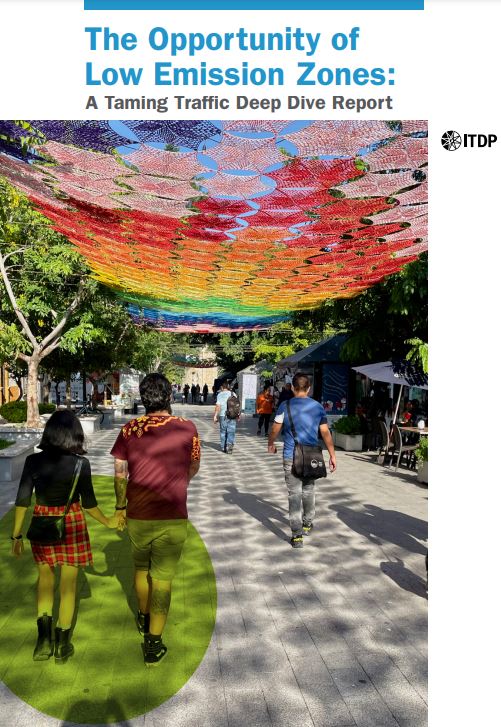
The opportunity of low emission zones: a taming traffic deep dive report
2023
Author(s): Yanocha D
Building on ITDP’s Taming Traffic report that highlights various strategies for reducing driving, The Opportunity of Low Emission Zones report offers a closer look at LEZs to provide context and background for decision-makers and stakeholders interested in understanding the potential of these strategies for their city.