



Knowledge Hub

Simulating the Impact of E-Mobility Charging Infrastructure on Urban Low-Voltage Networks
2020
Author(s): Echternacht D, El Haouati I, Schermuly R, Meyer F
Driven by subsidies, the Volkswagen emission scandal, the discussion on driving bans for diesel cars and the decreasing prices for electric vehicles, it is expected that their numbers in Germany will increase dramatically in the coming years.

Financial and Symbolic Incentives Promote ‘Green’ Charging Choices
2020
Author(s): Kacperski C, Kutzner F
Electromobility can contribute to a reduction in greenhouse gas emissions if usage behavior is aligned with the increasing availability of renewable energy. To achieve this, smart navigation systems can be used to inform drivers of optimal charging times and locations.
Development of Ultra-Low-Friction and Zero-Leakage Mechanical Seal for High-Speed e-Mobility Shaft Sealing Applications
2020
Author(s): Tokunaga Y, Nakahara N, Itadani M
By the year 2020, EU legislation limits CO2 emissions for new passenger cars to a maximum of 95 g/km, and further reductions to 68 g/km are expected. An electric motor (e-motor) with high power density often requires shaft cooling in combination with increased rotational speeds to boost efficiency.

Five COVID-19 Aftershocks Reshaping Mobility’s Future
2020
Author(s): Gersdorf T, Hensley R, Hertzke P, Schaufuss P
COVID-19 has crossed the globe in a matter of months, putting lives in jeopardy, disrupting businesses, and causing a global economic downturn. COVID-19 has turned mobility upside down.
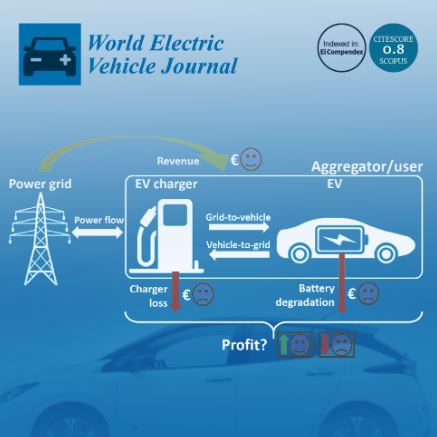
CRITIC Method and Grey System Theory in the Study of Global Electric Cars
2020
Author(s): Nguyen TKL, Le HN, Ngo VH, Hoang BA
The purpose of this study is to present an overview of electric car sales and its market share in 14 countries, from past to future, by integrating important criteria through the inter-criteria correlation (CRITIC) method in multi-criteria decision-making (MCDM), grey model first-order one variables (GM(1,1)), and grey relation analysis (GRA) method in grey system theory.
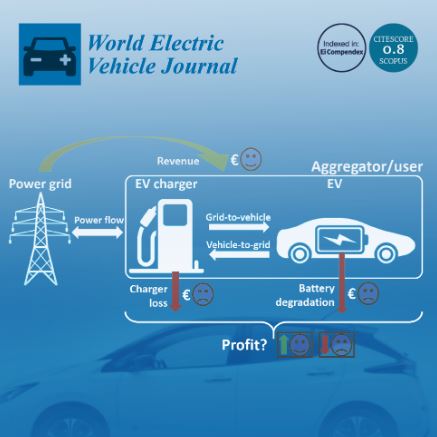
The New Neighbor Across the Street: An Outlook for Battery Electric Vehicles Adoption in Brazil
2020
Author(s): Vargas JEV, Seabra JEA, Cavaliero CKN, Walter ACS, Souza SP, Falco DG
The purpose of this research is to gather information that may be used to help entrepreneurs and policymakers make decisions or establish plans. The study's primary findings include the need for an electrification model that can work in tandem with biofuels, as well as the importance of having well-defined regulations on what Brazil wants from electromobility.

On the Ease of Being Green: An Investigation of the Inconvenience of Electric Vehicle Charging
2020
Author(s): Dixon J, Andersen PB, Bell K, Træholt C
This paper provides a quantitative investigation of the inconvenience of charging electric vehicles (EV) in comparison to the internal combustion engine vehicle (ICEV) in terms of the time penalty that drivers are likely to face.
Electrification of on-demand mobility in Delhi: identifying strategic locations for public EV charging stations - summary for policymakers
2020
Publisher/Organisation: UCLA (University of California, Los Angeles) & Ola Mobility Institute
Complementing the national, state and city level decarbonisation efforts taken by the government, public and private sectors, this policy brief endeavours to address the most critical operational issue of the availability of a robust EV charging infrastructure needed for electrification of on-demand mobility services, potential costs and savings in cities. This study identifies strategic locations for the installation of EV charging stations in Delhi, through scientific modelling and a data-driven approach, that is required to meet the same ride-sharing demand with a fully electric fleet. The framework developed in the study can be applied to other cities. By strategically locating charging stations along high-demand corridors within a city, the government can also ensure high utilization of the charging stations. Overall, through the adoption of e-mobility, a city can witness a reduction in air pollution and greenhouse gas emissions while reducing costs and increasing pay-offs for both drivers and transport network companies. The study also focuses on the fact that e-mobility reduces reliance on import-dependent fossil fuels at the national level, making the country energy secure.

Optimal Deployment of Charging Stations Considering Path Deviation and Nonlinear Elastic Demand
2020
Author(s): Xu M, Meng Q
This study aims to determine the optimal deployment of charging stations for BEVs by maximizing the covered path flows taking into account the path deviation and nonlinear elastic demand.

Assessing the Ancillary Service Potential of Electric Vehicles to Support Renewable Energy Integration in Touristic Islands: A Case Study From Balearic Island of Menorca
2020
Author(s): Raveendran V, Alvarez-Bel C, Nair MG
The e-mobility potential determination to support renewable energy grid integration in Menorca, and similar touristic islands, is the focus of this paper. The potential of e-mobility to participate in intermittency flattening ancillary services (AS) to support solar photo-voltaic (PV) grid integration is analysed in this paper.