



Reports

Post COVID-19 Green Recovery Assessment of Road Transport- From a Gender Perspective
2023
Author(s): Hoa DX, Quyen NV
This thematic study explores gender perspective in enterprises operating in road transport by assessing their resilience, and application of green and inclusive recovery measures in the post-COVID-19 pandemic.

Global EV Outlook 2023: Catching Up with Climate Ambitions
2023
Author(s): International Energy Agency
The Global EV Outlook is an annual publication that identifies and discusses recent developments in electric mobility across the globe. It is developed with the support of the members of the Electric Vehicles Initiative (EVI).
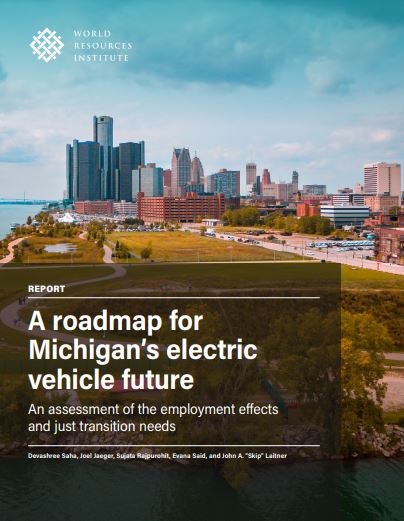
A roadmap for Michigan’s EV future: an assessment of the employment effects and just transition needs
2023
Author(s): Saha D, Jaeger J, Rajpurohit S, Said E, Laitner JAS
This report discusses the employment effects of Michigan’s auto industry shifting from internal combustion engine vehicle manufacturing to electric vehicle manufacturing, with a focus on supporting a just transition for workers and communities. Using economic modeling from 2024 to 2040, the report highlights the importance of Michigan seizing the opportunities electrification presents. Additionally, it presents policy recommendations to help Michigan attract and retain good jobs, support workers and ensure local communities benefit from the transition.

Electric vehicle lithium-ion batteries in lower- and middle-income countries: life cycle impacts and issue
2023
Author(s): Kendall A, Dayemo K, Helal N, Iskakov G, Pares F, Slattery M, Fulton L
This report explores the future stocks, flows, and life cycles of electric vehicles to understand the implications for lower and middle income countries and provides a set of strategies for how some of the problems presented by the transition to electric vehicles might be mitigated.

The main objectives of this study were to conduct the Life Cycle Assessment (LCA) and Total Cost of Ownership (TCO) analysis of two sets of four-wheelers (4W) vehicles. The vehicle categories were Battery Electric Vehicles (BEVs), Hybrid Electric Vehicles (HEVs), and Internal Combustion Engine Vehicles (ICEVs).

Benefits of adopting California’s Advanced Clean Cars II Standards in sixteen U.S. states
2023
Author(s): Houk J, Huang J, Sussman E
This report documents the technical steps and findings of an evaluation of the benefits of adopting California’s Advanced Clean Cars II (ACC II) standards in additional states. The states analyzed are: Colorado, Connecticut, Delaware, Maine, Maryland, Massachusetts, Minnesota, New Jersey, New Mexico, Nevada, New York, Oregon, Rhode Island, Vermont, Virginia, and Washington.

Electric Mobility in Public Transport: a Guidebook for Asia-Pacific Countries
2023
Author(s): Miller J, Du L, Kodjak D
This Guidebook offers frameworks, policy goals, strategies, and instruments to accelerate the adoption of EVs in public transport systems.

This insight report highlights the experiences and perspectives of 11 industrial clusters that are a part of the Transitioning Industrial Clusters towards Net Zero initiative. These clusters, despite facing unique geographical, infrastructure, policy and sectoral challenges, have all developed comprehensive strategies to rapidly and equitably decarbonize their operations.

Distributional effects of urban transport policies to discourage car use: a literature review
2023
Author(s): Organisation for Economic Co-operation and Development
This report takes stock of scientific findings to date regarding the distributional effects of policies discouraging car use in urban areas. These policies include cordon tolls, distance-based charges, fuel taxes, parking measures and public transport subsidies.
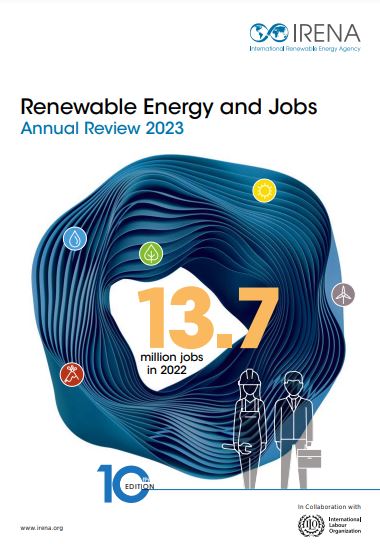
Renewable Energy and Jobs: Annual Review 2023
2023
Author(s): International Renewable Energy Agency, International Labour Organization
This report finds that renewable energy employment worldwide has continued to expand - to an estimated 13.7 million direct and indirect jobs in 2022. We can expect the creation of many millions of additional jobs in the coming years and decades, provided that education and skills development programmes are appropriately expanded, workforce development programmes are put in place, and labour markets respond to evolving needs.