



Knowledge Hub
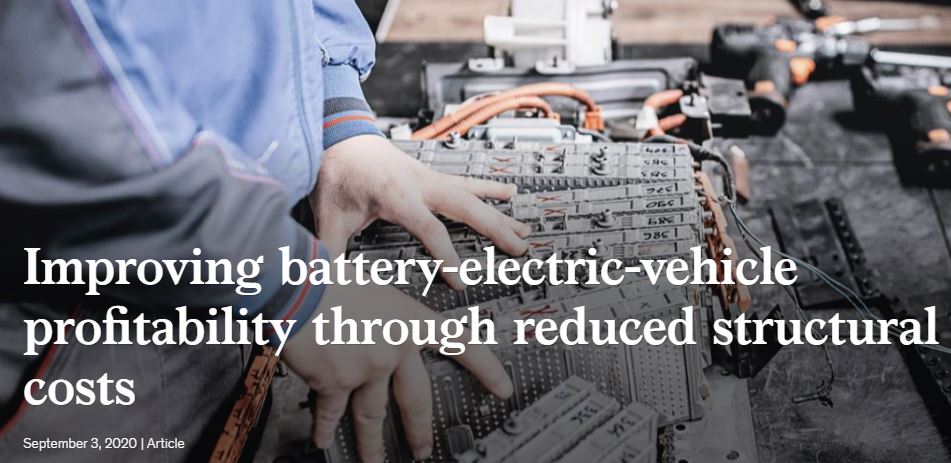
Improving Battery-Electric-Vehicle Profitability Through Reduced Structural Costs
2020
Author(s): Breiter A, Hackert P, Han W, Hensley R, Schwedhelm D
Battery electric vehicles (BEV) profitability will continue to face headwinds from high e-drive and battery costs, as well as the need for high investments at a time when sales volumes remain challenged.
Envisioning 5G-enabled transport
2020
Author(s): Monserrat J F, Diehl A, Lamas C B, Sultan S
5G features will have an impact in the transport sector, contributing to transport-specific applications. When applying these new technologies to transport, changes can be expected across the sector, to some extent. While impossible to foresee all potential applications, the study predicts three likely and significant changes: (1) the rise of connected and autonomous vehicles, (2) increasingly smart and efficient logistics, and (3) improved urban transportation with the implementation of MaaS platforms.

This 4 year (March 2016 to February 2020) project by Switch Asia aimed at promoting sustainable lifestyles and poverty reduction while reducing CO2 emissions and air pollution in India. The project fostered the scaling up of a replicable and integrated model of sustainable auto-rickshaw transport, based on clean technologies in the Cities of Bangalore and Chennai.
The report provides an understanding of segment wise propensity to transition to EVs by analyzing use cases and Total Cost of Ownership, and estimates the EV penetration by 2025 and 2030.
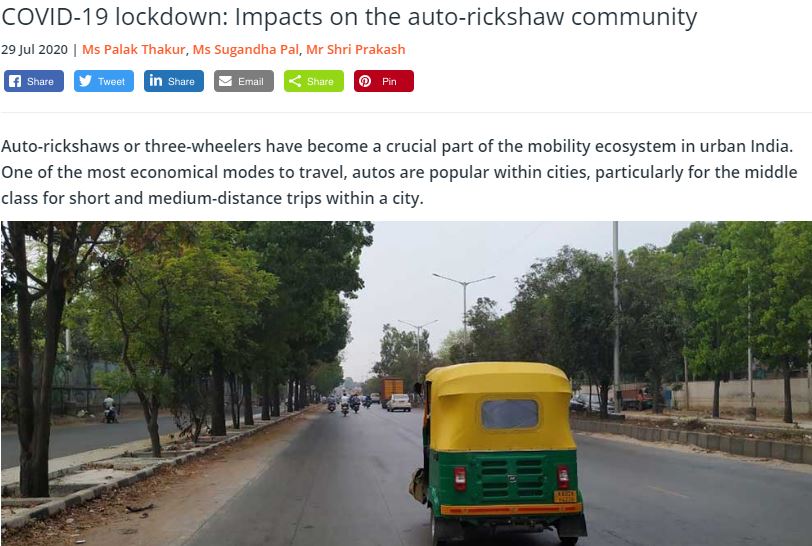
COVID-19 Lockdown: Impacts on the Auto-Rickshaw Community
2020
Author(s): Thakur P, Pal S, Prakash S
Auto-rickshaws or three-wheelers have become a crucial part of the mobility ecosystem in urban India. One of the most economical modes to travel, autos are popular within cities, particularly for the middle class for short and medium-distance trips within a city.
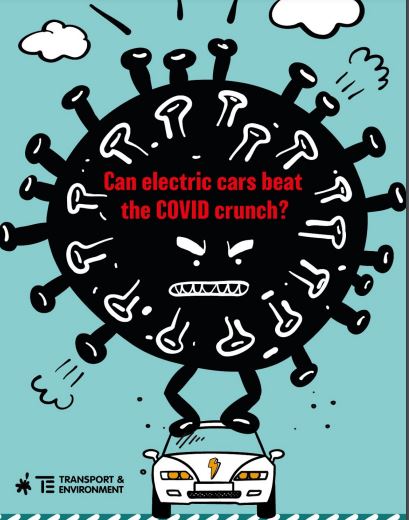
With societies months-long in confinements and factories shut, the COVID-19 pandemic has gravely impacted economies across Europe and beyond. 2020 was touted as the year of the electric car in Europe and early 2020 showed record plug-in sales. But has the COVID-19 crisis killed off the electric car momentum that was finally gaining pace in response to EU emissions regulations?
Smart Transportation Systems 2020
2020
Author(s): Qu, X., Lu, Z., Howlett, R.J., Jain, L.C. (Eds.)
This book includes selected papers presented at the KES International Symposium on Smart Transportation Systems (KES STS 2020).
Recharge EU trucks: time to act! a roadmap for electric truck charging infrastructure deployment
2020
Author(s): Transport & Environment
The new European framework and public funding mechanisms for infrastructure should prioritise exclusively zero emission technologies. Using a key EU legislation (covering alternative fuel infrastructure)to promote infrastructure for fossil fuels such as CNG and LNG would not respect the Paris Agreement or the European Green Deal. The revised infrastructure framework planned for 2021 should take electric trucks seriously, include them in the scope of the law, and set appropriate binding targets. It should also propose a realistic and cost-effective strategy to allow hydrogen and dynamically-charged trucks to develop.
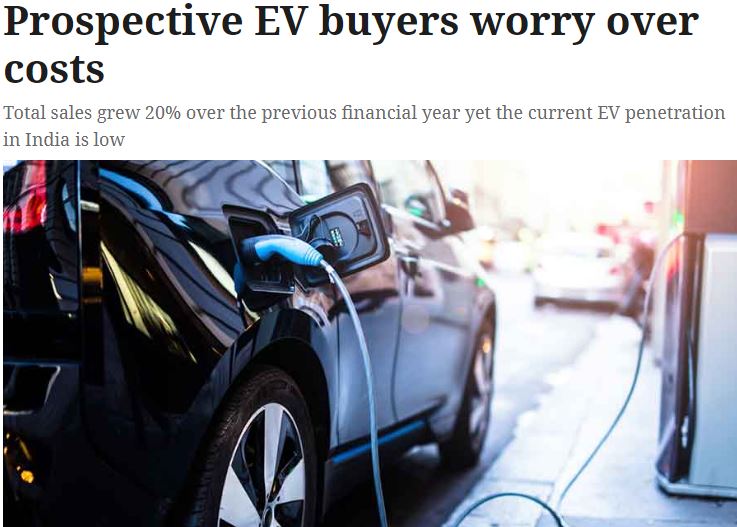
The upfront cost of electric vehicles (EV)s, battery replacement and the distance a vehicle can run on a single charge are the top concerns for people planning to buy EVs, according to a survey by The Energy and Resources Institute (TERI). This post by The Telegraph India highlights TERI's survey on consumer perception and how it affects the buying decision of a prospective buyer. The survey also found that the ability of EVs to cover a limited distance in comparison to internal combustion engines had an impact on perception and highlighted an important concern.
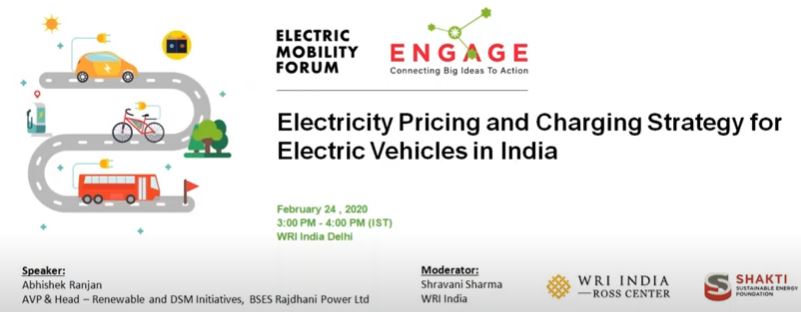
Electricity Pricing and Charging Strategy for Electric Vehicles in India
2020
Author(s): Ranjan A, Shah N
The World Resources Institute (WRI) organised a webinar on Electricity Pricing and Charging Strategy for Electric Vehicles in India on March 3, 2020, as a part of the project, "Electric mobility Forum" launched by the vice president of India in 2019. Shakti Foundation is the funding partner of WRI for this project.