



Knowledge Hub
The Bharat Stage (BS) VI emission standards announced in September 2016 with an ambitious deadline of April 1, 2020. India turned the challenge into an opportunity and completed its mission of producing BS VI-compliant fuel and vehicles on time, Coronavirus notwithstanding. All in all, this blogpost by ICCT explains how a seemingly impossible mission (fewer than five years ago) has been accomplished.
Matching electric buses with optimal routes – A new tool that helps make good decisions
2020
Author(s): Xie Y
This blogpost by the ICCT highlights the study published in its working paper "Strategies for deploying zero-emission bus fleets: Development of real-world drive cycles to simulate zero-emission technologies along existing bus routes" in which a new methodology has been developed to identify representative drive cycles based on real-world bus performance data in Bangalore.
 Charging in India.JPG)
Battery Swapping: Future of Electric Vehicle (EV) Charging in India
2020
Author(s): Sachdev G
To counter the ill effects of fossil fuels, electric mobility is being seriously considered as an alternative to fuel the mobility needs of rapid urbanisation. India has pledged to reduce carbon intensity by 33-35% by 2030. According to statistics, more than 80% of the total vehicles in India comprise of 2Ws, unlike 4Ws in western countries. This blog post by Blue circle staff highlights the refuelling issues of EVs and the advantages of battery swapping technologies.
Power Play: Canada’s Role in the Electric Vehicle Transition
2020
Author(s): Sharpe B, Lutsey N, Smith C, Kim C
This paper evaluates Canada’s position in the emerging global electric vehicle industry by analyzing sales and production trends for conventional and electric vehicles and comparing these trends to similar auto markets around the world.

Charging Infrastructure in Cities: Metrics for Evaluating Future Needs
2020
Author(s): Hall D, Lutsey N
This working paper identifies metrics that cities can use to track charging infrastructure policies and deployment to support electrification goals in cities.
Charging Infrastructure Requirements to Support Electric Ride-Hailing in U.S. Cities
2020
Author(s): Nicholas M, Slowik P, Lutsey N
This research analyzes two pressing questions that are highly relevant across major U.S. cities, namely, quantifying how many electric ride-hail vehicles can be supported by a growing public charging infrastructure network and how many additional dedicated chargers could pave the way for a fully electric ride-hailing fleet.
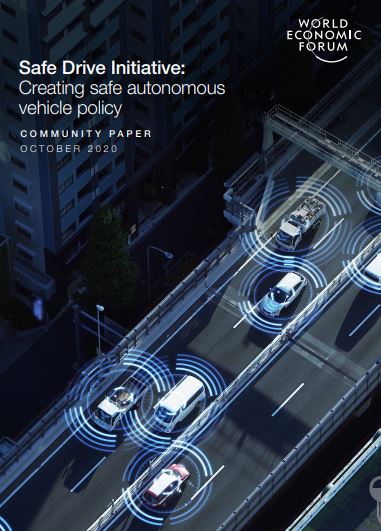
Safe Drive Initiative: Creating Safe Autonomous Vehicle Policy
2020
Author(s): World Economic Forum (WEF)
This review is the first in a series of documents published by the World Economic Forum to offer holistic guidance on autonomous vehicle policy. By engaging with industry partners, regulators, academia and civil society, the Safe Drive Initiative proposes a broad and actionable framework to enable policy-makers to create a graduated series of milestones to enable the safe deployment of automated vehicles.
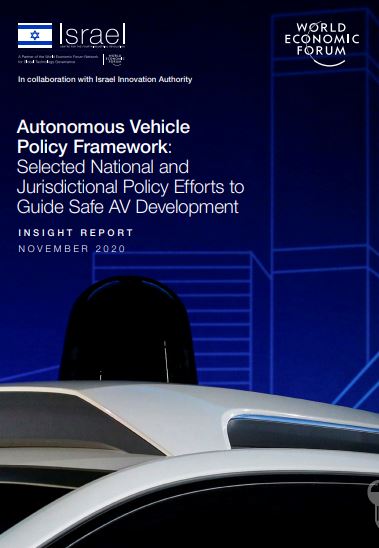
The industry’s rapid development has encouraged regulators around the world to introduce AV policy frameworks to enable the safe experimentation and development of the technology. Approaches to AV policy vary greatly between nations and other jurisdictions, and all are relatively nascent.
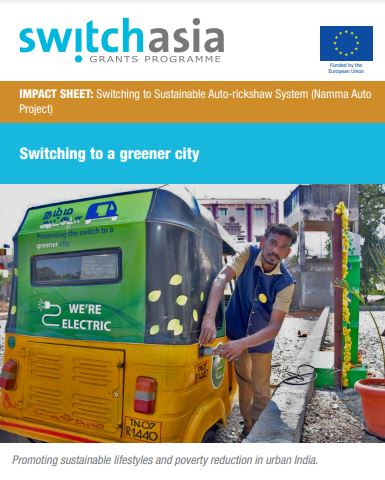
Switching to Sustainable Auto-rickshaw System (Namma Auto Project)
2020
Author(s): European Union (EU), SWITCH-Asia SCP Facility
The Switching to Sustainable Auto-rickshaw System (Namma Auto project) was designed on an “ecosystem” approach, working closely with the driver communities, giving them access to financial services, engaging with policy makers as well as industry players.
Market Monitor: European Passenger Car Registrations January–April 2020
2020
Author(s): International Council on Clean Transportation (ICCT)
With COVID-19 confinement, April 2020 new car registrations dropped by 79% across Europe compared to April 2019.