



Knowledge Hub
Training Needs Assessment for Electric Buses in India: Volume II - E-Bus Training Programme Structure
2021
Author(s): Deutsche Gesellschaft für Internationale Zusammenarbeit (GIZ) GmbH
This report aims to prepare a detailed and organised training programme structure for Public Transport Authorities (PTAs). It identifies a total of eight e-Bus training modules across its life cycle stages – i.e. from fundamentals and safety; technology selection; financial planning and strategy; procurement; operations; monitoring and control; repair and maintenance; and end-of-life, scrapping, and recycling.
Training Needs Assessment for Electric Buses in India: Volume I - Identification of Training Needs
2021
Author(s): Deutsche Gesellschaft für Internationale Zusammenarbeit (GIZ) GmbH
This volume identifies clear training needs in Public Transport Authorities (PTAs) across e-Bus life cycle functions, various departments, and hierarchies.
Training Needs Assessment (TNA) for Electric Buses in India: Executive Summary
2021
Author(s): Deutsche Gesellschaft für Internationale Zusammenarbeit (GIZ) GmbH
Under SMART-SUT project, GIZ has concluded a National level study on “Training Needs Assessment (TNA) for Electric Buses in India”. Under SMART-SUT project, GIZ has concluded a National level study on “Training Needs Assessment (TNA) for Electric Buses in India”.
How To Measure the Impacts of Shared Automated Electric Vehicles on Urban Mobility
2021
Author(s): Nemoto EH, Issaoui R, Korbee D, Jaroudi I, Fournier G
This article proposes a method to measure the impacts of SAEV on mobility through a sustainability assessment. Based on an integrative literature study and on the context of AVENUE, a European project deploying automated shuttles in the public transport of European cities, a set of indicators is defined.
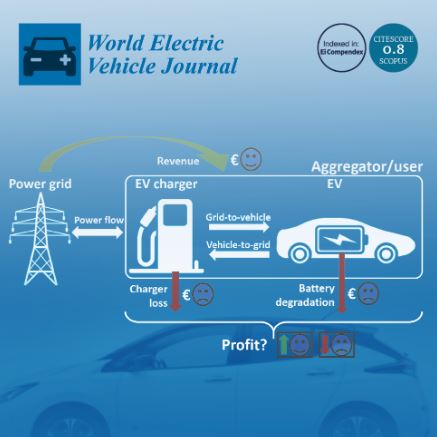
Flexibility-Enhancing Charging Station to Support the Integration of Electric Vehicles
2021
Author(s): Ilieva I, Bremdal B
This paper discusses the Inspiria charging station facility in Norway, which enables various charging point operators to offer different charging systems for different purposes and needs.
Electric Vehicle Charging Network in Europe: An Accessibility and Deployment Trends Analysis
2021
Author(s): Falchetta G, Noussan M
This paper provides the first comprehensive bottom-up analysis of the EV charging network in Europe. Combining a crowd-sourced database of charging stations with accessibility data and algorithms, the authors produce maps of the travel time to the most accessible EV charging station across Europe, and also evaluate the charging points density and the number of active operators in different areas.

Fuzzy Set Qualitative Comparative Analysis (fsQCA) Applied to the Adaptation of the Automobile Industry To Meet the Emission Standards of Climate Change Policies via the Deployment of Electric Vehicles (EVs)
2021
Author(s): Llopis-Albert C, Palacios-Marqu´es D, Simon-Moya V
This study aids the design of the adaptation strategies of the automotive industry to meet global goals on climate change by means of a fuzzy-set qualitative comparative analysis (fsQCA), which makes it possible to measure the level of actors’ satisfaction.
Understanding and Identifying Barriers to Electric Vehicle Adoption Through Thematic Analysis
2021
Author(s): Krishna G
The study focuses on identifying and understanding the factors involved in their purchase with a wider range of expression using thematic analysis unlike traditional survey techniques.
Taking Into Account Greenhouse Gas Emissions of Electric Vehicles for Transportation De-Carbonization
2021
Author(s): Gan Y, Wang M, Lu Z, Kelly J
This study quantifies greenhouse gas emission increases due to these two effects in the three markets. The authors show that plug-in electric vehicles sold in 2012–2025 in the three markets will result in greenhouse gas emission increases of more than 1 billion tonnes of CO2 equivalent through 2050 relative to the case without the two effects.
Battery Electric Vehicle Adoption in Regions Without Strong Policies
2021
Author(s): Brückmann G, Willibald F, Blanco V
This paper presents individual consumer characteristics and home-location based spatial characteristics of current BEV and internal combustion engine vehicle holders, in a region free from strong EV policies.