



Knowledge Hub
What’s the “Business As Usual” Future for Road Transport in India?
2021
Author(s): Kumar M
It’s not hard to predict that if India continues as is, it will mean an unabated rise in vehicular activity.
Time for Intervention: What do the Mitigation Scenarios Look Like for India’s Road Transport Emissions?
2021
Author(s): Kumar M
The focus here is on the scenarios that incorporate policy interventions that could help decarbonize the sector. Besides the Business-As-Usual (BAU), there were typically two kinds of alternate scenarios incorporated in the models we analyzed: the Moderate effort and the High Ambition.
ICCT and IEA’s High Ambition scenarios expect the light-duty vehicle segment or cars to electrify following two- and three-wheelers.
Decarbonizing India’s Road Transport Sector: Shouldn’t We Aim Higher?
2021
Author(s): International Council on Clean Transportation (ICCT)
There are many policy avenues that remain unexplored from a decarbonization perspective. Many of the models don’t incorporate the entire set of emission reduction strategies already commonly employed, and thus these in no way set a boundary as far as what India can achieve.
Summing Up: What’s the Potential for India to Set a Sectoral Target for Road Transport CO2 Emissions in its NDC?
2021
Author(s): Kumar M
The Intergovernmental Panel on Climate Change (IPCC) urged nations to increase the ambition of their Nationally Determined Contributions (NDCs). India’s current NDC includes an economy-wide emissions reduction target and it is 2 °C compatible.
Future of Electric Vehicles with Reference to National Electric Mobility Mission Plan at Tamil Nadu
2021
Author(s): Shrilatha S, Aruna K, Bhagavathy S, Chellaiah G, Gupta A
In the past few decades the personal vehicle commutation has been increased in India due to their lifestyle changes and standard of living. The carbon emissions from automobiles are the major cause of air pollution, including in India.
Green Hydrogen Potentials from Surplus Hydro Energy in Nepal
2021
Author(s): Thapa BS, Neupane B, Yang H, Lee Y-H
This paper studies the potential of green hydrogen production from hydropower energy and its application in electricity regeneration and replacement of petroleum products from the transportation sector in Nepal.
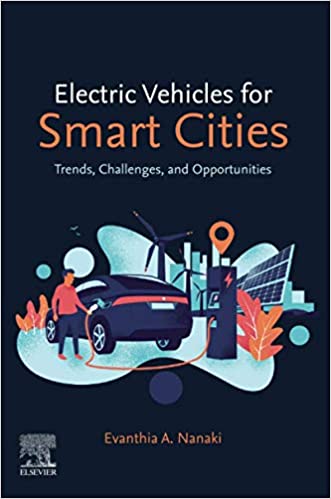
Electric Vehicles for Smart Cities:Trends, Challenges, and Opportunities
2021
Author(s): Nanaki E
Electric Vehicles for Smart Cities: Trends, Challenges, and Opportunities uniquely examines different approaches to electric vehicle deployment in the context of smart cities.
 Systems and Scholarly Literature on the Application of Such Systems.JPG)
A Comprehensive Analysis of Vehicle to Grid (V2G) Systems and Scholarly Literature on the Application of Such Systems
2021
Author(s): Bibak B, Tekiner-Moğulkoç H
In this paper, by analyzing a precise and comprehensive literature review, the authors consider all aspects of implementing the EVs especially their supporting roles for the grid in vehicle to grid system (V2G).
Economic Competitiveness and Environmental Implications of Hydrogen Energy and Fuel Cell Electric Vehicles in ASEAN Countries: The Current and Future Scenarios
2021
Author(s): Li Y, Kimura S
This study asks if hydrogen-based road transport, especially FCEVs in the fleets of passenger cars, buses, and trucks, could be economically justified in the ASEAN member states. If not, what strategies to take for ASEAN member states?