



Knowledge Hub
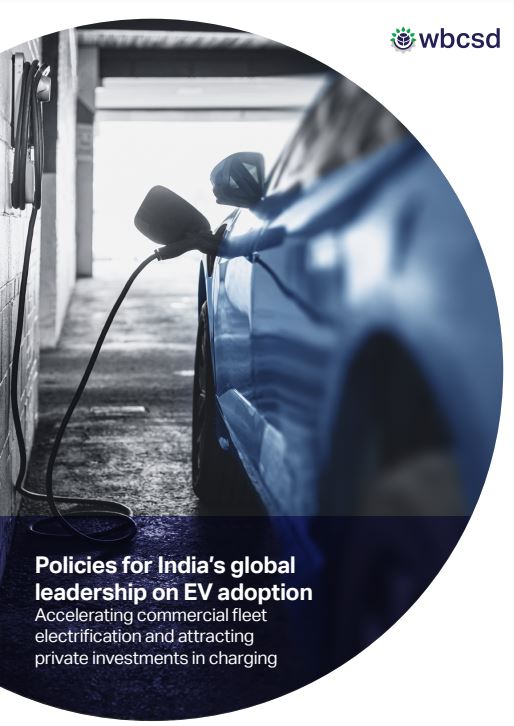
Policies for India's global leadership on EV adoption
2021
Author(s): World Business Council for Sustainable Development
Building on the previous work of the REmobility coalition, WBCSD has developed this report to help accelerate India's transition to electric mobility and enhance the collaboration between policymakers and businesses. It presents a policy framework that reinforces the adoption of EVs across commercial fleets and increased investments in charging infrastructure.
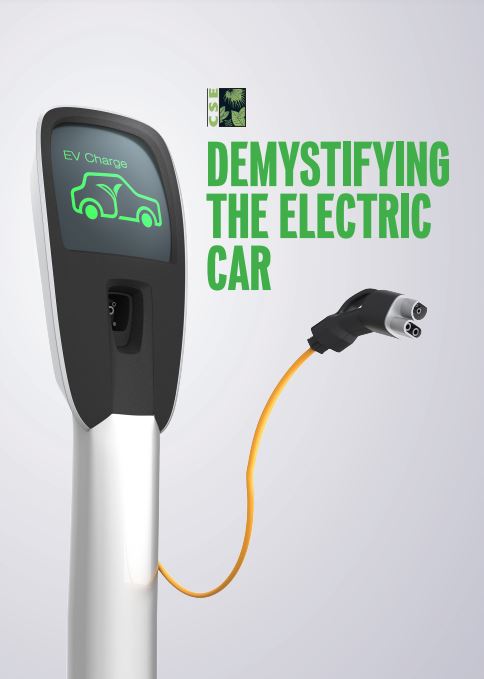
Should we buy an electric car? New technologies often tend to get mired in a web of misinformation and myths due to an information deficit environment. In this publication, Centre for Science and Environment (CSE) answers questions about the electric car that is used for personal mobility, in the hope that this information will dispel myths and encourage consumers to buy more e-cars.
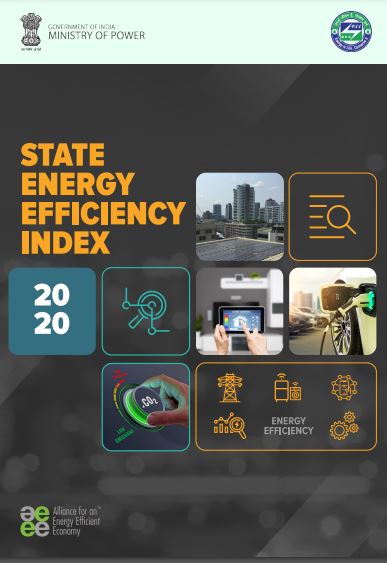
State energy efficiency index 2020
2021
Author(s): Bureau of Energy Efficiency, Alliance for an Energy Efficient Economy
Karnataka has topped the State Energy Efficiency Index 2020 (SEEI), scoring 70 points out of 100 on the back of several initiatives to improve energy efficiency in the state. The Ministry of Power’s (MoP) Energy Efficiency Index ranks states on their performance across 68 indicators covering buildings, industry, municipalities, transport, agriculture, distribution companies (DISCOMs), and cross-sector initiatives. The index assesses the states’ performance on policy and regulation, financing mechanism, institutional capacity, adoption of energy efficiency measures, and energy savings.
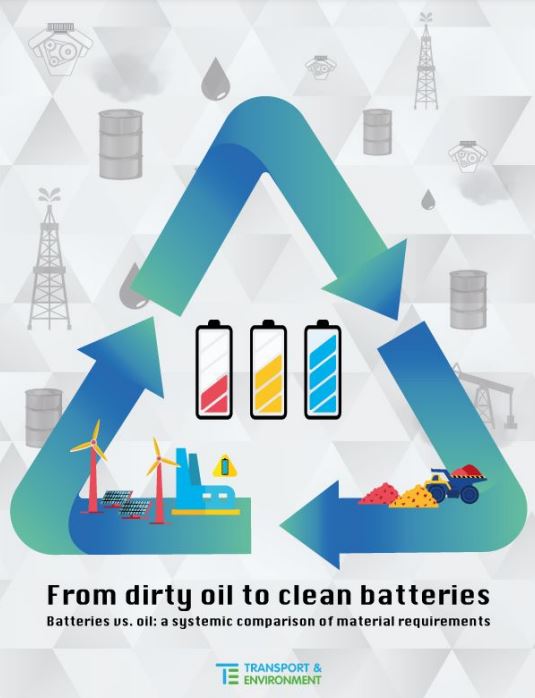
From dirty oil to clean batteries- batteries vs. oil: a systemic comparison of material requirements
2021
Author(s): Mathieu L, Mattea C
An electric vehicle (EV) battery uses up just 30kg of raw materials with recycling compared to the 17,000 litres of petrol burned by the average car. That’s according to a new study that shows Europe’s current crude oil dependency far outweighs its need for battery raw materials. The gap is set to increase further as technological advancements drive down the amount of lithium required to make an EV battery by half over the next decade. The amount of cobalt required will drop by more than three-quarters and nickel by around a fifth.
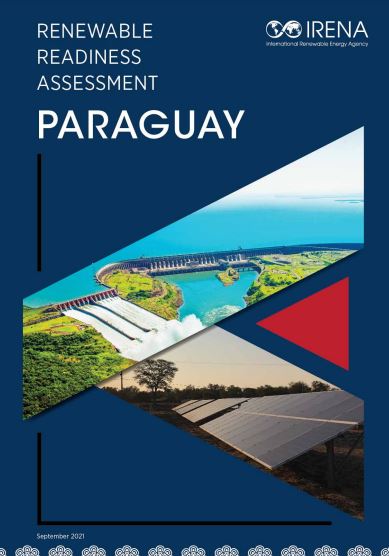
Renewable readiness assessment: Paraguay
2021
Author(s): International Renewable Energy Agency (IRENA)
This report examines Paraguay’s energy institutions and their governance, long-term energy planning practices, and the socio-economic benefits of promoting renewable and low-carbon technologies in the end-use sectors. The RRA process was conducted in synergy with the country’s revision of its National Determined Contribution (NDC). The resulting report highlights the strong link between diversifying the energy mix, scaling up renewable energy use, and promoting low-carbon technologies such as green hydrogen and electric vehicles, alongside climate action.
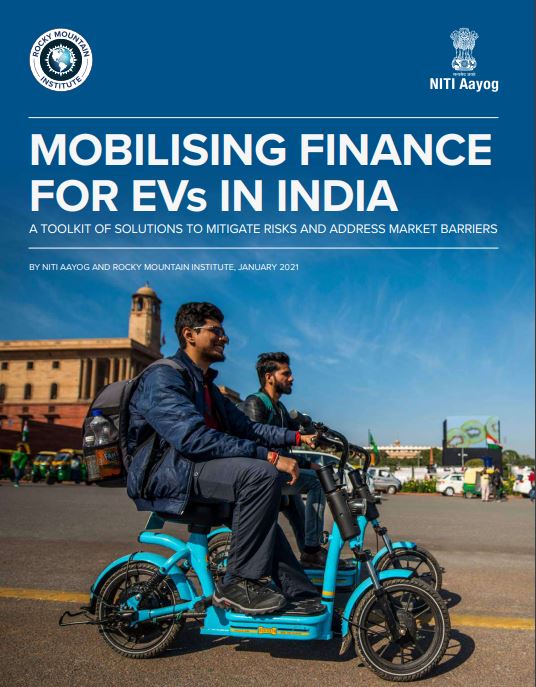
Mobilising finance for EVs in India: a toolkit of solutions to mitigate risks and address market barriers
2021
Author(s): NITI Aayog, Rocky Mountain Institute
The report highlights financing as another key hurdle to accelerating uptake. EV buyers currently face a range of financing challenges, such as high interest and insurance rates, low loan-to-value ratios, and limited specialized financing options. These challenges will only become more important to address as EV adoption picks up.
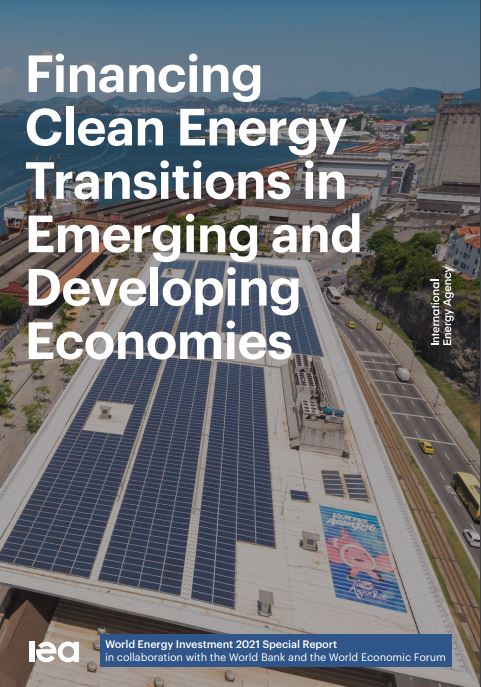
Financing clean energy transitions in emerging and developing economies
2021
Author(s): International Energy Agency
The report aims to address the challenge of mobilising investment and finance to support clean energy transitions in the emerging and developing world. This is based on detailed analysis of successful projects and initiatives, including almost 50 real-world case studies – across clean power, efficiency and electrification, as well as transitions for fuels and emissions-intensive sectors – in countries ranging from Brazil to Indonesia and from Senegal to Bangladesh.
Draft Motor Vehicle Aggregators Scheme, 2021
2021
Publisher/Organisation: Government of NCT of Delhi
The Delhi government has issued a draft Motor Vehicle Aggregators Scheme, 2021, which proposed the need for online passenger and commercial vehicle operators to increasingly adopt electric vehicles. Alongside laying down a proposed timeline for bringing more electric vehicles (EVs) under their wing, the draft scheme also proposed a continuous driver assessment to increase safety of services in the national capital.
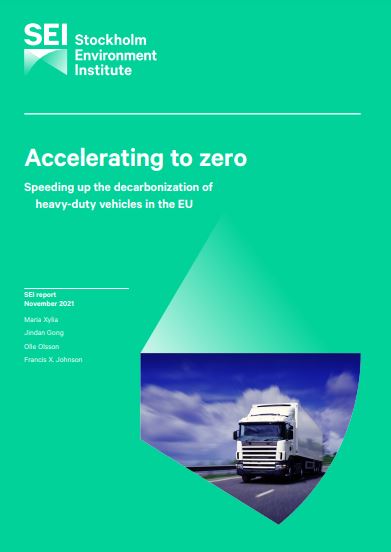
Accelerating to zero: speeding up the decarbonization of heavy-duty vehicles in the EU
2021
Author(s): Xylia M, Gong J, Olsson O, Johnson FX
The objective of this report is to analyse the current status and outlook for decarbonization of the heavy-duty vehicle sector in the EU. The authors focus on developments over the coming 10 years, and how much the sector’s emissions could be reduced through energy efficiency improvements, electrification, and increased biofuel deployment.
Used vehicles and the environment:-a global overview of used light duty vehicles: update and progress 2021
2021
Author(s): United Nations Environment Programme
The export of used light duty vehicles (LDVs) has increased significantly. In 2015, 3.4 million used LDVs were exported globally, by 2019 this had increased to 4.8 million. Most likely due to the covid-19 pandemic, there was a reduction of used LDVs in 2020 to 4 million. This report gives updated and new information to the 2020 UNEP report, “Global Overview on Used Light Duty Vehicles: Flows, Scale, and Regulations”.