



Knowledge Hub
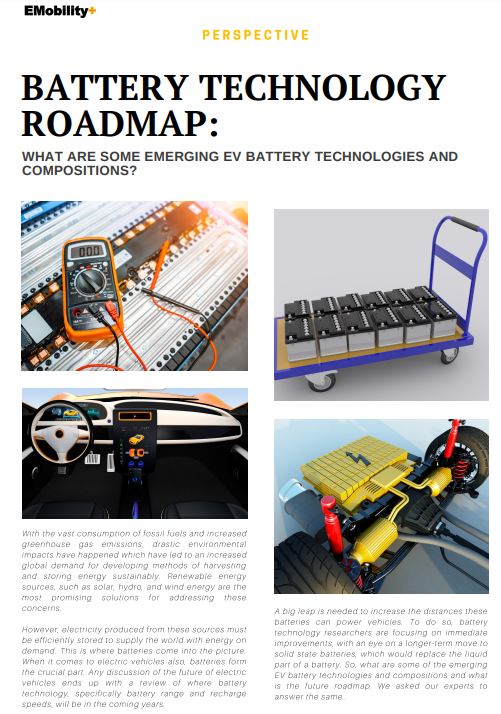
The performance of an electric vehicle (EV) is mainly dependent on a battery and its materials composition. Battery selection is based on performance characteristics, such as energy and power density, life cycle, safety, charging/discharging rate, cost, etc.

Environmental Implications of the Ongoing Electrification of the UK Light Duty Vehicle Fleet
2021
Author(s): Raugei M, Kamran M, Hutchinson A
The paper presents a holistic perspective life cycle assessment of these two interrelated transitions' environmental implications while also considering an alternative scenario characterized by a gradual shift from traditional private vehicle ownership to shared mobility schemes.
Optimal Sizing of Electric Vehicle Charging Stations Considering Urban Traffic Flow for Smart Cities
2021
Author(s): Campaña M, Inga E, Cárdenas J
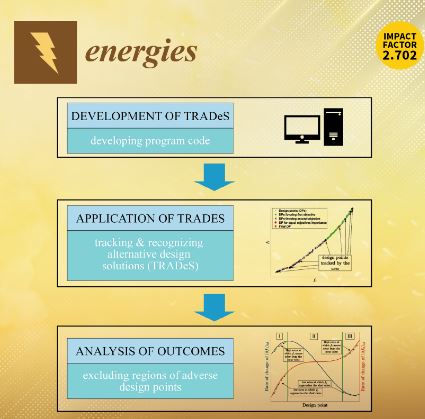
The study developed in this article has a high potential for the development of service providers for the creation of charging infrastructures, and the analysis is based on the study of georeferenced traffic in terms of trajectories, looking at the features of the road network to decide the input variables for the linear optimization model.
Update: Accounting for well-to-wake carbon dioxide equivalent emissions in maritime transportation climate policies
2021
Author(s): Comer B, Osipova L
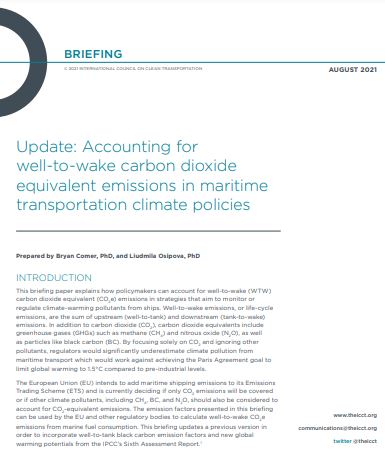
This briefing paper outlines a methodology for calculating well-to-wake CO2-equivalent emissions from four fossil marine fuels: heavy fuel oil, very low sulfur fuel oil, marine gas oil, and liquefied natural gas.
STATEMENT: Biden Administration Announces Stronger Vehicle Mileage Standards, Sets EV Goal
2021
Author(s): World Resources Institute (WRI)
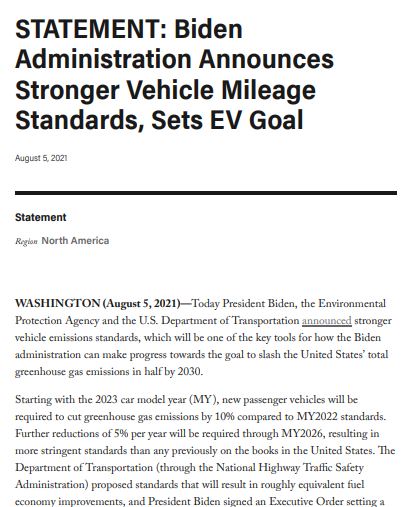
President Biden, the Environmental Protection Agency and the U.S. Department of Transportation announced stronger vehicle emissions standards, which will be one of the key tools for how the Biden administration can make progress towards the goal to slash the United States’ total greenhouse gas emissions in half by 2030.
Privileging Electric Vehicles as an Element of Promoting Sustainable Urban Mobility—Effects on the Local Transport System in a Large Metropolis in Poland
2021
Author(s): Borowska‐stefańska M, Kowalski M, Kurzyk P, Mikušová M, Wiśniewski S
The study used two sets of data: information on infrastructure and traffic management; and the recorded road network loads and traffic volumes generated by a given shopping centre—the E. Leclerc shopping centre (a vital traffic generator within the city of Łódź, Poland).

Electric Vehicle Deployment Fundamentals for Southeast Asia: Module 1, Unit 1 — The Value of Data in Understanding the Status & Mapping a Path for EV Transition
2021
Author(s): National Renewable Energy Laboratory (NREL)
The Module 1, Unit 1 — The Value of Data in Understanding the Status & Mapping a Path for EV Transition covers basic vehicle data types, parameters, and methodologies; the importance of basic travel data and other household data needs to get a bigger picture; and how to coordinate data acquisition across transport and energy. This lecture is presented by Mr Caley Johnson of NREL.
Towards the Future of Sustainable Mobility: Results From a European Survey on (Electric) Powered-Two Wheelers
2021
Author(s): Will S, Luger-Bazinger C, Schmitt M, Zankl C
Personal transport is essential in our society, and the 2020 pandemic has reinforced this situation. At the same time, transportation contributes to local emissions, which need to be reduced in the face of climate change. Changing from vehicles with internal combustion engines to light electric vehicles could be one promising approach.

Scootin’ in the Rain: Does Weather Affect Micromobility?
2021
Author(s): Noland RB
The usage of shared e-scooters, dockless e-bikes, and docked bicycles are correlated with weather conditions to examine the relative impact on each mode, precisely the number of trips taken, their duration, and distance.
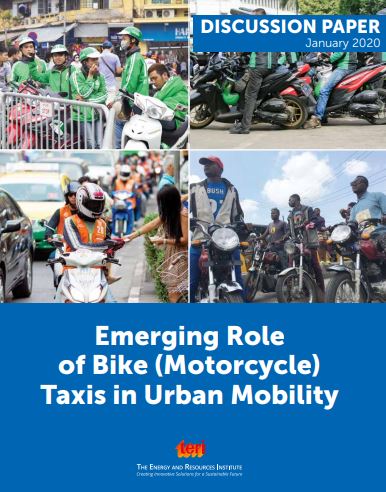
Emerging Role of Bike (Motorcycle) Taxis in Urban Mobility
2021
Author(s): Thakur P, Jain A, Harikumar A
Ride sharing and hailing services have given new dimension to urban mobility. They provide mobility as a service and promote asset utilization.