

Research Papers/Articles

Review on Electric Vehicles
2018
Author(s): Muniamuthu S, Krishna Arjun S, Jalapathy M, Harikrishnan S, Vignesh A
The age of the fossil fuel engines are vanishing gradually and development of innovative technologies has started to revolutionize the world. This review work aims at the study of journals, blogs and statistical reports to bring forth the evolution of electric hybrids, their sources of supply, pros and cons, their classification and major constituents.

Business Scenarios and Data Flow in NeMo Hyper-Network
2018
Author(s): Jako Z, Knapp A
The paper presents main motivations and goals of NeMo Hyper-core Network. In addition, the possible business scenarios that are found in NeMo are discussed.
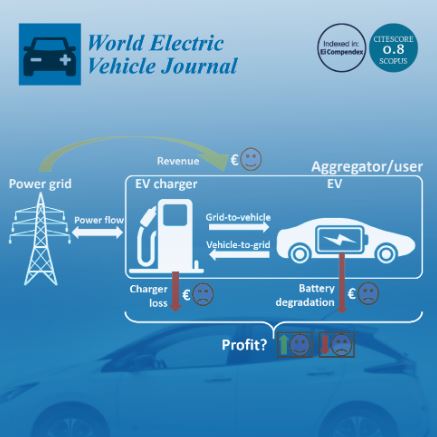
Sustainability and Gender: A Mixed-Method Analysis of Urban Women’s Mode Choice With Particular Consideration of E-Carsharing
2018
Author(s): Martin D, Kuhl N, Stryja C, Haude J
Women in urban areas have specific requirements for their daily mobility. Car sharing services are mostly used by men as shown in studies from different countries. This study aims for understanding...
Approaching Net Zero Energy Housing Through Integrated EV
2018
Author(s): Doroudchi E, Alanne K, Okur Ö, Kyyrä J, Lehtonen M
The zero‐energy concept has been developed and widely used in energy policy making with an aim at designing and building sustainable buildings and communities. Electric vehicle (EV) contributes in providing the building energy demand when it is available in the building site and its energy is applicable.

A Comprehensive Model for Lithium-Ion Batteries: From the Physical Principles to an Electrical Model
2018
Author(s): Berrueta A, Urtasun A, Ursúa A, Sanchis P
The growing interest in e-mobility and the increasing implementation of systems based on renewable energy are contributing to rapid improvements in lithium-ion batteries. In this context, battery manufacturers and engineers require advanced models in order to study battery performance accurately.

Integrated Infrastructure for Electro Mobility Powered by the Arrowhead Framework
2018
Author(s): Peceli B, Singler G, Theisz Z, Hegedus C, Szepessy Z, Varga P
Electro Mobility is a rapidly growing and evolving application domain of the Internet of Things, with a huge market potential in various areas. It incorporates many stakeholders - from manufacturers to the players of the energy market - with all sorts of physical and virtual resources.

Stasis, Dynamism and Emergence of the E-Mobility System in China: A Power Relational Perspective
2018
Author(s): Tyfield D, Zuev D
Efforts at urban e-mobility transition in China are of crucial global significance. Exploring these developments, however, demands significant reframing of dominant theories of socio-technical system transition to accommodate the strikingly different socio-political context of China to that of the global North where these theories have been developed.

Commercial Viability of Electric Vehicles in India
2018
Author(s): Kumar A, Choudhary SK, Chethan KN
India has pledged to cut down its share of GHGs emissions significantly in order limit the average increase in global temperature. As a result of this, the Indian government has set a target of 100% e-mobility by 2030.

Efficient Future Mobility With Intelligent Drivetrain Systems for Hybrids and EVs
2018
Author(s): Zink M
Using the motto "efficient future mobility", are supporting and shaping the path towards electric mobility with close customer collaboration. These activities are primarily focused on consistently optimizing the internal combustion drivetrain, on hybrid modules and on components and modules for E-Mobility.

Ecopreneurs’ Creation of User Business Models for Green Tech: An Exploratory Study in E-Mobility
2018
Author(s): Abdelkafi N, Hansen EG
This paper introduces user business models to the literature on ecopreneurship and explores their contribution to environmental sustainability. Renewable e-mobility is identified as an appropriate application. The research methodology consists of two steps: A document analysis for developing a typology of ecopreneurs with user business models, and an in-depth case study analysis.