



Knowledge Hub
Framing Electric Mobility for Urban Sustainability in a Circular Economy Context: An Overview of the Literature
2021
Author(s): Leal Filho W, Abubakar IR, Kotter R, Grindsted TS, Balogun A-L, Salvia AL, Aina YA, Wolf F
This paper provides a comprehensive review of the literature and provides a detailed analysis of the current development of electro-mobility in Europe, assessing social, economic, and environmental aspects under a circular economy context.

Electric Vehicle Deployment Fundamentals for Southeast Asia: Module 2, Unit 1 — Electric Vehicle Supply Equipment Standards and Communication Protocols
2021
Author(s): National Renewable Energy Laboratory (NREL)
This Module 2, Unit 1 — Electric Vehicle Supply Equipment Standards and Communication Protocols this lecture covers the basic structure of charging standards; common codes; communications (across different charging networks) and interoperability protocols for seamless connectivity; and synergies with the grid as well as other EV ecosystem stakeholders (e.g. buildings, EVSE manufacturers, urban planners). This lecture is presented by Mr Jesse Bennett of NREL.
Electric Vehicle Deployment Fundamentals for Southeast Asia: Module 4, Unit 1 — Workforce Development
2021
Author(s): National Renewable Energy Laboratory (NREL)
The Module 4, Unit 1 — Workforce Development covers tracking the evolution of the EV labor market; steps to enabling workers to transfer from shrinking labor markets to expanding labor markets; and creating holistic workforce development strategies. This lecture is presented by Mr Alex Aznar and Ms Sanjini Nanayakkara of NREL.
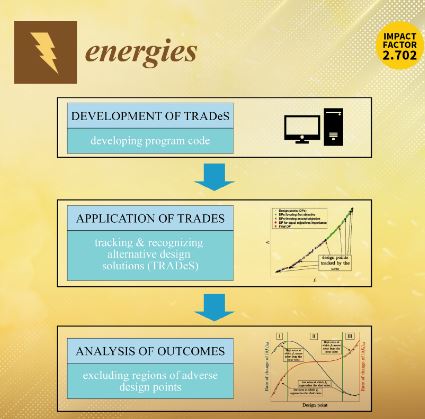
Data Driven Approaches for Sustainable Development of E-Mobility in Urban Areas
2021
Author(s): Nigro M, Ferrara M, De Vincentis R, Liberto C, Valenti G
This study focuses on a modeling framework to support mobility planners and energy providers in the sustainable development of electric mobility in urban areas.
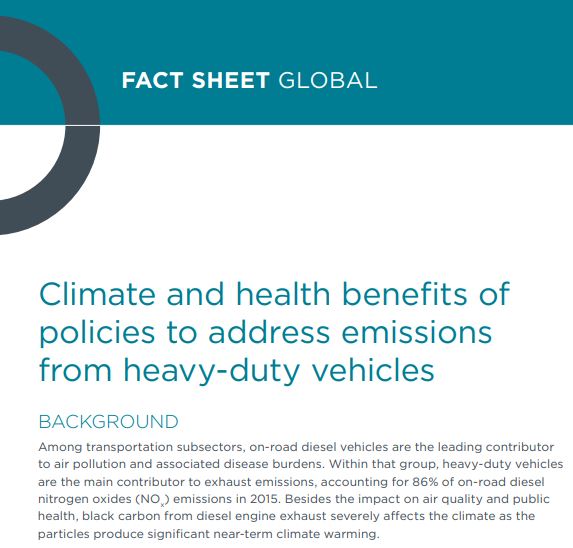
Climate and Health Benefits of Policies to Address Emissions from Heavy-duty Vehicles
2021
Author(s): Jin L, Braun C, Miller J, Buysse C
Among transportation subsectors, on-road diesel vehicles are the leading contributor to air pollution and associated disease burdens. Within that group, heavy-duty vehicles are the main contributor to exhaust emissions, accounting for 86% of on-road diesel nitrogen oxides (NOx) emissions in 2015.
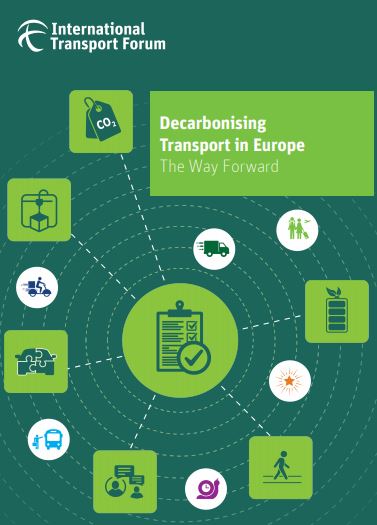
This paper summarises the findings of the project "Decarbonising Transport in Europe". The DTEU project modelled transport activity in Europe and provided detailed quantitative evidence on the actual impact of CO2 mitigation measures.
Transport and Sustainability contains original research contributions dealing with a wide range of issues associated with transport, travel, mobility and sustainability. All contributions are subject to peer review.
Air Quality and Health Impacts of Heavy-duty Vehicles in G20 Economies
2021
Author(s): Jin L, Braun C, Miller J, Buysse C
his study analyzes the health and climate impacts associated with projected diesel HDV exhaust emissions in G20 economies under four scenarios: currently adopted policies, expanded adoption of Euro VI-equivalent standards, potential next-generation emission standards, and accelerated fleet renewal programs.
Route Prioritization of Urban Public Transportation From Conventional to Electric Buses: A New Methodology and a Study of Case in an Intermediate City of Ecuador
2021
Author(s): Wenz K-P, Serrano-Guerrero X, Barragán-Escandón A, González LG, Clairand J-M
This paper proposes a new methodology to address the transition of urban public transportation from conventional buses to EBs by route prioritization. The scores of each criterion are weighted using a multi-criteria technique.
A Real-Time Dispatching Strategy for Shared Automated Electric Vehicles With Performance Guarantees
2021
Author(s): Li L, Pantelidis T, Chow JYJ, Jabari SE
Car-sharing is gaining popularity throughout the world and has emerged as a competitive technology for urban mobility. Combined with the upward trend in vehicle electrification and the promise of automation, it is expected that urban travel will change in fundamental ways in the near future.